


Setting the Research Agenda for Clinical Artificial Intelligence in Pancreatic Adenocarcinoma Imaging
- PMID: 35884559
- PMCID: PMC9316850
- DOI: 10.3390/cancers14143498
Setting the Research Agenda for Clinical Artificial Intelligence in Pancreatic Adenocarcinoma Imaging
Abstract
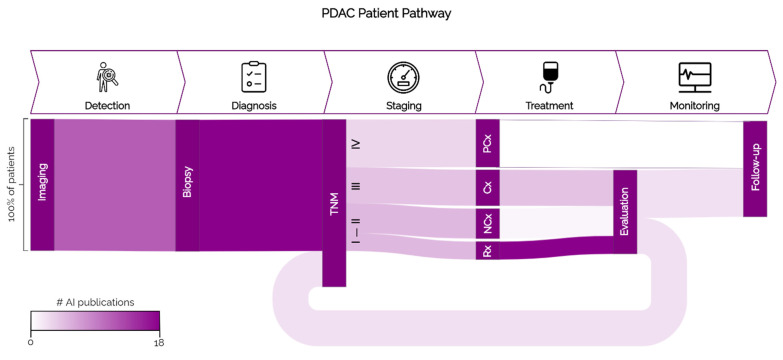
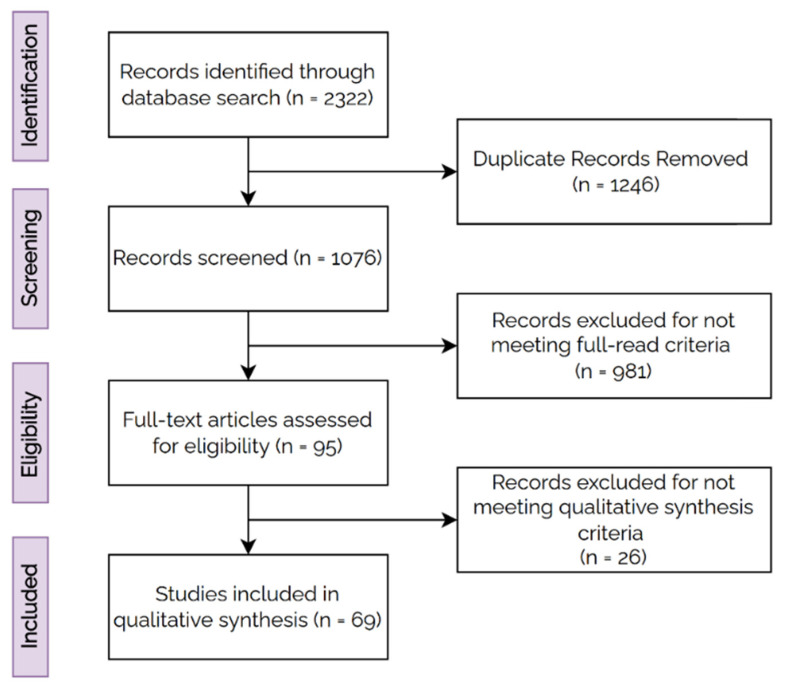
Pancreatic ductal adenocarcinoma (PDAC), estimated to become the second leading cause of cancer deaths in western societies by 2030, was flagged as a neglected cancer by the European Commission and the United States Congress. Due to lack of investment in research and development, combined with a complex and aggressive tumour biology, PDAC overall survival has not significantly improved the past decades. Cross-sectional imaging and histopathology play a crucial role throughout the patient pathway. However, current clinical guidelines for diagnostic workup, patient stratification, treatment response assessment, and follow-up are non-uniform and lack evidence-based consensus. Artificial Intelligence (AI) can leverage multimodal data to improve patient outcomes, but PDAC AI research is too scattered and lacking in quality to be incorporated into clinical workflows. This review describes the patient pathway and derives touchpoints for image-based AI research in collaboration with a multi-disciplinary, multi-institutional expert panel. The literature exploring AI to address these touchpoints is thoroughly retrieved and analysed to identify the existing trends and knowledge gaps. The results show absence of multi-institutional, well-curated datasets, an essential building block for robust AI applications. Furthermore, most research is unimodal, does not use state-of-the-art AI techniques, and lacks reliable ground truth. Based on this, the future research agenda for clinically relevant, image-driven AI in PDAC is proposed.
Keywords: artificial intelligence; imaging; pancreatic cancer; pathology; radiology.
Conflict of interest statement
For all authors there is no conflict of interest.
Figures
References
-
- Michl P., Löhr M., Neoptolemos J.P., Capurso G., Rebours V., Malats N., Ollivier M., Ricciardiello L. UEG Position Paper on Pancreatic Cancer. Bringing Pancreatic Cancer to the 21st Century: Prevent, Detect, and Treat the Disease Earlier and Better. United Eur. Gastroenterol. J. 2021;9:860. doi: 10.1002/ueg2.12123. - DOI - PMC - PubMed
-
- Latenstein A.E.J., van der Geest L.G.M., Bonsing B.A., Groot Koerkamp B., Haj Mohammad N., de Hingh I.H.J.T., de Meijer V.E., Molenaar I.Q., van Santvoort H.C., van Tienhoven G., et al. Nationwide Trends in Incidence, Treatment and Survival of Pancreatic Ductal Adenocarcinoma. Eur. J. Cancer. 2020;125:83–93. doi: 10.1016/j.ejca.2019.11.002. - DOI - PubMed
Publication types
Grants and funding
LinkOut - more resources
Full Text Sources
Miscellaneous
