


The Counteractive Effect of Self-Regulation-Based Interventions on Prior Mental Exertion: A Systematic Review of Randomised Controlled Trials
- PMID: 35884703
- PMCID: PMC9313235
- DOI: 10.3390/brainsci12070896
The Counteractive Effect of Self-Regulation-Based Interventions on Prior Mental Exertion: A Systematic Review of Randomised Controlled Trials
Abstract
Background: Many investigations have been performed on the effects of mental exertion that consumes self-regulatory resources and then affects physical and/or cognitive performance later on. However, the effect of manipulating self-regulation and interventions to attenuate this negative effect remains unclear. Moreover, there is continuous controversy regarding the resource model of self-regulation.
Objective: We conducted a systematic review to assess the literature on manipulating self-regulation based on four ingredients (standard, monitoring, strength, and motivation) in order to counter mental exertion and improve physical and/or cognitive performance. The results provide more insight into the resource model.
Method: A thorough search was conducted to extract the relevant literature from several databases, as well as Google Scholar, and the sources from the references were included as grey literature. A self-regulation intervention compared to a control condition, a physical and/or cognitive task, and a randomised controlled trial were selected.
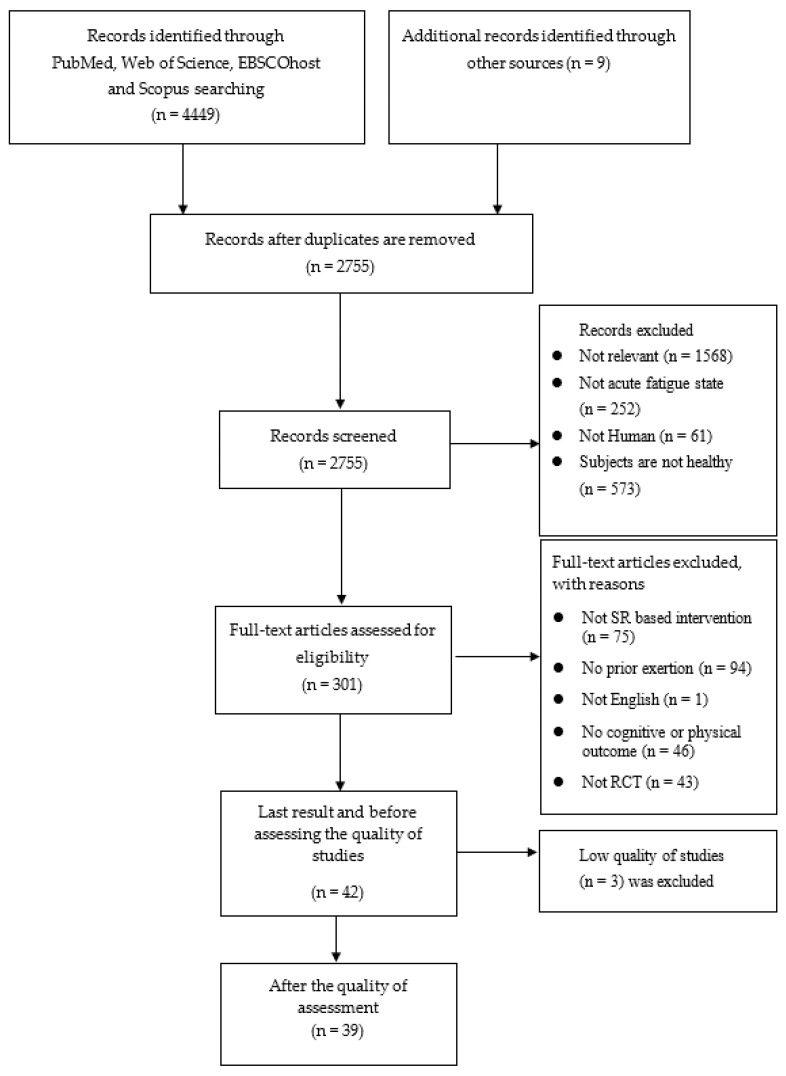
Result: A total of 39 publications were included. Regarding the four components of self-regulation, the interventions could mainly be divided into the following: (i) standard: implementation intervention; (ii) monitoring: biofeedback and time monitoring; (iii) strength: repeated exercise, mindfulness, nature exposure, and recovery strategies; (iv) motivation: autonomy-supportive and monetary incentives. The majority of the interventions led to significant improvement in subsequent self-regulatory performance. In addition, the resource model of self-regulation and attention-restoration theory were the most frequently used theories and supported relevant interventions.
Conclusion: In line with the resource model, manipulating the four components of self-regulation can effectively attenuate the negative influence of mental exertion. The conservation proposed in the strength model of self-regulation was supported in the current findings to explain the role of motivation in the self-regulation process. Future studies can focus on attention as the centre of the metaphorical resource in the model.
Keywords: ego depletion; fatigue; intervention; mental exertion; self-regulation.
Conflict of interest statement
The authors declare that the research was conducted in the absence of any commercial or financial relationships that could be construed as a potential conflict of interest.
Figures
References
-
- Baumeister R.F., Heatherton T.F., Tice D.M. Losing Control: How and Why People Fail at Self-Regulation. Academic Press; San Diego, CA, USA: 1994.
Publication types
Grants and funding
LinkOut - more resources
Full Text Sources
