


Prevalence and Factors Associated with Insomnia in Military Personnel: A Retrospective Study during the Second COVID-19 Epidemic Wave in Peru
- PMID: 35885726
- PMCID: PMC9315965
- DOI: 10.3390/healthcare10071199
Prevalence and Factors Associated with Insomnia in Military Personnel: A Retrospective Study during the Second COVID-19 Epidemic Wave in Peru
Abstract
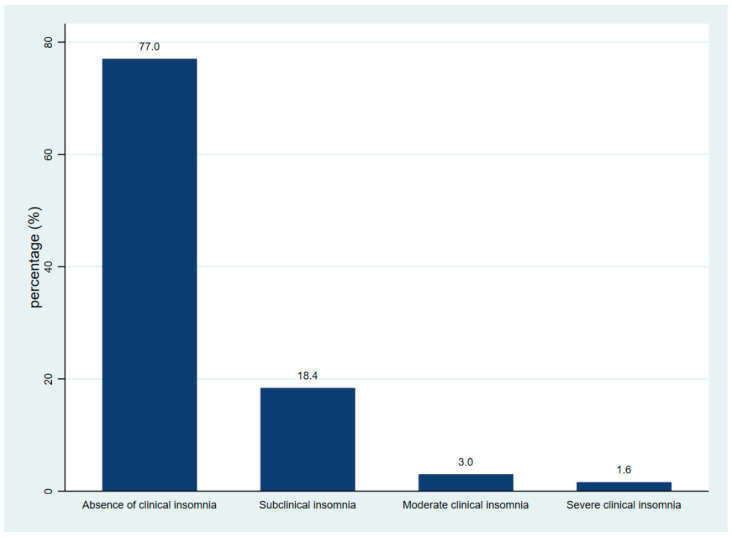
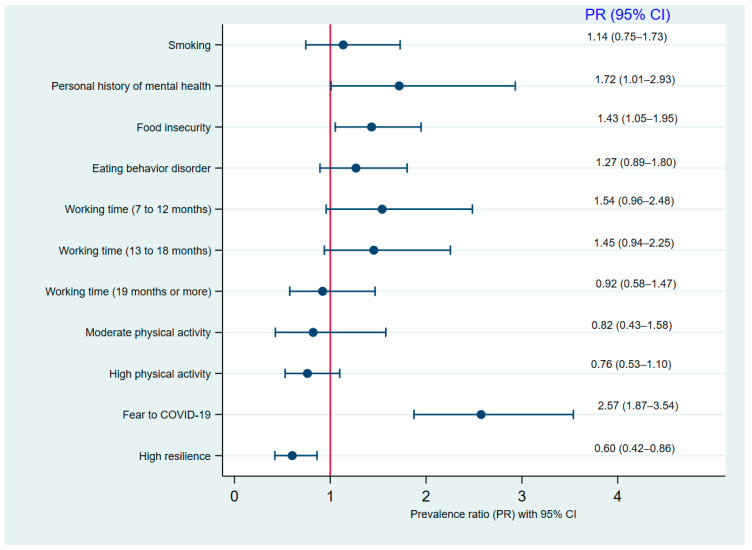
Studies in military personnel are scarce and have reported increased rates of medical consultations and insomnia. The COVID-19 pandemic has been associated with a number of factors that increase the prevalence of insomnia, which has established consequences in the military. However, reported data are from different settings. We aimed to identify the prevalence and factors associated with insomnia during the second COVID-19 epidemic wave in Lambayeque, Peru. A retrospective study in 566 participants was conducted face-to-face in November 2021. The dependent variable was insomnia, measured with the Insomnia Severity Index. The independent variables were socio-labor variables, physical activity, food insecurity, eating behavior disorder, fear of COVID-19, and resilience. The prevalence of insomnia was 23% (95% CI: 19.6-26.7%). In multivariate analysis, insomnia was associated with a personal history of mental health (PR: 1.71, 95% CI: 1.01-2.93), food insecurity (PR: 1.43, 95% CI: 1.05-1.95), fear of COVID-19 (PR: 2.57, 95% CI: 1.87-3.54), and high resilience (PR: 0.60, 95% CI: 0.42-0.86). Overall, the Peruvian military population presents a high prevalence of insomnia during the pandemic period. Special attention should be paid to factors that influence insomnia. Prevention and promotion programs should be established to reverse this negative trend in the military.
Keywords: COVID-19; insomnia; mental health; public health; sleep quality.
Conflict of interest statement
The authors declare no conflict of interest.
Figures
References
-
- Gutiérrez-Tudela J.W. La pandemia de la COVID-19 en el Perú: Análisis epidemiológico de la segunda ola. Rev. De La Soc. Peru. De Med. Interna. 2021;34:129. doi: 10.36393/spmi.v34i4.627. - DOI
Grants and funding
LinkOut - more resources
Full Text Sources
Research Materials
