


Factors Associated with Emergency Department Visits and Consequent Hospitalization and Death in Korea Using a Population-Based National Health Database
- PMID: 35885850
- PMCID: PMC9325044
- DOI: 10.3390/healthcare10071324
Factors Associated with Emergency Department Visits and Consequent Hospitalization and Death in Korea Using a Population-Based National Health Database
Abstract
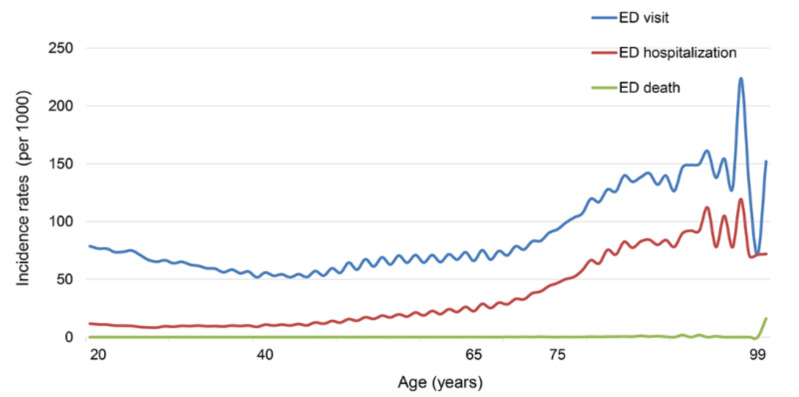
We aim to investigate common diagnoses and risk factors for emergency department (ED) visits as well as those for hospitalization and death after ED visits. This study describes the clinical course of ED visits by using the 2014-2015 population data retrieved from the National Health Insurance Service. Sociodemographic, medical, and behavioral factors were analyzed through multiple logistic regression. Older people were more likely to be hospitalized or to die after an ED visit, but younger people showed a higher risk for ED visits. Females were at a higher risk for ED visits, but males were at a higher risk for ED-associated hospitalization and death. Individuals in the highest quartile of income had a lower risk of ED death relative to lowest income level individuals. Disabilities, comorbidities, and medical issues, including previous ED visits or prior hospitalizations, were risk factors for all ED-related outcomes. Unhealthy behaviors, including current smoking, heavy alcohol consumption, and not engaging in regular exercise, were also significantly associated with ED visits, hospitalization, and death. Common diagnoses and risk factors for ED visits and post-visit hospitalization and death found in this study provide a perspective from which to establish health polices for the emergency medical care system.
Keywords: emergency department; emergency department visit; health behavior; hospital death; hospitalization; sociodemographic.
Conflict of interest statement
The authors declare that they have no competing interest.
Figures
References
-
- NEMC: National Emergency Medical Center (KR) Statistical Yearbook of Emergency Medical Service. National Emergency Medical Center (NEMC); Seoul, Korea: 2019.
LinkOut - more resources
Full Text Sources
