


Current Understanding of the Genetics and Molecular Mechanisms Regulating Wood Formation in Plants
- PMID: 35885964
- PMCID: PMC9319765
- DOI: 10.3390/genes13071181
Current Understanding of the Genetics and Molecular Mechanisms Regulating Wood Formation in Plants
Abstract
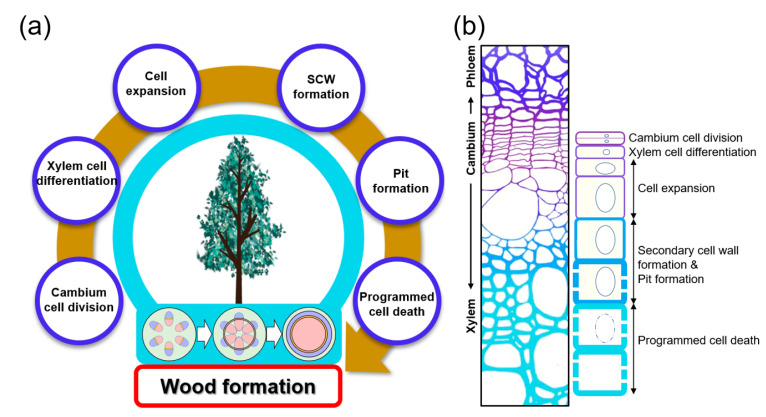
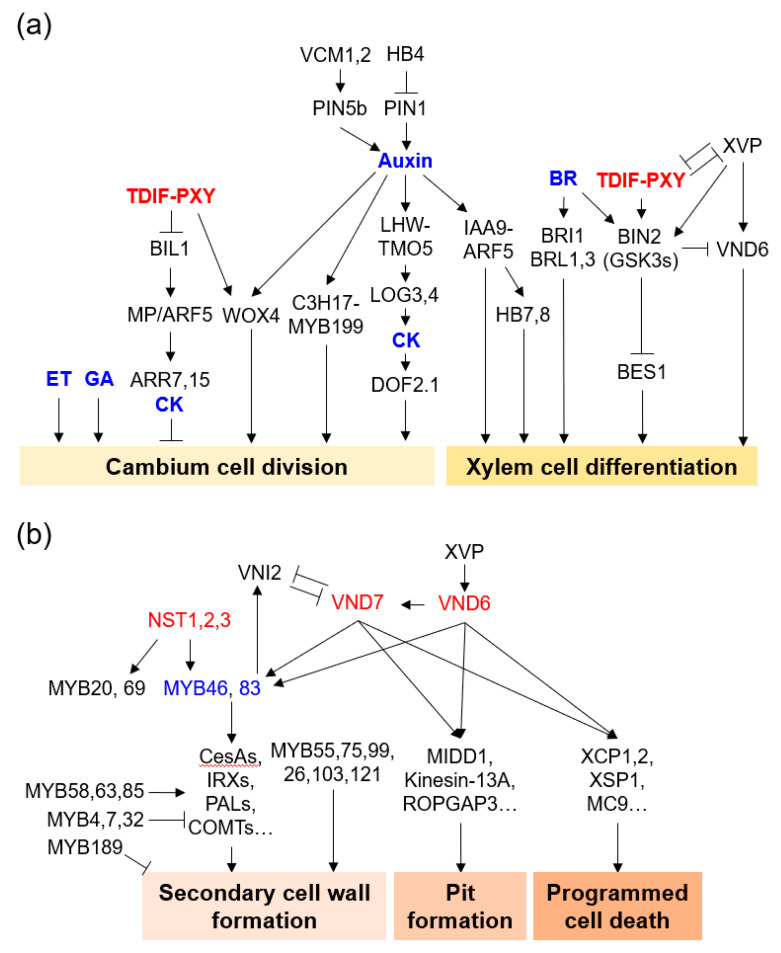
Unlike herbaceous plants, woody plants undergo volumetric growth (a.k.a. secondary growth) through wood formation, during which the secondary xylem (i.e., wood) differentiates from the vascular cambium. Wood is the most abundant biomass on Earth and, by absorbing atmospheric carbon dioxide, functions as one of the largest carbon sinks. As a sustainable and eco-friendly energy source, lignocellulosic biomass can help address environmental pollution and the global climate crisis. Studies of Arabidopsis and poplar as model plants using various emerging research tools show that the formation and proliferation of the vascular cambium and the differentiation of xylem cells require the modulation of multiple signals, including plant hormones, transcription factors, and signaling peptides. In this review, we summarize the latest knowledge on the molecular mechanism of wood formation, one of the most important biological processes on Earth.
Keywords: biomass; secondary growth; vascular cambium; wood formation; xylem differentiation.
Conflict of interest statement
The authors declare no conflict of interest.
Figures
References
-
- Rajput K.S., Gondaliya A.D., Lekhak M.M., Yadav S.R. Structure and Ontogeny of Intraxylary Secondary Xylem and Phloem Development by the Internal Vascular Cambium in Campsis radicans (L.) Seem. (Bignoniaceae) J. Plant Growth Regul. 2018;37:755–767. doi: 10.1007/s00344-017-9771-x. - DOI
Publication types
MeSH terms
LinkOut - more resources
Full Text Sources
Research Materials
