


Air Pollution and Workplace Choice: Evidence from China
- PMID: 35886583
- PMCID: PMC9319413
- DOI: 10.3390/ijerph19148732
Air Pollution and Workplace Choice: Evidence from China
Abstract
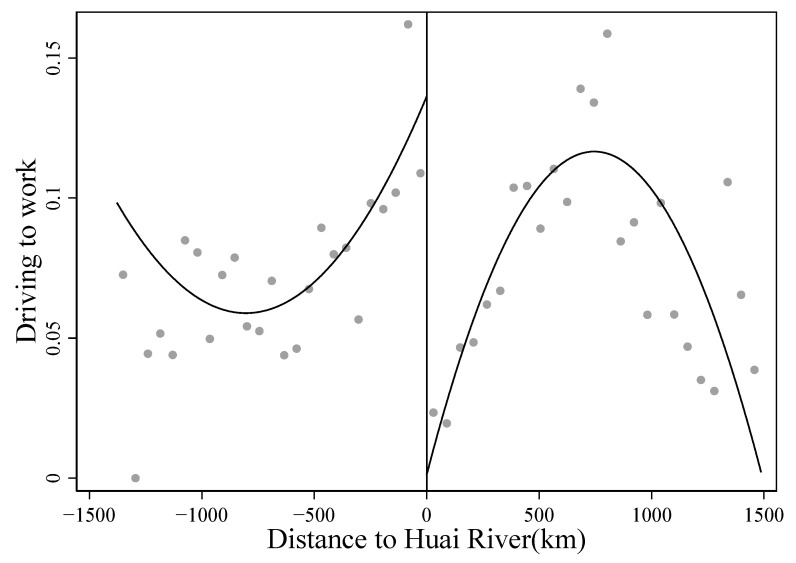
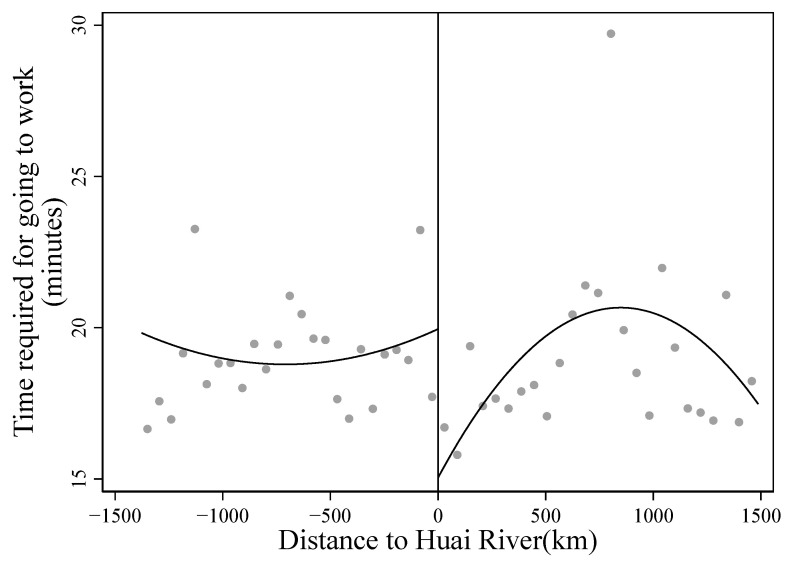
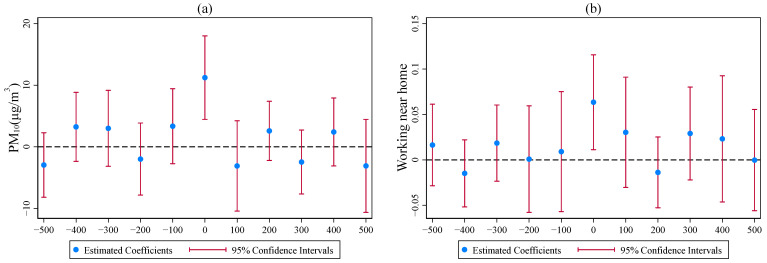
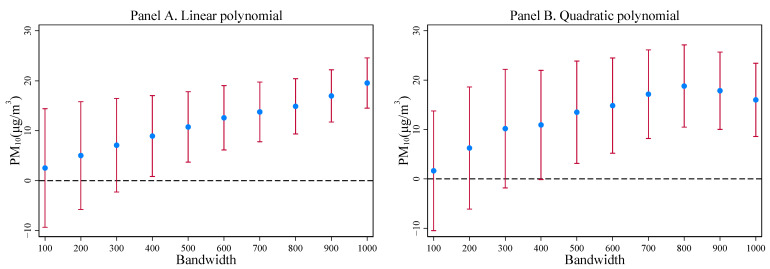
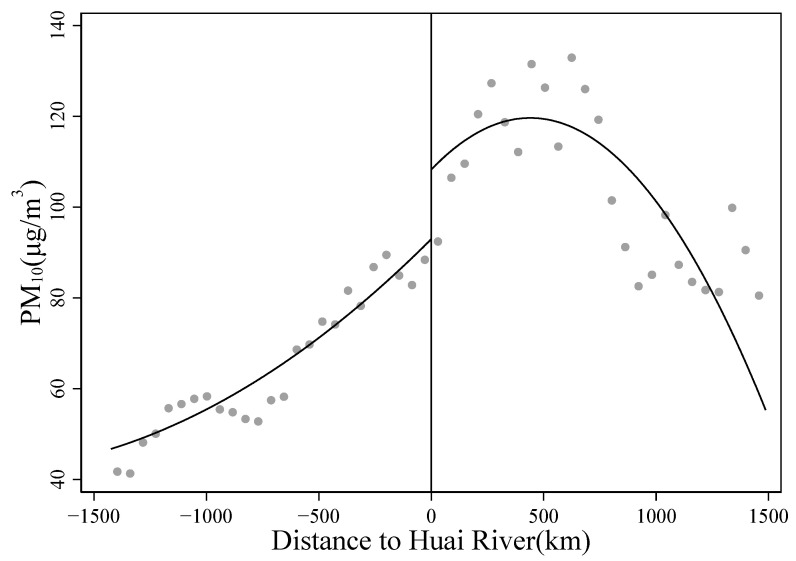
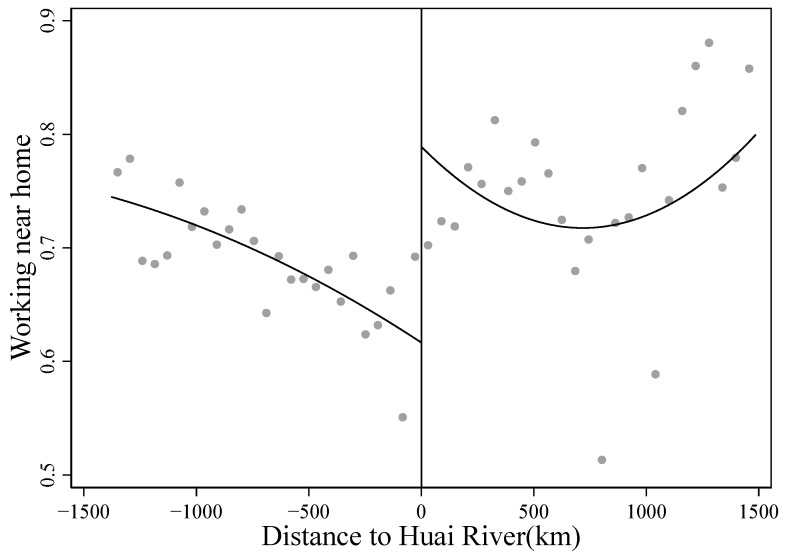
Understanding the impacts of air pollution on public health and individual behavior is crucial for optimal environmental policy design. Using 2015 census microdata in China, this paper examined the causal effect of air pollution on working place choice. The research design relies on a regression discontinuity design based on China's Huai River Policy. The discontinuity in air pollution caused by the Huai River Policy provides a natural experiment to estimate the impact of air pollution. The results show that air pollution significantly increases the possibility of individuals working near home. The positive effect of air pollution on working near home is more significant for women, the elderly, urban individuals and those individuals working in secondary and tertiary industries. This study improves our understanding of the health effects and avoidance behavior associated with environmental hazards, discusses the negative impact of air pollution on labor mobility and mismatch by making individuals work nearby, and emphasizes that strengthening air pollution control should be a long-term policy.
Keywords: China; air pollution; avoidance behavior; public health; regression discontinuity design; workplace.
Conflict of interest statement
The authors declare no conflict of interest.
Figures
References
-
- Ebenstein A., Fan M., Greenstone M., He G., Yin P., Zhou M. Growth, pollution, and life expectancy: China from 1991–2012. Amer. Econ. Rev. 2015;105:226–231. doi: 10.1257/aer.p20151094. - DOI
-
- Lai W. Pesticide use and health outcomes: Evidence from agricultural water pollution in China. J. Environ. Econ. Manag. 2017;86:93–120. doi: 10.1016/j.jeem.2017.05.006. - DOI
Publication types
MeSH terms
Substances
LinkOut - more resources
Full Text Sources
Medical
