


Applications of Circulating Tumor Cells and Circulating Tumor DNA in Precision Oncology for Breast Cancers
- PMID: 35887191
- PMCID: PMC9315812
- DOI: 10.3390/ijms23147843
Applications of Circulating Tumor Cells and Circulating Tumor DNA in Precision Oncology for Breast Cancers
Abstract
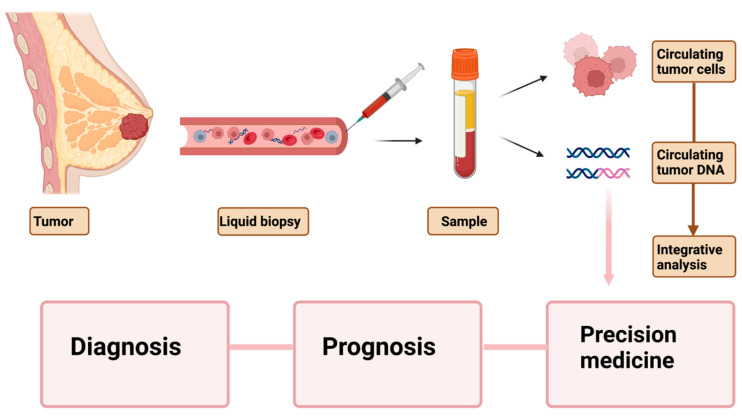
Liquid biopsies allow for the detection of cancer biomarkers such as circulating tumor cells (CTCs) and circulating tumor DNA (ctDNA). Elevated levels of these biomarkers during cancer treatment could potentially serve as indicators of cancer progression and shed light on the mechanisms of metastasis and therapy resistance. Thus, liquid biopsies serve as tools for cancer detection and monitoring through a simple, non-invasive blood draw, allowing multiple longitudinal sampling. These circulating markers have significant prospects for use in assessing patients' prognosis, monitoring response to therapy, and developing precision medicine. In addition, single-cell omics of these liquid biopsy markers can be potential tools for identifying tumor heterogeneity and plasticity as well as novel therapeutic targets. In this review, we focus on our current understanding of circulating tumor biomarkers, especially in breast cancer, and the scope of novel sequencing technologies and diagnostic methods for better prognostication and patient stratification to improve patient outcomes.
Keywords: circulating tumor DNA; circulating tumor cells; diagnosis; early stage breast cancer; late-stage breast cancer; liquid biopsy; next generation sequencing; screening.
Conflict of interest statement
The authors declare no conflict of interest.
Figures
References
-
- Bauer K.R., Brown M., Cress R.D., Parise C.A., Caggiano V. Descriptive analysis of estrogen receptor (ER)-negative, progesterone receptor (PR)-negative, and HER2-negative invasive breast cancer, the so-called triple-negative phenotype: A population-based study from the California cancer Registry. Cancer. 2007;109:1721–1728. doi: 10.1002/cncr.22618. - DOI - PubMed
Publication types
MeSH terms
Substances
LinkOut - more resources
Full Text Sources
Medical
