. 2022 Jul 20;14(14):2963.
doi: 10.3390/nu14142963.

Citicoline/Coenzyme Q10/Vitamin B3 Fixed Combination Exerts Synergistic Protective Effects on Neuronal Cells Exposed to Oxidative Stress

Affiliations

Citicoline/Coenzyme Q10/Vitamin B3 Fixed Combination Exerts Synergistic Protective Effects on Neuronal Cells Exposed to Oxidative Stress

Leonardo Mastropasqua et al. Nutrients. .

Abstract

Background: The present study aimed to investigate the rationale and efficacy of using a citicoline, coenzyme Q10 (CAVAQ10) and vitamin B3 fixed combination in combating inflammation and oxidation in neuronal cells exposed to oxidative stress.

Methods: HypoE22 cells and isolated hypothalamic specimens were selected as in vitro models to conduct the experiments. The efficacy of citicoline, CAVAQ10, and vitamin B3, with their fixed combination, were assayed after the exposure of hypothalamic cells to hydrogen peroxide (concentration range 1 nM-10 µM), in order to evaluate the biocompatibility of treatments. The activity of neuroprotective and pro-inflammatory factors, namely, brain-derived neurotrophic factor (BDNF), interleukin-6 (IL-6), and tumor necrosis factor-α (TNFα), involved in the neuronal cell damage in neurodegenerative diseases, were assayed in isolated hypothalamus.

Results: Neither citicoline, CAVAQ10, nor vitamin B3 significantly altered hypothalamic cell viability, thus suggesting the biocompatibility of single ingredients and fixed combination in the concentration range considered for the study. In the same condition, citicoline and CAVAQ10 were also effective in reducing the gene expression of monoaminoxidase-B, involved in dopamine degradation. However, only citicoline demonstrated an ability to reduce dopamine levels. Conversely, all compounds were effective in reducing the gene expression of IL-6, and TNFα, and in inducing the gene expression of BDNF, with the co-administration of citicoline/CAVAQ10/vitamin B3 being generally more effective than single ingredients.

Conclusions: The present findings support the beneficial and synergistic effects of citicoline, CAVAQ10, and vitamin B3 in fixed combination in reducing inflammation and oxidation, and in stimulating neurotrophin production in neuronal cells.

Keywords: associative therapy; citicoline; coenzyme Q10; neurodegenerative diseases; neuroinflammation; neuroprotection; niacin; oxidative stress.


Conflict of interest statement

The authors declare no conflict of interest.

Figures
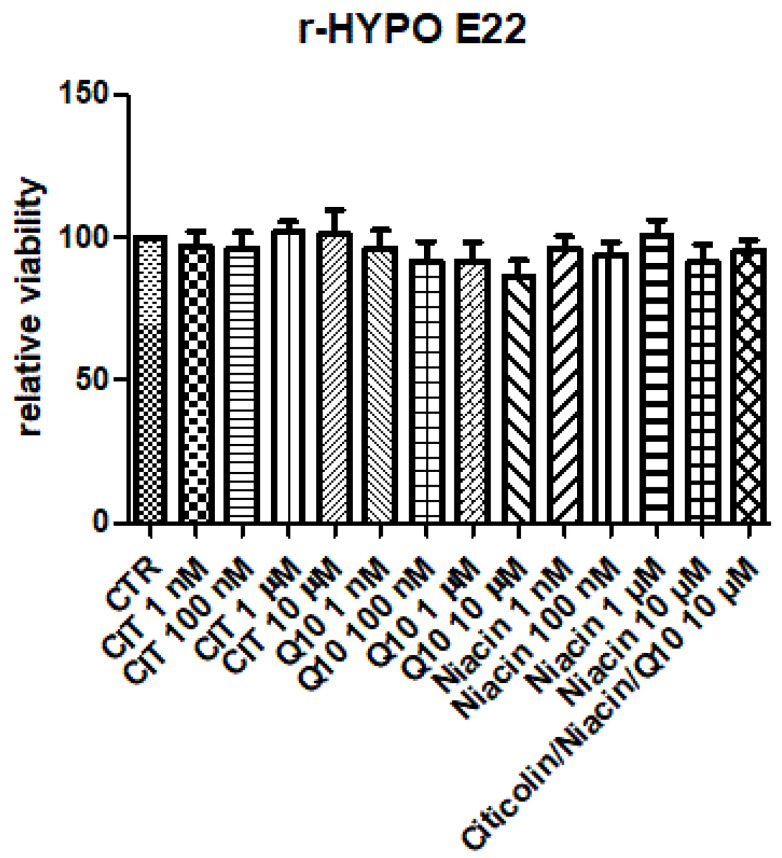
Figure 1
Figure 1
Null effect of citicoline, niacin (vitamin B3), coenzyme Q10 (1 nM–10 µM), and their fixed combination (10 µM) on hypothalamic HypoE22 viability. The cell viability was measured via MTT test. The null effects induced by single ingredients and their association indicated a complete biocompatibility in the selected in vitro model.
Figure 2
Figure 2
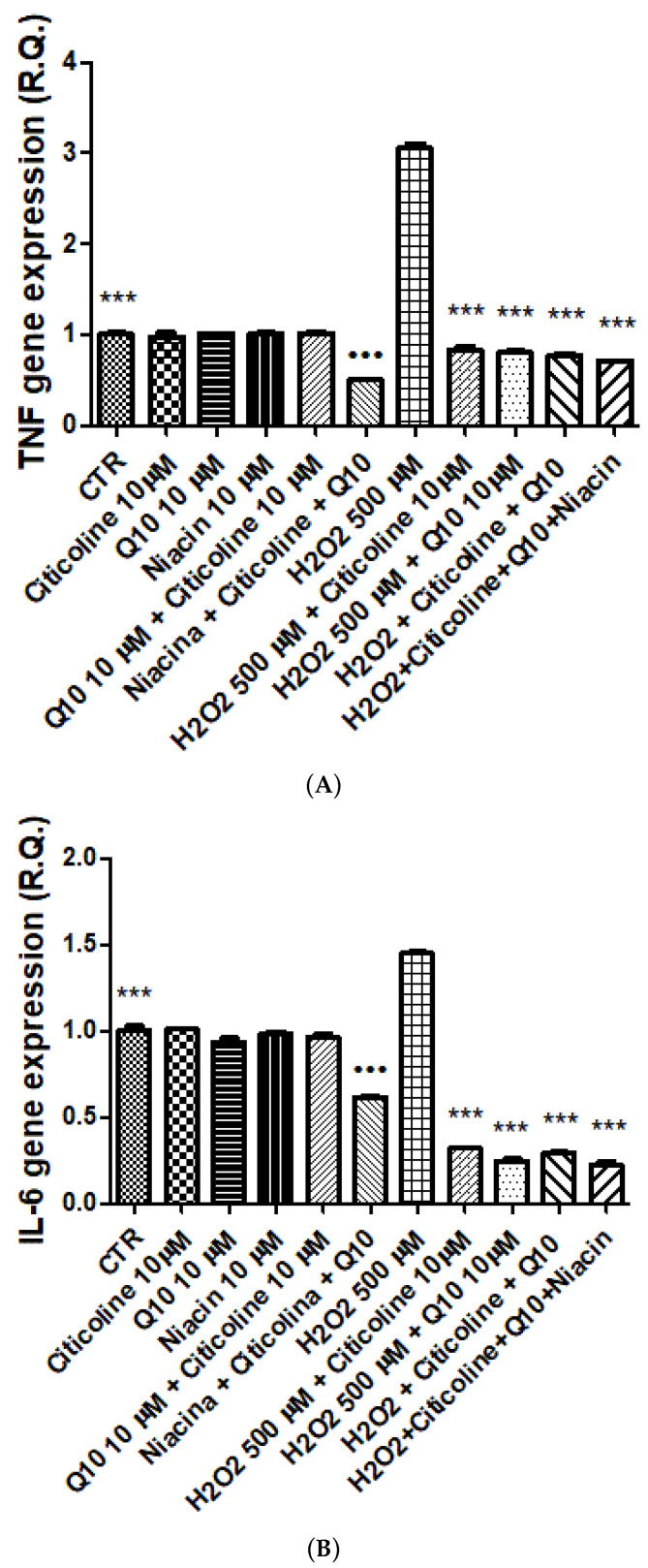
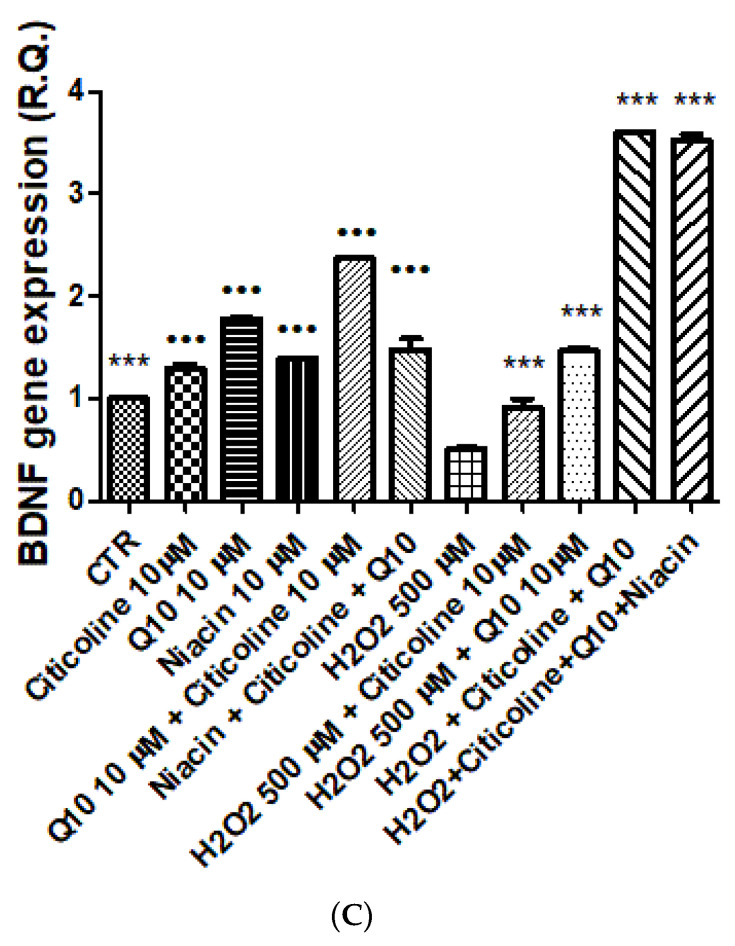
Effects induced by citicoline, niacin (vitamin B3), and coenzyme Q10 and the fixed combination on tumor necrosis factor-α (TNFα) (A), interleukin-6 (IL-6) (B), and brain-derived neurotrophic factor (BDNF) (C) gene expression, in isolated hypothalamic specimens exposed to hydrogen peroxide. ANOVA, p < 0.0001; *** p < 0.001 vs. control (CTR) group, p <0.001 vs. H2O2. The concomitant stimulation of BDNF gene expression and the reduced gene expression of both IL-6 and TNFα indicate neuroprotective properties by the single ingredients and their association. The latter is more effective in stimulating BDNF gene expression, compared with the single ingredients.
Figure 2
Figure 2
Effects induced by citicoline, niacin (vitamin B3), and coenzyme Q10 and the fixed combination on tumor necrosis factor-α (TNFα) (A), interleukin-6 (IL-6) (B), and brain-derived neurotrophic factor (BDNF) (C) gene expression, in isolated hypothalamic specimens exposed to hydrogen peroxide. ANOVA, p < 0.0001; *** p < 0.001 vs. control (CTR) group, p <0.001 vs. H2O2. The concomitant stimulation of BDNF gene expression and the reduced gene expression of both IL-6 and TNFα indicate neuroprotective properties by the single ingredients and their association. The latter is more effective in stimulating BDNF gene expression, compared with the single ingredients.
Figure 3
Figure 3
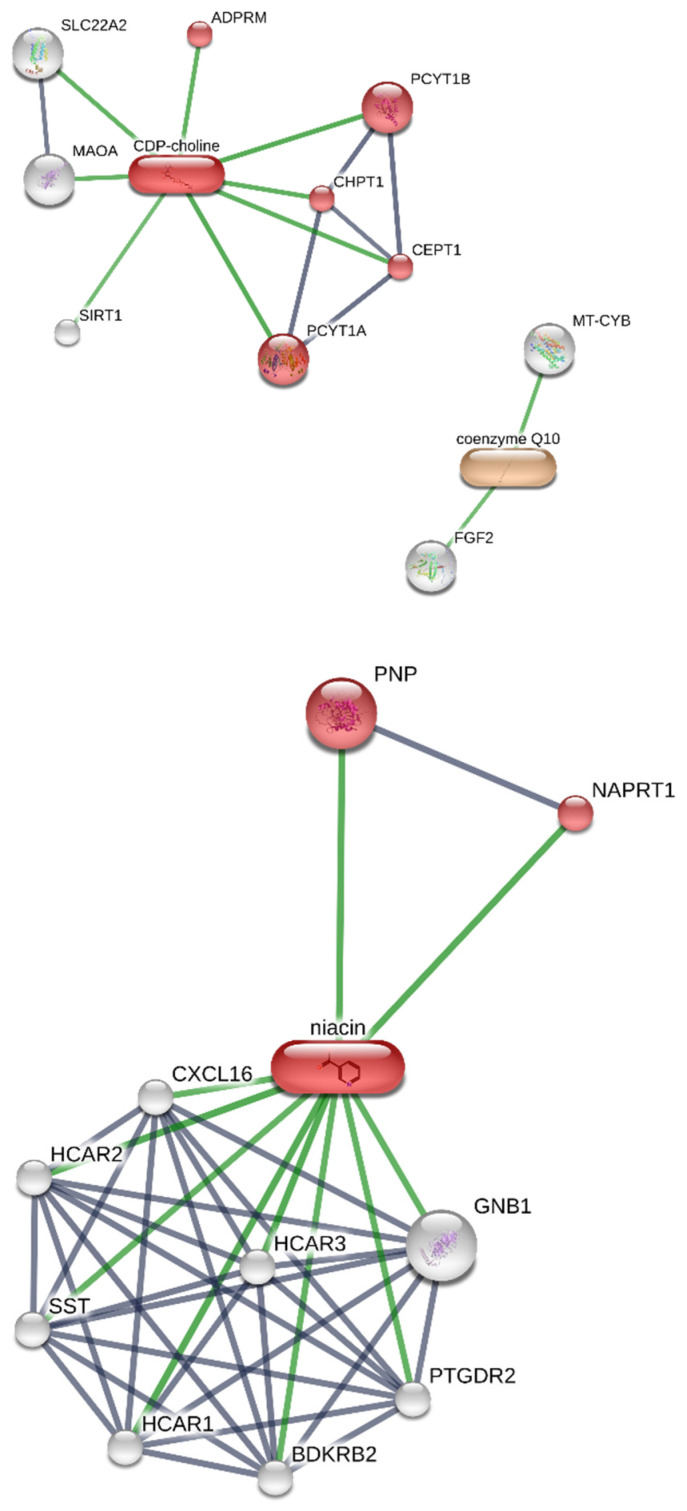
Results of the components-targets analysis conducted via the platform STITCH. The results suggested the capability of citicoline to interact with monoamine oxidase A (MAO-A). Additionally, citicoline was predicted to modulate dopamine uptake, through interaction with the neurotransmitter carrier (SLC22A2), and through phosphatidylcholine synthesis, in which it interacts with phosphate cytidylyltransferases (PCYT1B and PCYT1A). On the other hand, CAVAQ10 was predicted to interact with cytochrome b (MT-CYB), involved in the ATP biosynthesis, and fibroblast growth factor-2 (FGF2).

References

    1. Kritsilis M., Rizou V.S., Koutsoudaki P.N., Evangelou K., Gorgoulis V.G., Papadopoulos D. Ageing, Cellular Senescence and Neurodegenerative Disease. Int. J. Mol. Sci. 2018;19:2937. doi: 10.3390/ijms19102937. - DOI - PMC - PubMed
    1. Vajda F.J. Neuroprotection and neurodegenerative disease. J. Clin. Neurosci. 2002;9:4–8. doi: 10.1054/jocn.2001.1027. - DOI - PubMed
    1. Grieb P. Neuroprotective properties of citicoline: Facts, doubts and unresolved issues. CNS Drugs. 2014;28:185–193. doi: 10.1007/s40263-014-0144-8. - DOI - PMC - PubMed
    1. Yang X., Zhang Y., Xu H., Luo X., Yu J., Liu J., Chang R.C. Neuroprotection of Coenzyme Q10 in Neurodegenerative Diseases. Curr. Top Med. Chem. 2016;16:858–866. doi: 10.2174/1568026615666150827095252. - DOI - PubMed
    1. Faiq M.A., Wollstein G., Schuman J.S., Chan K.C. Cholinergic nervous system and glaucoma: From basic science to clinical applications. Prog. Retin. Eye Res. 2019;72:1007–1067. doi: 10.1016/j.preteyeres.2019.06.003. - DOI - PMC - PubMed

MeSH terms

LinkOut - more resources