


Bone Tissue Engineering in the Treatment of Bone Defects
- PMID: 35890177
- PMCID: PMC9324138
- DOI: 10.3390/ph15070879
Bone Tissue Engineering in the Treatment of Bone Defects
Abstract
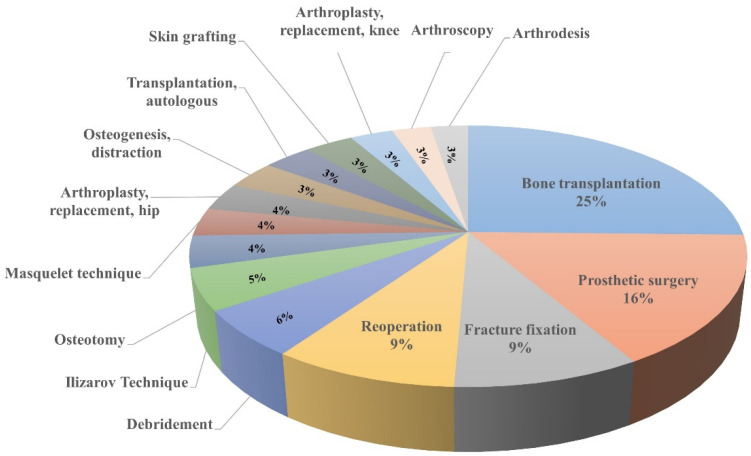
Bones play an important role in maintaining exercise and protecting organs. Bone defect, as a common orthopedic disease in clinics, can cause tremendous damage with long treatment cycles. Therefore, the treatment of bone defect remains as one of the main challenges in clinical practice. Today, with increased incidence of bone disease in the aging population, demand for bone repair material is high. At present, the method of clinical treatment for bone defects including non-invasive therapy and invasive therapy. Surgical treatment is the most effective way to treat bone defects, such as using bone grafts, Masquelet technique, Ilizarov technique etc. In recent years, the rapid development of tissue engineering technology provides a new treatment strategy for bone repair. This review paper introduces the current situation and challenges of clinical treatment of bone defect repair in detail. The advantages and disadvantages of bone tissue engineering scaffolds are comprehensively discussed from the aspect of material, preparation technology, and function of bone tissue engineering scaffolds. This paper also summarizes the 3D printing technology based on computer technology, aiming at designing personalized artificial scaffolds that can accurately fit bone defects.
Keywords: 3D printing; biomaterials; bone defect; scaffolds; tissue engineering; tissue regeneration.
Conflict of interest statement
There are no conflict of interest to declare.
Figures
References
Publication types
LinkOut - more resources
Full Text Sources
