


Trans-Anethole Alleviates Trimethyltin Chloride-Induced Impairments in Long-Term Potentiation
- PMID: 35890317
- PMCID: PMC9320999
- DOI: 10.3390/pharmaceutics14071422
Trans-Anethole Alleviates Trimethyltin Chloride-Induced Impairments in Long-Term Potentiation
Abstract
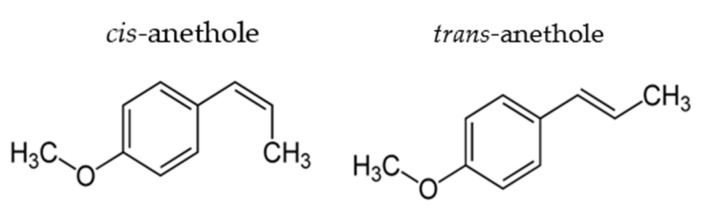
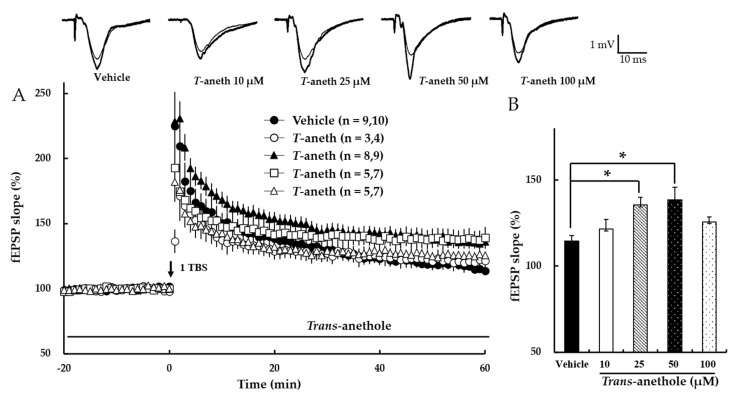
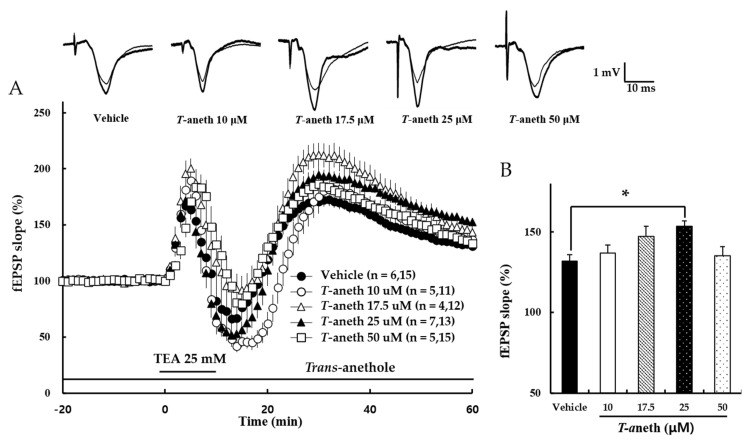
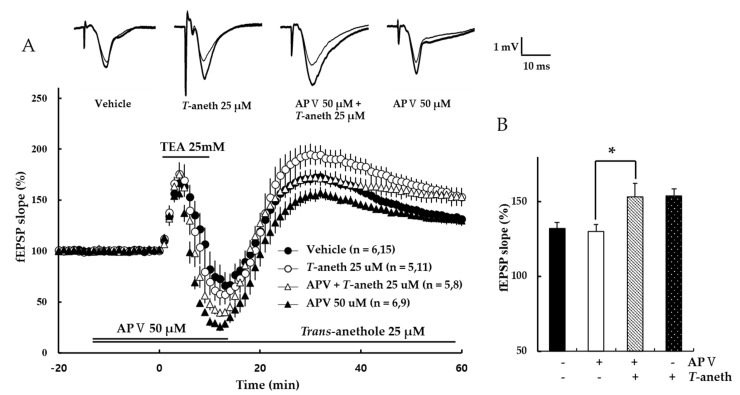
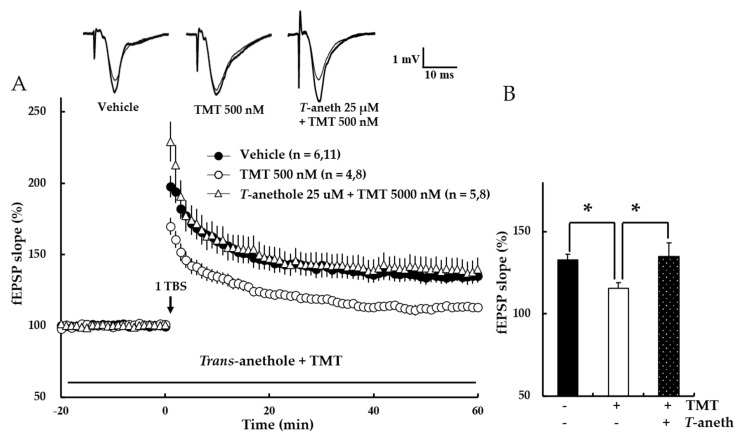
Trans-anethole is an aromatic compound that has been studied for its anti-inflammation, anticonvulsant, antinociceptive, and anticancer effects. A recent report found that trans-anethole exerted neuroprotective effects on the brain via multiple pathways. Since noxious stimuli may both induce neuronal cell injury and affect synaptic functions (e.g., synaptic transmission or plasticity), it is important to understand whether the neuroprotective effect of trans-anethole extends to synaptic plasticity. Here, the effects of trimethyltin (TMT), which is a neurotoxic organotin compound, was investigated using the field recording method on hippocampal slice of mice. The influence of trans-anethole on long-term potentiation (LTP) was also studied for both NMDA receptor-dependent and NMDA receptor-independent cases. The action of trans-anethole on TMT-induced LTP impairment was examined, too. These results revealed that trans-anethole enhances NMDA receptor-dependent and -independent LTP and alleviates TMT-induced LTP impairment. These results suggest that trans-anethole modulates hippocampal LTP induction, prompting us to speculate that it may be helpful for improving cognitive impairment arising from neurodegenerative diseases, including Alzheimer's disease.
Keywords: hippocampus; long-term potentiation (LTP); synaptic plasticity; trans-anethole; trimethyltin chloride.
Conflict of interest statement
The authors declare no conflict of interest.
Figures


References
-
- Vendramin V., Pesce A., Vincenzi S. Anethole Stability in Aniseed Spirits: Storage Condition Repercussions on Commercial Products. Beverages. 2021;7:73. doi: 10.3390/beverages7040073. - DOI
Grants and funding
LinkOut - more resources
Full Text Sources
