


The Use of Carbohydrate Biopolymers in Plant Protection against Pathogenic Fungi
- PMID: 35890629
- PMCID: PMC9322042
- DOI: 10.3390/polym14142854
The Use of Carbohydrate Biopolymers in Plant Protection against Pathogenic Fungi
Abstract
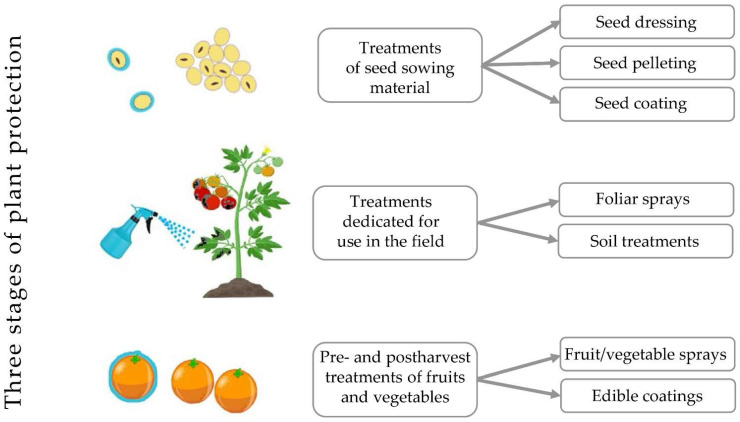
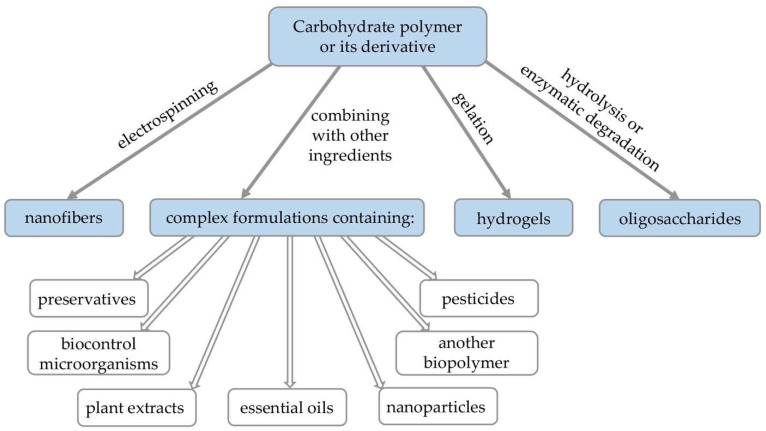
Fungal pathogens cause significant yield losses of many important crops worldwide. They are commonly controlled with fungicides which may have negative impact on human health and the environment. A more sustainable plant protection can be based on carbohydrate biopolymers because they are biodegradable and may act as antifungal compounds, effective elicitors or carriers of active ingredients. We reviewed recent applications of three common polysaccharides (chitosan, alginate and cellulose) to crop protection against pathogenic fungi. We distinguished treatments dedicated for seed sowing material, field applications and coating of harvested fruits and vegetables. All reviewed biopolymers were used in the three types of treatments, therefore they proved to be versatile resources for development of plant protection products. Antifungal activity of the obtained polymer formulations and coatings is often enhanced by addition of biocontrol microorganisms, preservatives, plant extracts and essential oils. Carbohydrate polymers can also be used for controlled-release of pesticides. Rapid development of nanotechnology resulted in creating new promising methods of crop protection using nanoparticles, nano-/micro-carriers and electrospun nanofibers. To summarize this review we outline advantages and disadvantages of using carbohydrate biopolymers in plant protection.
Keywords: antifungal coatings; edible coatings; field applications; phytopathogenic fungi; plant protection; polysaccharides; post-harvest treatments; pre-harvest treatments; seed coating; seed treatments.
Conflict of interest statement
The authors declare no conflict of interest.
Figures
References
-
- Russell P.E. A century of fungicide evolution. J. Agric. Sci. 2005;143:11–25. doi: 10.1017/S0021859605004971. - DOI
Publication types
LinkOut - more resources
Full Text Sources
