Review
. 2022 Jul 12;22(14):5200.
doi: 10.3390/s22145200.

Towards Multiplexed and Multimodal Biosensor Platforms in Real-Time Monitoring of Metabolic Disorders

Affiliations
Review

Towards Multiplexed and Multimodal Biosensor Platforms in Real-Time Monitoring of Metabolic Disorders

Sung Sik Chu et al. Sensors (Basel). .

Abstract

Metabolic syndrome (MS) is a cluster of conditions that increases the probability of heart disease, stroke, and diabetes, and is very common worldwide. While the exact cause of MS has yet to be understood, there is evidence indicating the relationship between MS and the dysregulation of the immune system. The resultant biomarkers that are expressed in the process are gaining relevance in the early detection of related MS. However, sensing only a single analyte has its limitations because one analyte can be involved with various conditions. Thus, for MS, which generally results from the co-existence of multiple complications, a multi-analyte sensing platform is necessary for precise diagnosis. In this review, we summarize various types of biomarkers related to MS and the non-invasively accessible biofluids that are available for sensing. Then two types of widely used sensing platform, the electrochemical and optical, are discussed in terms of multimodal biosensing, figure-of-merit (FOM), sensitivity, and specificity for early diagnosis of MS. This provides a thorough insight into the current status of the available platforms and how the electrochemical and optical modalities can complement each other for a more reliable sensing platform for MS.

Keywords: adipokines; cardiovascular disease; diabetes; electrochemical sensor; inflammation; metabolic syndrome; multiplexed sensor; obesity; optical sensor; point-of-care.


Conflict of interest statement

The authors declare no conflict of interest.

Figures
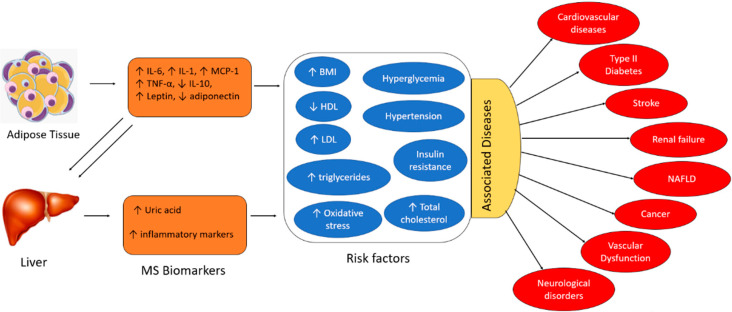
Figure 1
Figure 1
Interaction of adipokines and inflammatory biomarkers that contribute to the development of metabolic syndrome and its associated risk factors and diseases (HDL: high-density lipoprotein, LDL: low-density lipoprotein, NAFLD: non-alcoholic fatty liver disease, BMI: body mass index).
Figure 2
Figure 2
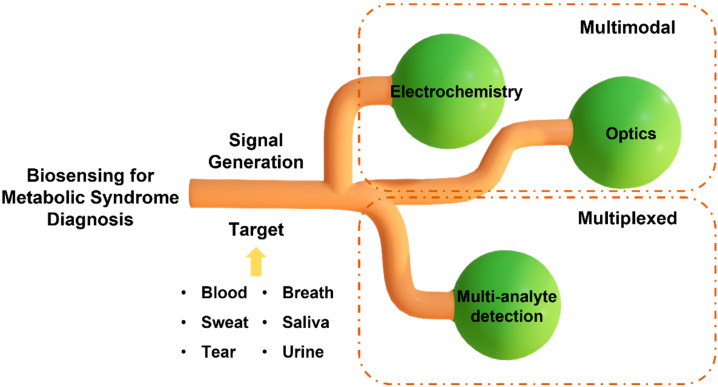
Schematic illustration of multiplexed and multimodal biosensing for diagnosis of metabolic syndrome.
Figure 3
Figure 3
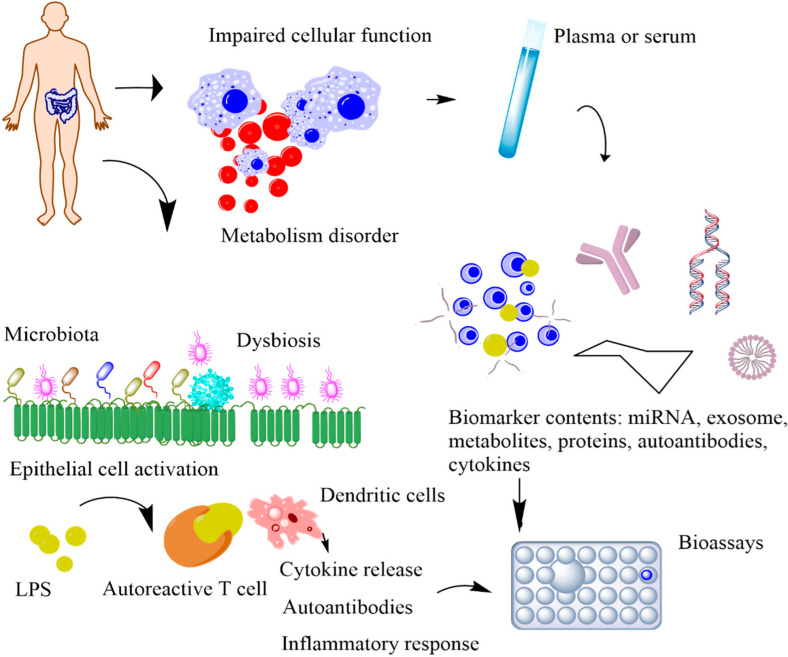
Schematic representation of the metabolic biomarkers released by impaired cellular functions and immune-gut microbiota interactions. In impaired cellular function, released biomarkers include exome, miRNA, cellular components, and antibodies. In immune–microbiome interactions, the intestinal dysbiosis and the increased bacterial lipopolysaccharides (LPS) trigger the autoimmune response, causing disease onset.
Figure 4
Figure 4
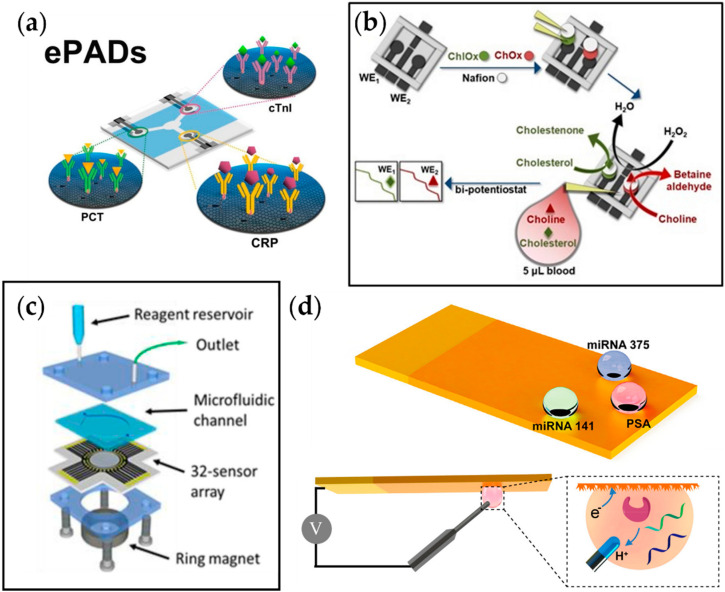
Examples of multiplexed electrochemical sensors for metabolic diseases. (a) Multiplexed ePAD for cTnI, PCT, and CRP detection [106]. (b) Fabrication process of the 3D printed biosensor for amperometric detection of cholesterol and choline [107]. (c) A 32-sensor array with microwells with a microfluidic chamber for simultaneous detection of prostate cancer biomarker proteins [109]. (d) Fabrication process of superwettable electrochemical microchip and schematic of electrochemical detection of analyte in droplets formed on the sensor [110].
Figure 5
Figure 5
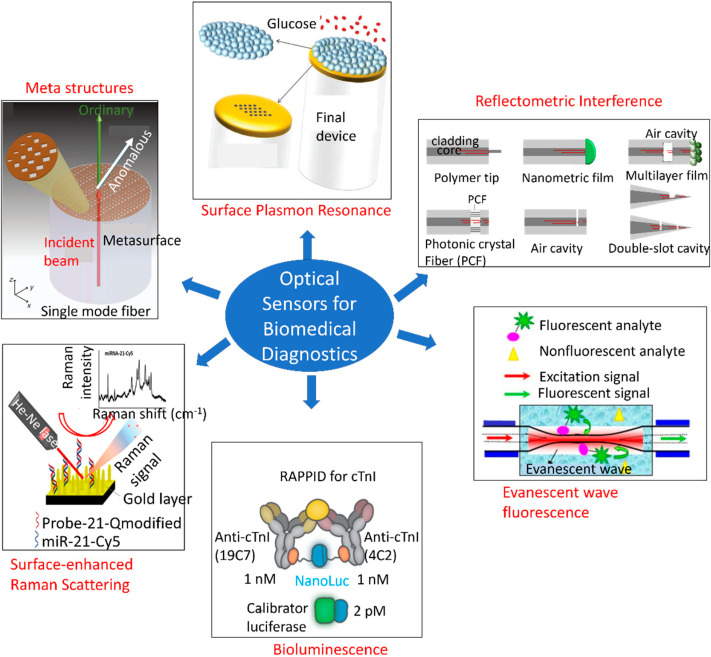
Overview of different types of optical sensing mechanisms based on the optical phenomenon arising from receptor–analyte interactions. This overview shows meta-structures, surface plasmon resonance, reflectometric interference [126], evanescent wave fluorescence [127], bioluminescence [128], and surface-enhanced Raman scattering (SERS) [129]. Reproduced under the terms and conditions of the Creative Commons CC BY license.

References

    1. Lima L.F., Braga V.D.A., Silva M.E.S.D.F., Cruz J.D.C., Santos S.H.S., Monteiro M.M.D.O., Balarini C.D.M. Adipokines, diabetes and atherosclerosis: An inflammatory association. Front. Physiol. 2015;6:304. doi: 10.3389/fphys.2015.00304. - DOI - PMC - PubMed
    1. Mendrick D.L., Diehl A.M., Topor L.S., Dietert R.R., Will Y., La Merrill A.M., Bouret S., Varma V., Hastings K.L., Schug T.T., et al. Metabolic Syndrome and Associated Diseases: From the Bench to the Clinic. Toxicol. Sci. 2018;162:36–42. doi: 10.1093/toxsci/kfx233. - DOI - PMC - PubMed
    1. Srikanthan K., Feyh A., Visweshwar H., Shapiro J.I., Sodhi K. Systematic Review of Metabolic Syndrome Biomarkers: A Panel for Early Detection, Management, and Risk Stratification in the West Virginian Population. Int. J. Med. Sci. 2016;13:25–38. doi: 10.7150/ijms.13800. - DOI - PMC - PubMed
    1. Stefan N., Birkenfeld A.L., Schulze M.B. Global pandemics interconnected–obesity, impaired metabolic health and COVID-19. Nat. Rev. Endocrinol. 2021;17:135–149. doi: 10.1038/s41574-020-00462-1. - DOI - PubMed
    1. Han T.S., Lean M.E. A clinical perspective of obesity, metabolic syndrome and cardiovascular disease. JRSM Cardiovasc. Dis. 2016;5:2048004016633371. doi: 10.1177/2048004016633371. - DOI - PMC - PubMed