. 2022 Jul 12;22(14):5211.
doi: 10.3390/s22145211.

Classification Predictive Model for Air Leak Detection in Endoworm Enteroscopy System

Affiliations

Classification Predictive Model for Air Leak Detection in Endoworm Enteroscopy System

Roberto Zazo-Manzaneque et al. Sensors (Basel). .

Abstract

Current enteroscopy techniques present complications that are intended to be improved with the development of a new semi-automatic device called Endoworm. It consists of two different types of inflatable cavities. For its correct operation, it is essential to detect in real time if the inflatable cavities are malfunctioning (presence of air leakage). Two classification predictive models were obtained, one for each cavity typology, which must discern between the "Right" or "Leak" states. The cavity pressure signals were digitally processed, from which a set of features were extracted and selected. The predictive models were obtained from the features, and a prior classification of the signals between the two possible states was used as input to different supervised machine learning algorithms. The accuracy obtained from the classification predictive model for cavities of the balloon-type was 99.62%, while that of the bellows-type was 100%, representing an encouraging result. Once the models are validated with data generated in animal model tests and subsequently in exploratory clinical tests, their incorporation in the software device will ensure patient safety during small bowel exploration.

Keywords: classification predictive models; digital signal processing; enteroscopy; feature extraction; inflatable cavities; medical device; real-time detection system; soft robot.


Conflict of interest statement

The authors declare no conflict of interest.

Figures
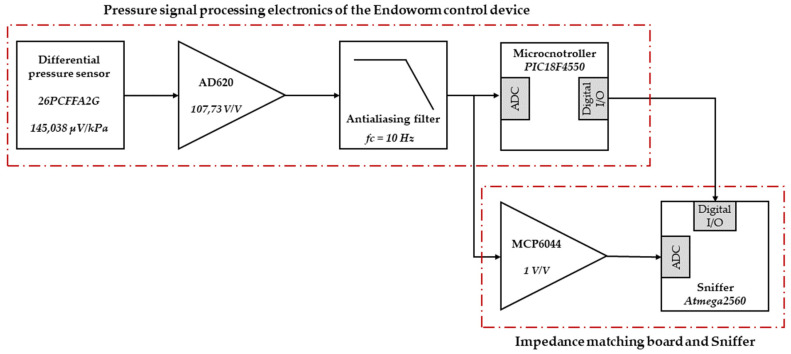
Figure 1
Figure 1
Diagram of the circuit for adapting the 26PCFFA2G sensor output signal to the ADC input of the Endoworm microcontroller (PIC18F4550), as well as the capture of the pressure signals, through the impedance matching board, and the main digital control signals.
Figure 2
Figure 2
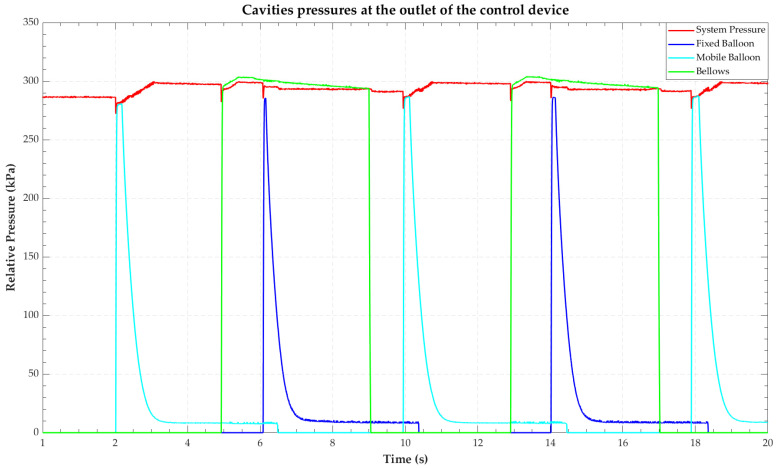
Temporal representation of the four pressures recorded by the Sniffer for any given test: system pressure (red), fixed balloon (dark blue), mobile balloon (blue), and bellows (green).
Figure 3
Figure 3
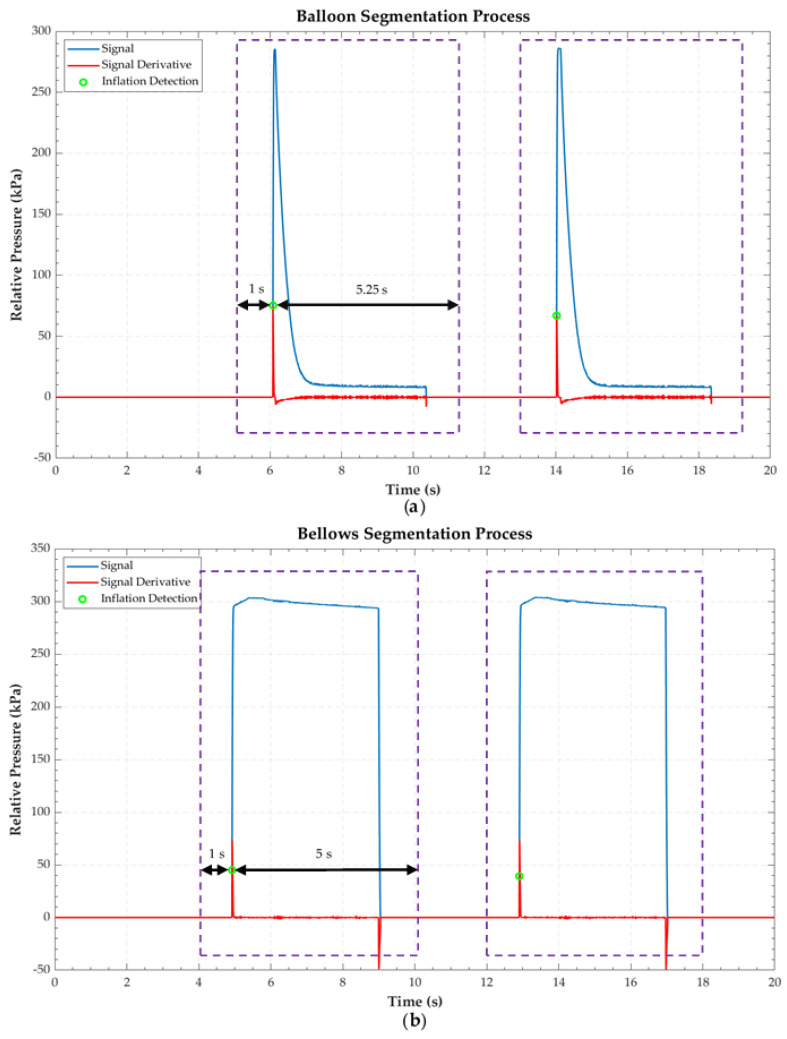
Graphical overview of the segmentation process of the two different Endoworm cavities: (a) balloon-type and (b) bellows-type. Dashed purple linear windows correspond to the segmented signal.
Figure 4
Figure 4
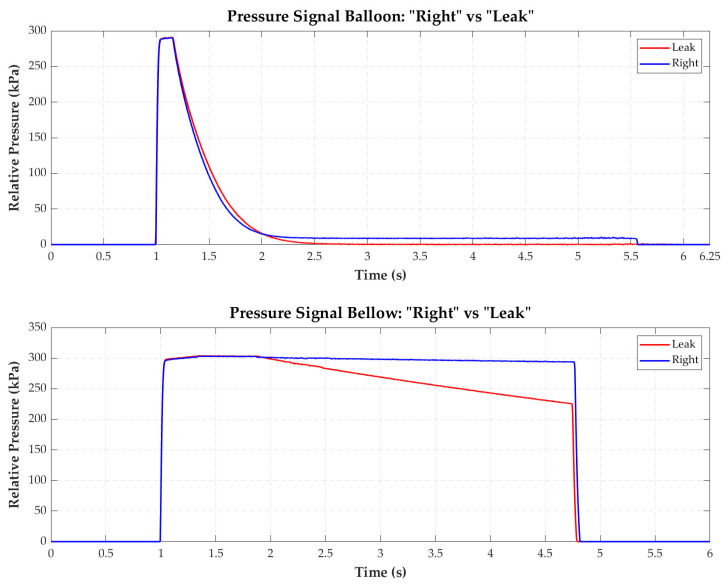
Representation of typical signals of the class “Right” (blue) and “Leak” (red) for the cavities balloon (a) and bellows (b).
Figure 5
Figure 5
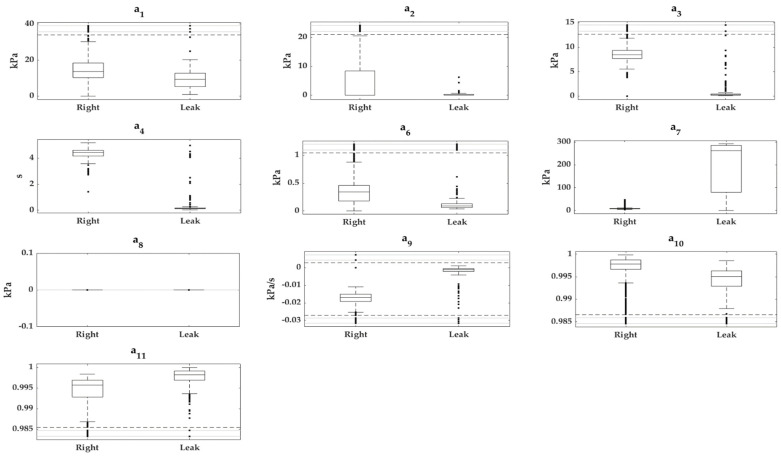
Box-and-whisker plots of quantitative features extracted (a1a4 and a6a11) from balloon signals. The “Right” and “Leak” groups are represented for each feature; a5 and a12 are not presented due to their categorical nature. For additional information on the extracted features see Appendix A.
Figure 6
Figure 6
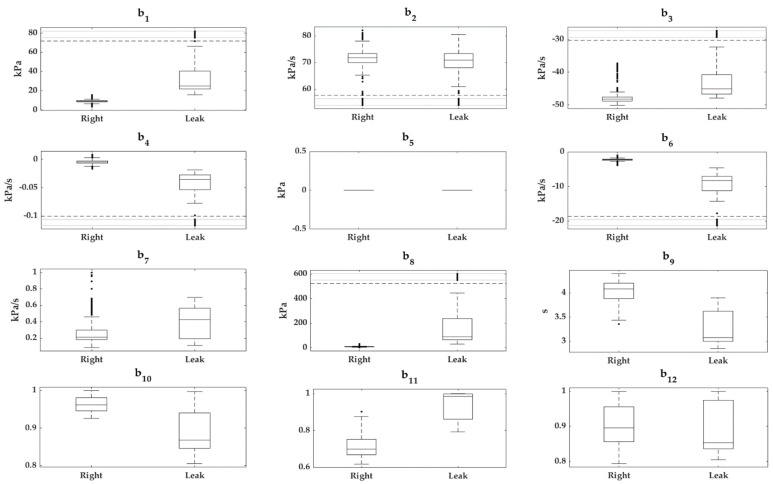
Box-and-whisker plots of quantitative features extracted (b1b12) from the bellows signals. The “Right” and “Leak” groups are represented for each feature; b13 is not presented due to its categorical nature. For additional information on the extracted features see Appendix A.
Figure 7
Figure 7
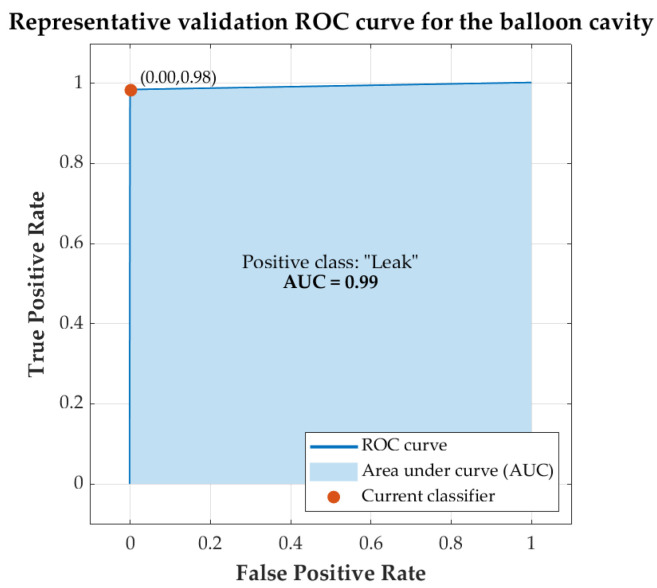
Representative validation ROC curve obtained for the balloon cavity model with median tree algorithm with input features a4, a6, and a7.
Figure 8
Figure 8
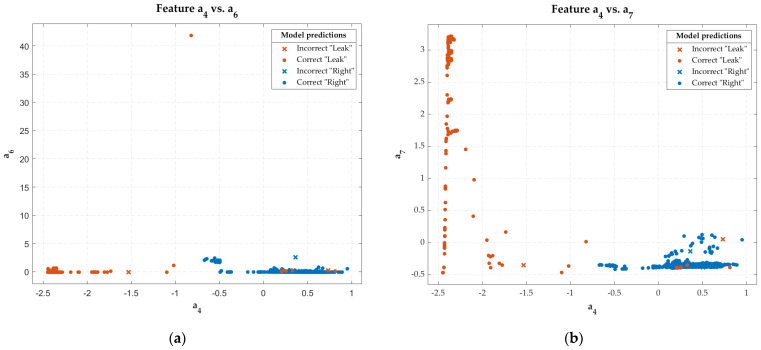
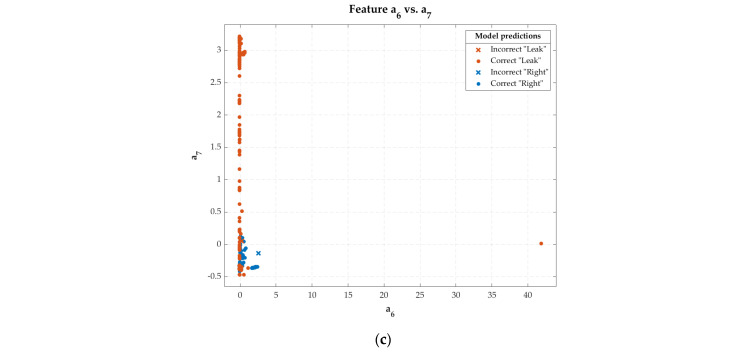
Scatter plots with the classification results of the predictive medium tree model with the input features a4, a6, and a7: scatter plot of feature a4 vs. a6 (a); scatter plot of feature a4 vs. a7 (b); scatter plot of feature a6 vs. a7 (c).
Figure 8
Figure 8
Scatter plots with the classification results of the predictive medium tree model with the input features a4, a6, and a7: scatter plot of feature a4 vs. a6 (a); scatter plot of feature a4 vs. a7 (b); scatter plot of feature a6 vs. a7 (c).
Figure 9
Figure 9
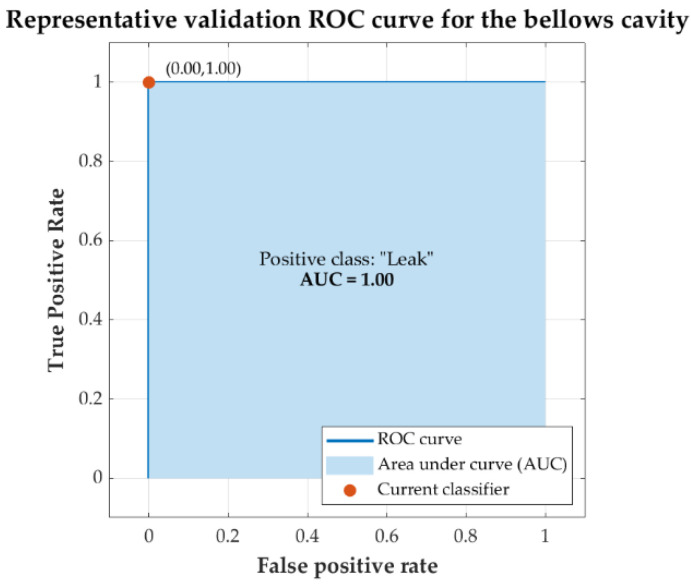
Representative validation ROC curve obtained for the bellows cavity model with logistic regression with input features b1, b4, and b6.
Figure 10
Figure 10
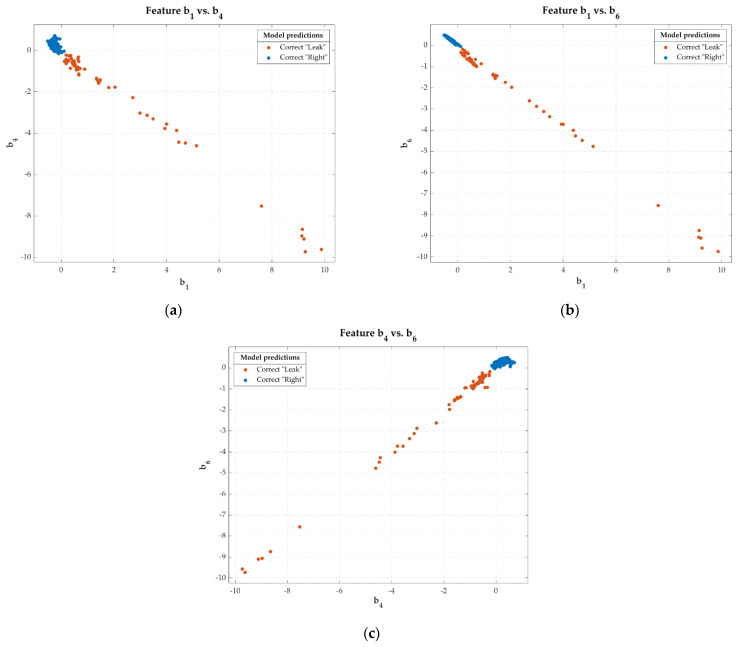
Scatter plots with the classification results of the predictive logistic regression model with the input features b1, b4, and b6: scatter plot of feature b1 vs. b4 (a); scatter plot of feature b1 vs. b6 (b); scatter plot of feature b4 vs. b6 (c).

References

    1. Tsujikawa T., Saitoh Y., Andoh A., Imaeda H., Hata K., Minematsu H., Senoh K., Hayafuji K., Ogawa A., Nakahara T., et al. Clinical impact of novel single balloon enteroscopy. J. Gastroenterol. Hepatol. 2007;22:A226. - PubMed
    1. Yamamoto H., Sekine Y., Sato Y., Higashizawa T., Miyata T., Iino S., Ido K., Sugano K. Total enteroscopy with a nonsurgical steerable double-balloon method. Gastrointest. Endosc. 2001;53:216–220. doi: 10.1067/mge.2001.112181. - DOI - PubMed
    1. Sunada K., Yamamoto H. Double-balloon endoscopy: Past, present, and future. J. Gastroenterol. 2019;44:1–12. doi: 10.1007/s00535-008-2292-4. - DOI - PubMed
    1. Akerman P.A., Haniff M. Spiral enteroscopy: Prime time or for the happy few? Best Pract. Res. Clin. Gastroenterol. 2012;26:293–301. doi: 10.1016/j.bpg.2012.03.008. - DOI - PubMed
    1. Lenz P., Domagk D. Double- vs. single-balloon vs. spiral enteroscopy. Best Pract. Res. Clin. Gastroenterol. 2012;26:303–313. doi: 10.1016/j.bpg.2012.01.021. - DOI - PubMed