


Predicting the Spread of SARS-CoV-2 in Italian Regions: The Calabria Case Study, February 2020-March 2022
- PMID: 35892732
- PMCID: PMC9326619
- DOI: 10.3390/diseases10030038
Predicting the Spread of SARS-CoV-2 in Italian Regions: The Calabria Case Study, February 2020-March 2022
Abstract
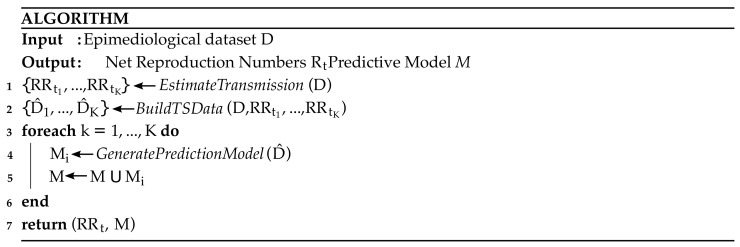
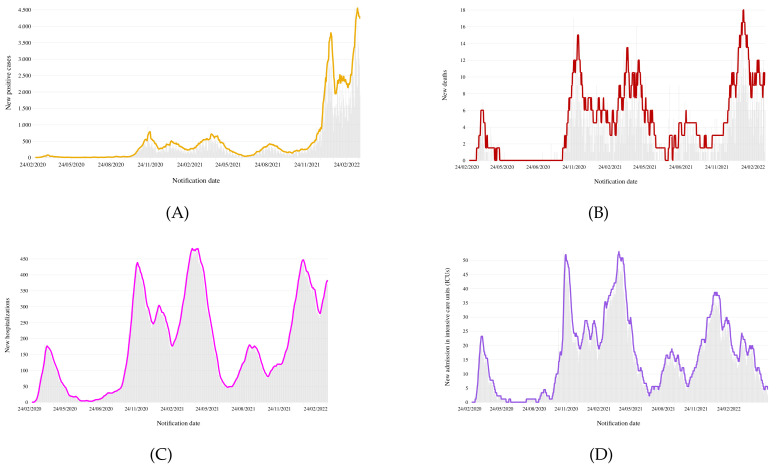
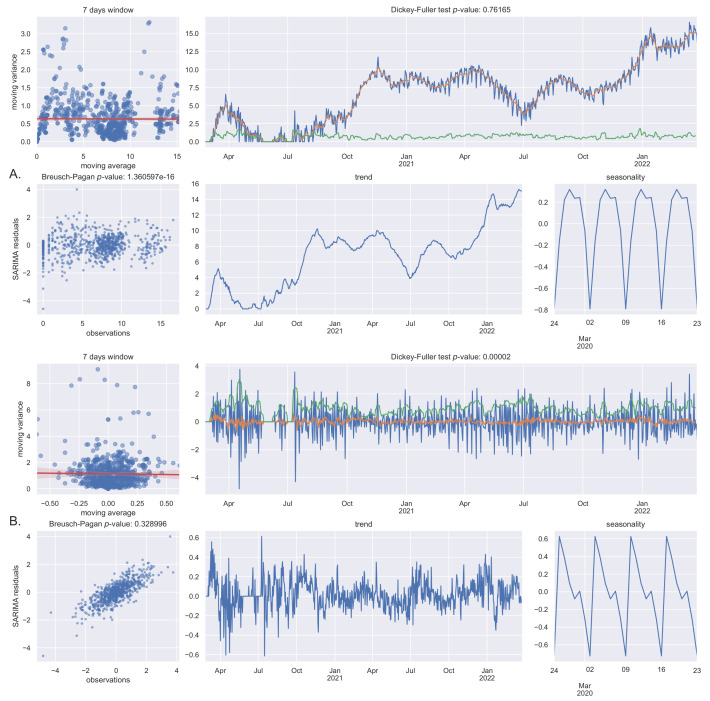
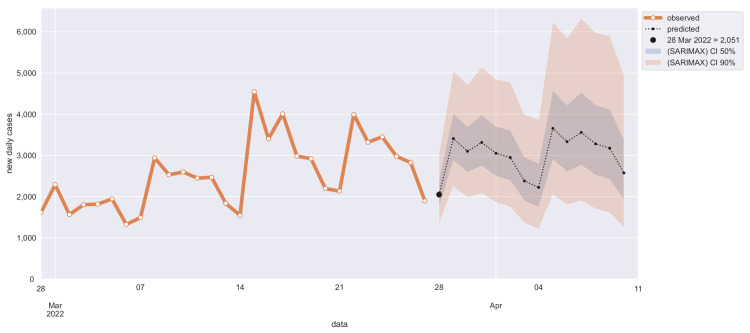
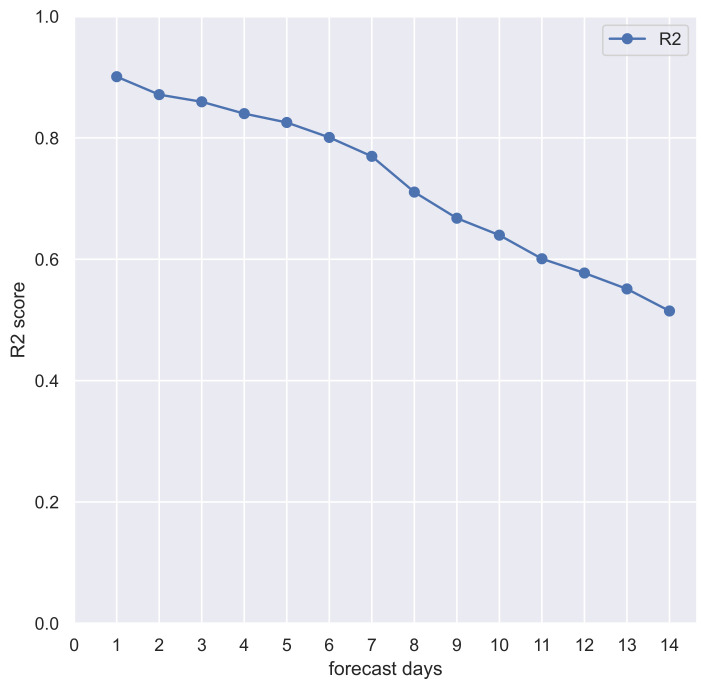
Despite the stunning speed with which highly effective and safe vaccines have been developed, the emergence of new variants of SARS-CoV-2 causes high rates of (re)infection, a major impact on health care services, and a slowdown to the socio-economic system. For COVID-19, accurate and timely forecasts are therefore essential to provide the opportunity to rapidly identify risk areas affected by the pandemic, reallocate the use of health resources, design countermeasures, and increase public awareness. This paper presents the design and implementation of an approach based on autoregressive models to reliably forecast the spread of COVID-19 in Italian regions. Starting from the database of the Italian Civil Protection Department (DPC), the experimental evaluation was performed on real-world data collected from February 2020 to March 2022, focusing on Calabria, a region of Southern Italy. This evaluation shows that the proposed approach achieves a good predictive power for out-of-sample predictions within one week (R-squared > 0.9 at 1 day, R-squared > 0.7 at 7 days), although it decreases with increasing forecasted days (R-squared > 0.5 at 14 days).
Keywords: COVID-19; Calabria; Italy; SARIMA; SARS-CoV-2; epidemiology; forecasting; time series regression models.
Conflict of interest statement
The authors declare no conflict of interest.
Figures

References
-
- Pneumonia of Unknown Cause—China. [(accessed on 22 March 2022)]. Available online: https://www.who.int/csr/don/05-january-2020-pneumonia-of-unkown-cause-ch...
-
- Listings of WHO’s Response to COVID-19. [(accessed on 20 March 2022)]. Available online: https://www.who.int/news-room/detail/29-06-2020-covidtimeline.
-
- Tracking SARS-CoV-2 Variants. [(accessed on 20 March 2022)]. Available online: https://www.who.int/en/activities/tracking-SARS-CoV-2-variants/
-
- Update on Omicron. [(accessed on 20 March 2022)]. Available online: https://www.who.int/news/item/28-11-2021-update-on-omicron.
-
- Statement on Omicron Sublineage, BA.2. [(accessed on 20 March 2022)]. Available online: https://www.who.int/news/item/22-02-2022-statement-on-omicron-sublineage....
LinkOut - more resources
Full Text Sources
Miscellaneous
