


Left Ventricular Remodeling after Myocardial Infarction: From Physiopathology to Treatment
- PMID: 35892913
- PMCID: PMC9332014
- DOI: 10.3390/life12081111
Left Ventricular Remodeling after Myocardial Infarction: From Physiopathology to Treatment
Abstract
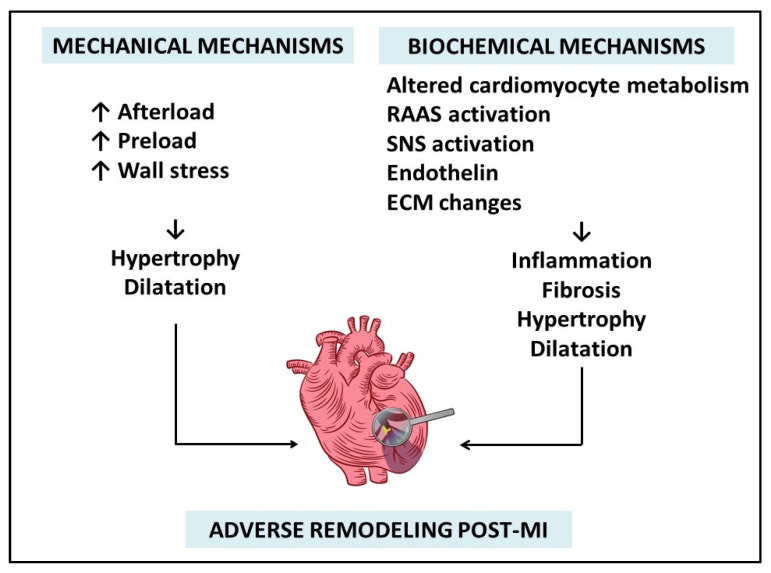
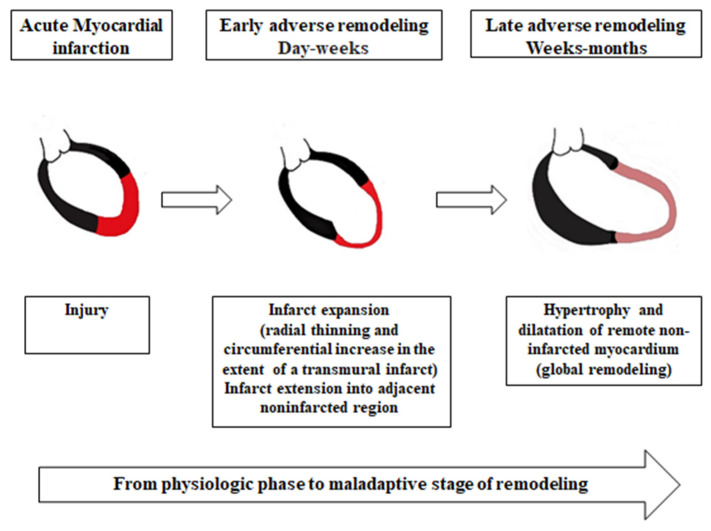
Myocardial infarction (MI) is the leading cause of death and morbidity worldwide, with an incidence relatively high in developed countries and rapidly growing in developing countries. The most common cause of MI is the rupture of an atherosclerotic plaque with subsequent thrombotic occlusion in the coronary circulation. This causes cardiomyocyte death and myocardial necrosis, with subsequent inflammation and fibrosis. Current therapies aim to restore coronary flow by thrombus dissolution with pharmaceutical treatment and/or intravascular stent implantation and to counteract neurohormonal activation. Despite these therapies, the injury caused by myocardial ischemia leads to left ventricular remodeling; this process involves changes in cardiac geometry, dimension and function and eventually progression to heart failure (HF). This review describes the pathophysiological mechanism that leads to cardiac remodeling and the therapeutic strategies with a role in slowing the progression of remodeling and improving cardiac structure and function.
Keywords: heart failure; inflammation; left ventricular remodeling; myocardial infarction; neurohormonal activation; wall stress.
Conflict of interest statement
The authors declare no conflict of interest.
Figures

References
-
- Masci P.G., Ganame J., Francone M., Desmet W., Lorenzoni V., Iacucci I., Barison A., Carbone I., Lombardi M., Agati L., et al. Relationship between location and size of myocardial infarction and their reciprocal influences on post-infarction left ventricular remodelling. Eur. Heart J. 2011;32:1640–1648. doi: 10.1093/eurheartj/ehr064. - DOI - PubMed
Publication types
LinkOut - more resources
Full Text Sources
Research Materials
Miscellaneous
