


Association between Cervical Microbiota and HPV: Could This Be the Key to Complete Cervical Cancer Eradication?
- PMID: 35892970
- PMCID: PMC9351688
- DOI: 10.3390/biology11081114
Association between Cervical Microbiota and HPV: Could This Be the Key to Complete Cervical Cancer Eradication?
Abstract
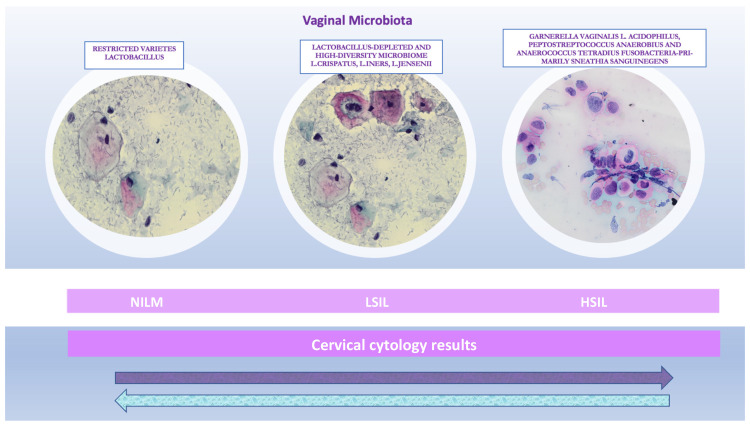
The heterogeneity of the cervico-vaginal microbiota can be appreciated in various conditions, both pathological and non-pathological, and can vary according to biological and environmental factors. Attempts are still in course to define the interaction and role of the various factors that constitute this community of commensals in immune protection, inflammatory processes, and the onset of precancerous lesions of the cervical epithelium. Despite the many studies on the relationship between microbiota, immunity, and HPV-related cervical tumors, further aspects still need to be probed. In this review article, we will examine the principal characteristics of microorganisms commonly found in cervico-vaginal specimens (i) the factors that notoriously condition the diversity and composition of microbiota, (ii) the role that some families of organisms may play in the onset of HPV-dysplastic lesions and in neoplastic progression, and (iii) possible diagnostic-therapeutic approaches.
Keywords: CIN; cervical cancer; cervical intraepithelial neoplasia; cervical microbiota; microbiota.
Conflict of interest statement
The authors declare no conflict of interest.
Figures
References
Publication types
Grants and funding
LinkOut - more resources
Full Text Sources
