. 2022 Jun 21;8(4):44.
doi: 10.3390/ncrna8040044.

LncRNA-Based Classification of Triple Negative Breast Cancer Revealed Inherent Tumor Heterogeneity and Vulnerabilities

Affiliations

LncRNA-Based Classification of Triple Negative Breast Cancer Revealed Inherent Tumor Heterogeneity and Vulnerabilities

Radhakrishnan Vishnubalaji et al. Noncoding RNA. .

Abstract

Triple negative breast cancer (TNBC) represents a diverse group of cancers based on their gene expression profiles. While the current mRNA-based classification of TNBC has contributed to our understanding of the heterogeneity of this disease, whether such heterogeneity can be resolved employing a long noncoding RNA (lncRNA) transcriptome has not been established thus far. Herein, we used iterative clustering and guide-gene selection (ICGS) and uniform manifold approximation and projection (UMAP) dimensionality reduction analysis on a large cohort of TNBC transcriptomic data (TNBC = 360, normal = 88) and classified TNBC into four main clusters: LINC00511-enriched, LINC00393-enriched, FIRRE-enriched, and normal tissue-like. Delving into associated gene expression profiles revealed remarkable differences in canonical, casual, upstream, and functional categories among different lncRNA-derived TNBC clusters, suggesting functional consequences for altered lncRNA expression. Correlation and survival analysis comparing mRNA- and lncRNA-based clustering revealed similarities and differences between the two classification approaches. To provide insight into the potential role of the identified lncRNAs in TNBC biology, CRISPR-Cas9 mediated LINC00511 promoter deletion reduced colony formation and enhanced the sensitivity of TNBC cells to paclitaxel, suggesting a role for LINC00511 in conferring tumorigenicity and resistance to therapy. Our data revealed a novel lncRNA-based classification of TNBC and suggested their potential utilization as disease biomarkers and therapeutic targets.

Keywords: CRISPR; Cas9; classification; lncRNA; triple negative breast cancer.


Conflict of interest statement

The authors declare no conflict of interest.

Figures
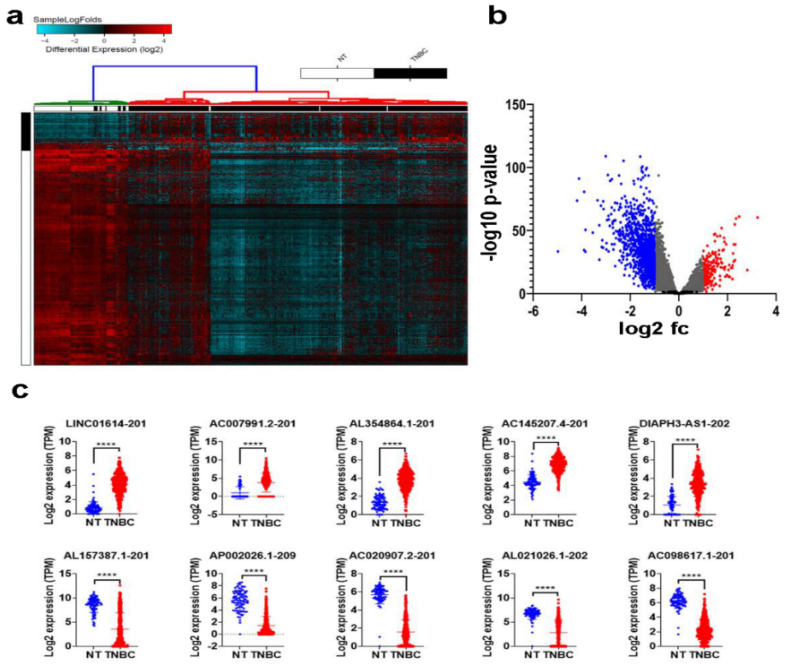
Figure 1
Figure 1
Differentially expressed lncRNAs in TNBC compared to normal breast tissue (NT). RNA-Seq data were aligned to the human geocode release v33, and the abundance of each lncRNA transcript was quantified. (a) Hierarchical clustering of TNBC (n = 360) compared to NT (n = 88). Each column represents one sample, and each row represents the lncRNA transcript. The expression level of each transcript (log2) is depicted according to the color scale. (b) Volcano plot depicting upregulated (red) and downregulated (blue) lncRNAs in TNBC compared to NT. (c) Scatter plot depicting the expression of the top 5 upregulated (upper panel) and downregulated (lower panel) lncRNA transcripts in TNBC compared to NT. **** p < 0.00001.
Figure 2
Figure 2
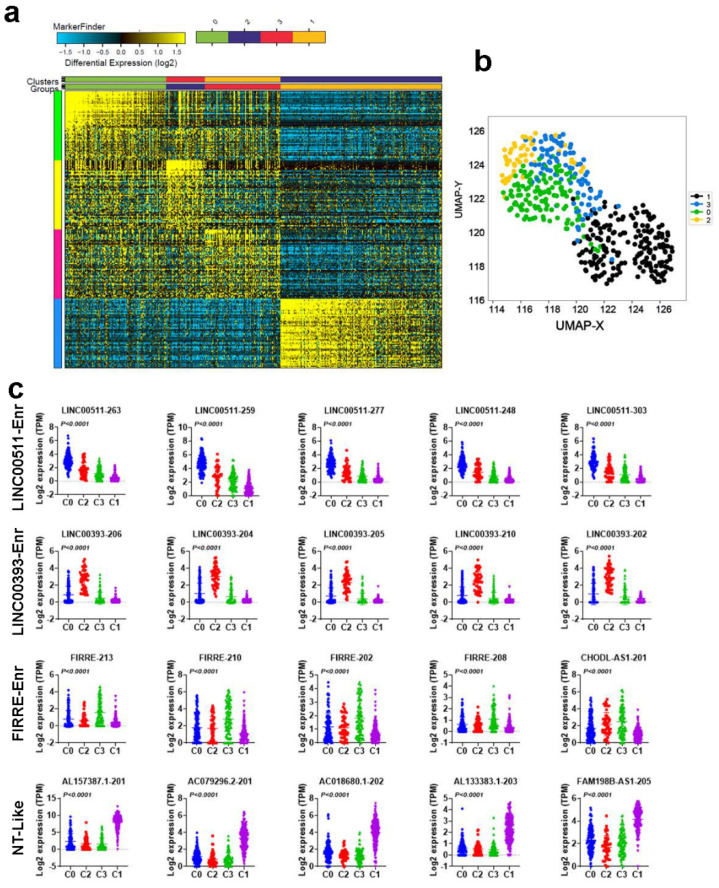
Molecular heterogeneity of TNBC employing lncRNA transcriptome. (a) Iterative clustering and guide-gene selection (ICGS) classification of TNBC and NT based on their lncRNA transcriptome, revealing four distinct clusters. (b) Uniform manifold approximation and projection (UMAP) dimensionality reduction analysis of TNBC and NT based on their lncRNA expression. (c) Scatter plot depicting the expression of the top 5 enriched lncRNA transcripts in each cluster (C0, C2, C3, and C1) in the same cohort.
Figure 3
Figure 3
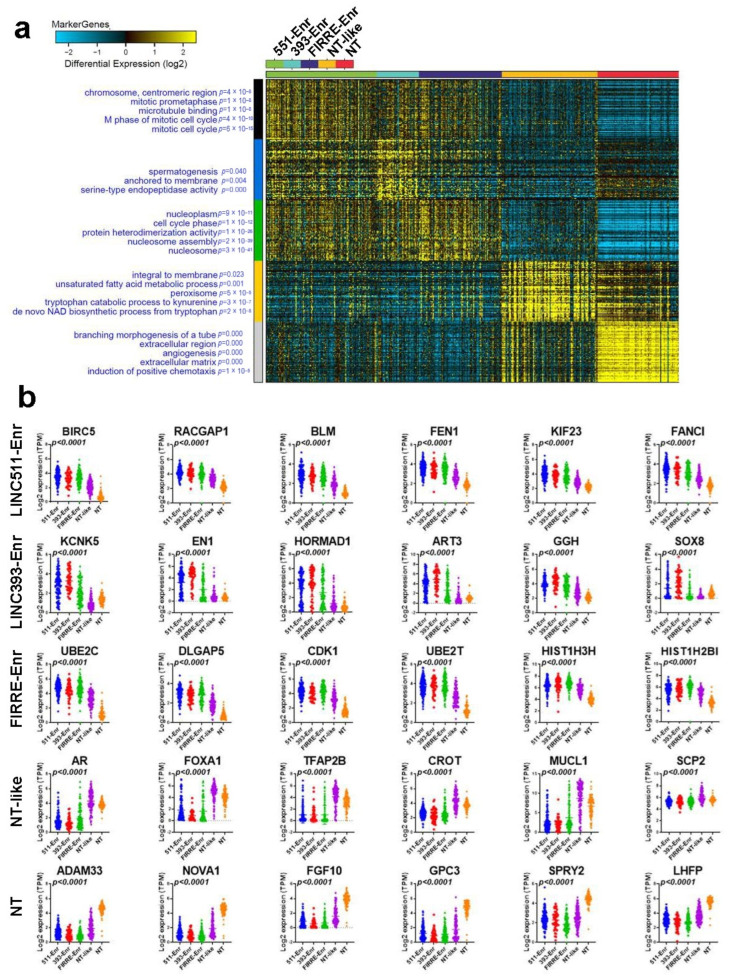
Marker finder analysis depicting gene and functional categories associated with the four lncRNA-based clusters. (a) Marker finder heatmap illustrating the expression and associated functional categories (left) in each cluster (LINC00551-Enr, LINC00393-Enr, FIRRE-Enr, NT-like, and NT). (b) Scatter plot depicting the expression of the top enriched genes in each cluster (LINC00551-Enr, LINC00393-Enr, FIRRE-Enr, NT-like, and NT). The corresponding p values are indicated in each plot. 551-Enr, LINC00511-enriched; 393-Enr, LINC00393-enriched; FIRRE-Enr, FIRRE-enriched; NT-like, normal tissue-like; NT, normal tissue.
Figure 4
Figure 4
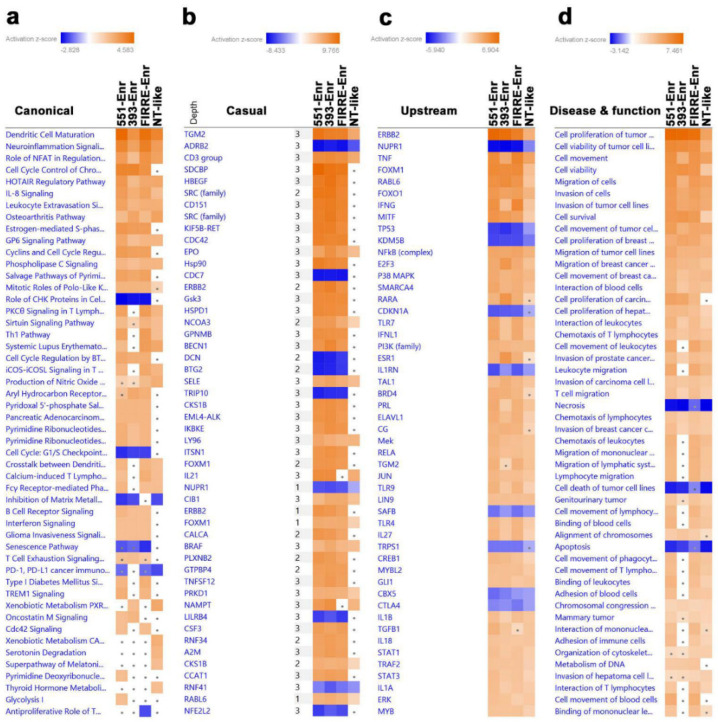
Upstream regulator and functional annotation enrichment in lncRNA-derived TNBC clusters. Upregulated genes from each lncRNA-derived TNBC cluster compared to NT were subjected to comparative casual (a), canonical (b), upstream (c), and disease and function (d) analysis using IPA illustrating the top affected categories. Color intensity corresponds to the activation Z-score. 551-Enr, LINC00511-enriched; 393-Enr, LINC00393-enriched; FIRRE-Enr, FIRRE-enriched; NT-like, normal tissue-like; NT, normal tissue.
Figure 5
Figure 5
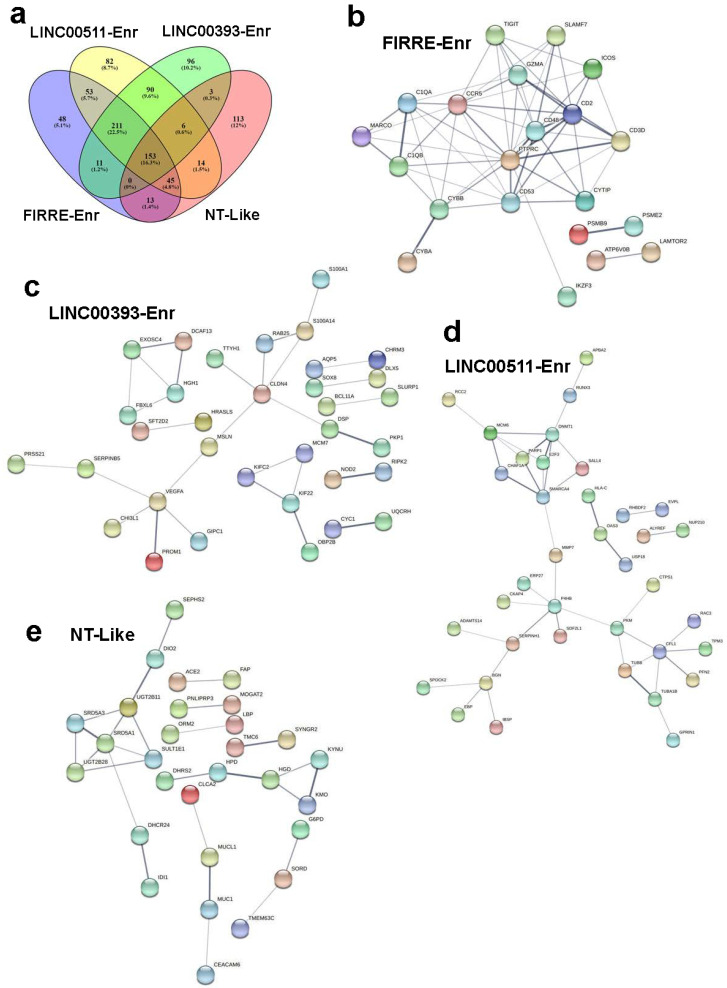
Protein–protein interaction (PPI) network analysis on upregulated genes in the indicated lncRNA-based h TNBC clusters. (a) Venn diagram depicting the commonality and uniquely upregulated genes in each lncRNA-derived cluster. STRING PPI network of uniquely upregulated genes in FIRRE-Enr (b), LINC00511-Enr (c), LINC00393-Enr (d), and NT-like (e) clusters. 551-Enr, LINC00511-enriched; 393-Enr, LINC00393-enriched; FIRRE-Enr, FIRRE-enriched; NT-like, normal tissue-like; NT, normal tissue.
Figure 6
Figure 6
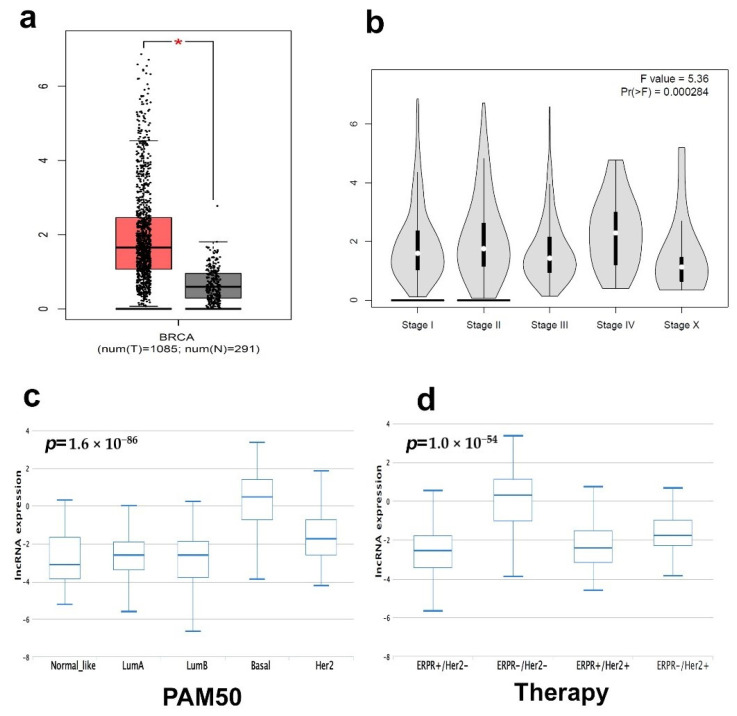
Expression of LINC00511 and its correlation with pathological stage in BC. (a) Expression of LINC00511 in BC (n = 1085) compared to normal breast tissue (n = 291) from the BRCA TCGA cohort. (b) Stage plot demonstrating LINC00511 expression as a function of pathological stage in the BRCA TCGA breast cancer cohort (n = 1085). Expression on LINC00511 as a function of PAM50 classification (c) or as a function of therapy (d) based on the TANRIC database. * p < 0.05.
Figure 7
Figure 7
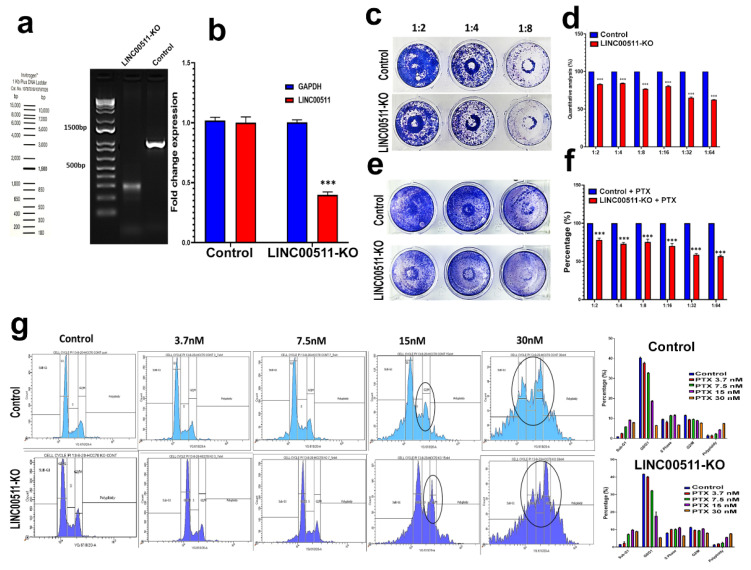
Effect of CRISPR-Cas9 mediated LINC00511 promoter deletion on HCC70 colony formation and paclitaxel sensitivity. (a,b) Genomic deletion of the LINC00511 promoter using CRISPR-Cas9 in the HCC70 TNBC model. qRT-PCR for LINC00511 expression in HCC70 WT and LINC00511-KO cell models. Data are presented as mean ± SD, n = 3. *** p < 0.0005. Clonogenic assay for HCC70 parental and LINC00511-KO cells, in the absence (c,d) or the presence (e,f) of indicated concentrations of Paclitaxel. Data are presented as mean ± SD, n = 4. *** p < 0.0005. (g) Cell cycle analysis for HCC70 parental and LINC00511-KO cells in the absence or presence of different concentrations of Paclitaxel.
Figure 8
Figure 8
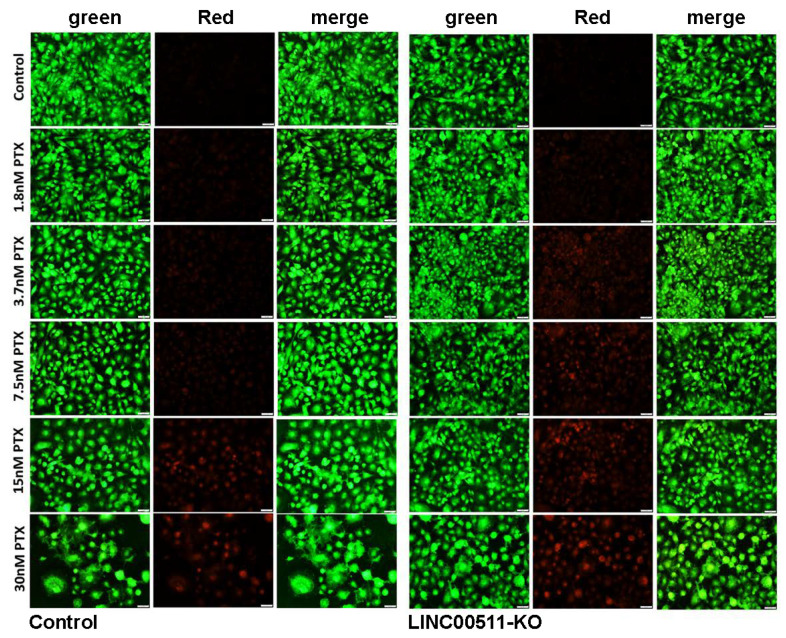
Viability staining for LINC00511-KO cells in the absence or presence of Paclitaxel. Representative fluorescence images of HCC70 parental and LINC00511-KO cells (±different concentration (1.8–30 nM) Paclitaxel). The cells were stained with acridine orange/ethidium bromide to detect live and dead cells.

References

    1. Weigelt B., Reis-Filho J.S. Histological and molecular types of breast cancer: Is there a unifying taxonomy? Nat. Rev. Clin. Oncol. 2009;6:718–730. doi: 10.1038/nrclinonc.2009.166. - DOI - PubMed
    1. Bianchini G., Balko J.M., Mayer I.A., Sanders M.E., Gianni L. Triple-negative breast cancer: Challenges and opportunities of a heterogeneous disease. Nat. Rev. Clin. Oncol. 2016;13:674–690. doi: 10.1038/nrclinonc.2016.66. - DOI - PMC - PubMed
    1. Xiao W., Zheng S., Yang A., Zhang X., Zou Y., Tang H., Xie X. Breast cancer subtypes and the risk of distant metastasis at initial diagnosis: A population-based study. Cancer Manag. Res. 2018;10:5329–5338. doi: 10.2147/CMAR.S176763. - DOI - PMC - PubMed
    1. Parker J.S., Mullins M., Cheang M.C., Leung S., Voduc D., Vickery T., Davies S., Fauron C., He X., Hu Z., et al. Supervised risk predictor of breast cancer based on intrinsic subtypes. J. Clin. Oncol. 2009;27:1160–1167. doi: 10.1200/JCO.2008.18.1370. - DOI - PMC - PubMed
    1. Lehmann B.D., Bauer J.A., Chen X., Sanders M.E., Chakravarthy A.B., Shyr Y., Pietenpol J.A. Identification of human triple-negative breast cancer subtypes and preclinical models for selection of targeted therapies. J. Clin. Investig. 2011;121:2750–2767. doi: 10.1172/JCI45014. - DOI - PMC - PubMed

LinkOut - more resources