


Novel Trends in Hydrogel Development for Biomedical Applications: A Review
- PMID: 35893984
- PMCID: PMC9370620
- DOI: 10.3390/polym14153023
Novel Trends in Hydrogel Development for Biomedical Applications: A Review
Abstract
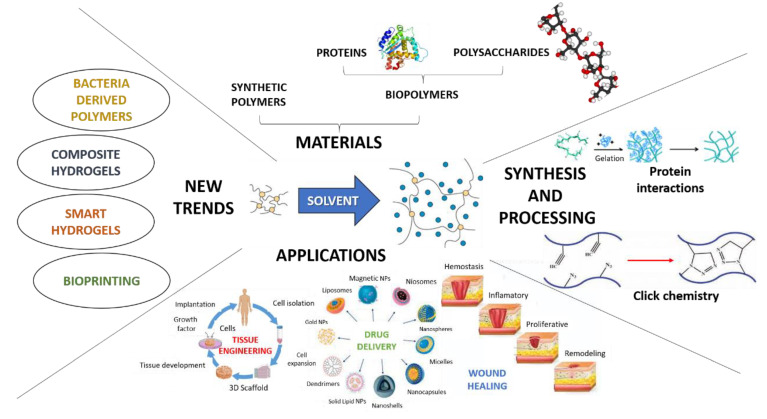
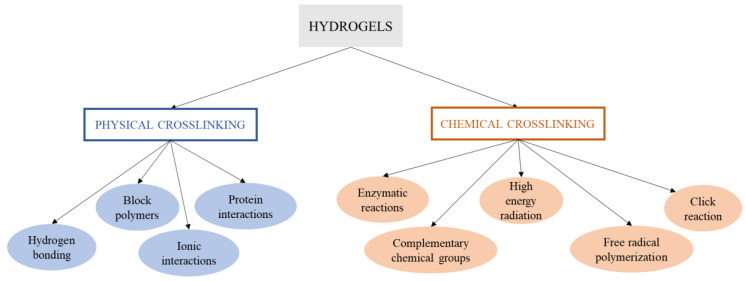
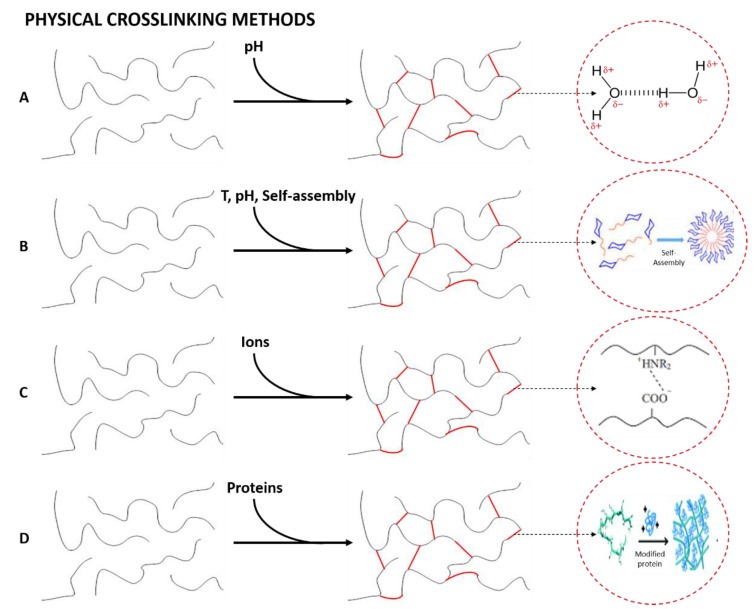
Nowadays, there are still numerous challenges for well-known biomedical applications, such as tissue engineering (TE), wound healing and controlled drug delivery, which must be faced and solved. Hydrogels have been proposed as excellent candidates for these applications, as they have promising properties for the mentioned applications, including biocompatibility, biodegradability, great absorption capacity and tunable mechanical properties. However, depending on the material or the manufacturing method, the resulting hydrogel may not be up to the specific task for which it is designed, thus there are different approaches proposed to enhance hydrogel performance for the requirements of the application in question. The main purpose of this review article was to summarize the most recent trends of hydrogel technology, going through the most used polymeric materials and the most popular hydrogel synthesis methods in recent years, including different strategies of enhancing hydrogels' properties, such as cross-linking and the manufacture of composite hydrogels. In addition, the secondary objective of this review was to briefly discuss other novel applications of hydrogels that have been proposed in the past few years which have drawn a lot of attention.
Keywords: biomedical applications; biopolymers; chemical cross-linking; composite hydrogels; hydrogel; physical cross-linking; synthetic polymers.
Conflict of interest statement
The authors declare no conflict of interest.
Figures
References
-
- Cunniffe G.M., O’Brien F.J. Collagen scaffolds for orthopedic regenerative medicine. Jom. 2011;63:66–73. doi: 10.1007/s11837-011-0061-y. - DOI
Publication types
Grants and funding
LinkOut - more resources
Full Text Sources
Other Literature Sources
Miscellaneous
