Review
. 2022 Jul 26;14(15):3027.
doi: 10.3390/polym14153027.

Polymer-Based Hybrid Nanoarchitectures for Cancer Therapy Applications

Affiliations
Review

Polymer-Based Hybrid Nanoarchitectures for Cancer Therapy Applications

Arun Kumar et al. Polymers (Basel). .

Abstract

Globally, cancer is affecting societies and is becoming an important cause of death. Chemotherapy can be highly effective, but it is associated with certain problems, such as undesired targeting and multidrug resistance. The other advanced therapies, such as gene therapy and peptide therapy, do not prove to be effective without a proper delivery medium. Polymer-based hybrid nanoarchitectures have enormous potential in drug delivery. The polymers used in these nanohybrids (NHs)provide them with their distinct properties and also enable the controlled release of the drugs. This review features the recent use of polymers in the preparation of different nanohybrids for cancer therapy published since 2015 in some reputed journals. The polymeric nanohybrids provide an advantage in drug delivery with the controlled and targeted delivery of a payload and the irradiation of cancer by chemotherapeutical and photodynamic therapy.

Keywords: cancer therapy; chitosan-based nanohybrids; drug delivery; pH-based targeting; polymeric nanohybrids.


Conflict of interest statement

The authors declare that there is no conflict of interest regarding the publication of this article.

Figures
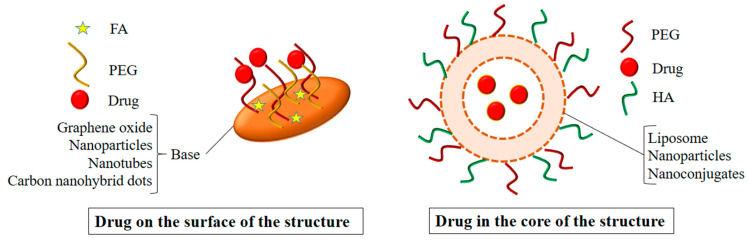
Figure 1
Figure 1
A generalized structure ofPEG-based nanohybrids.
Figure 2
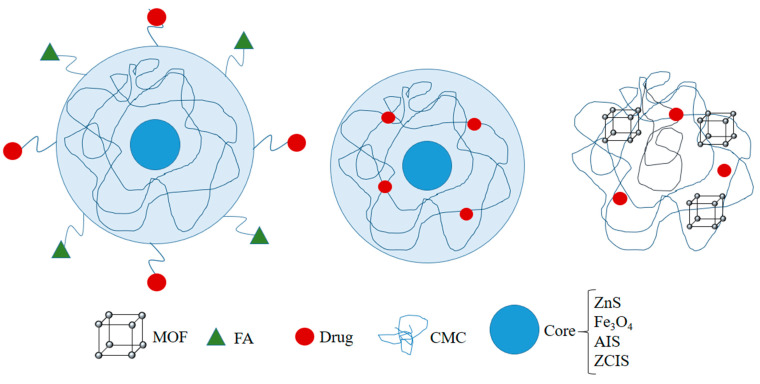
Figure 2
A generalized structure of CMC-containing nanohybrids.
Figure 3
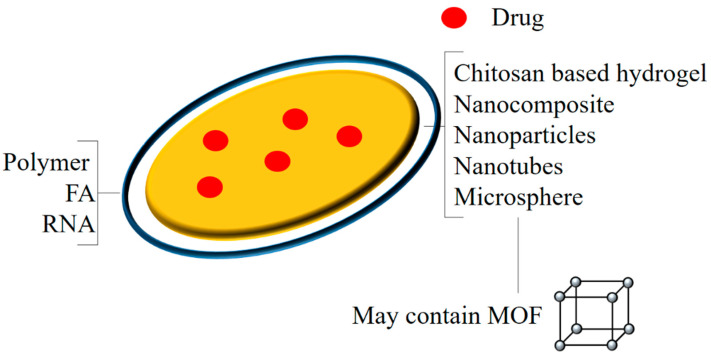
Figure 3
A generalized structure of chitosan-based nanohybrids.
Figure 4
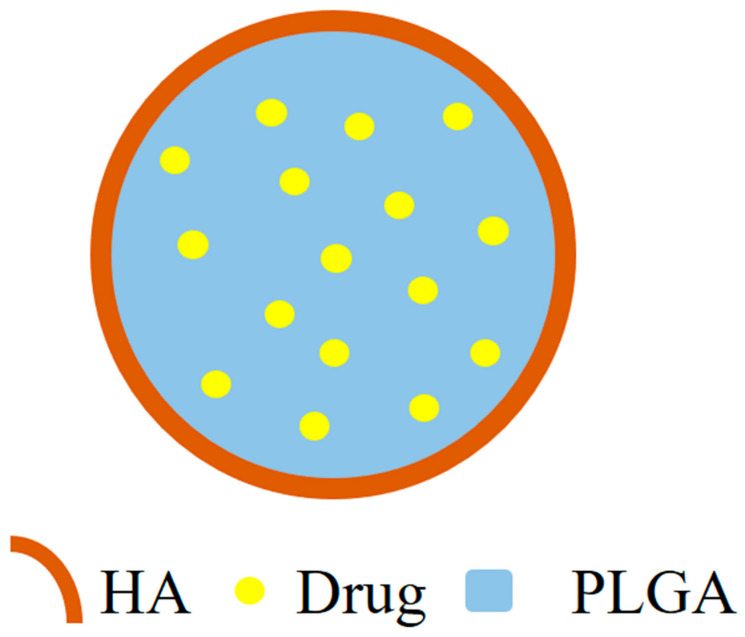
Figure 4
A generalized structure of PLGA-based nanohybrids.
Figure 5
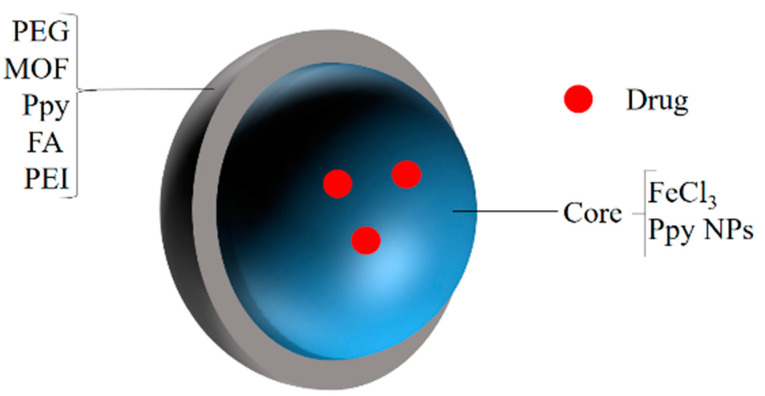
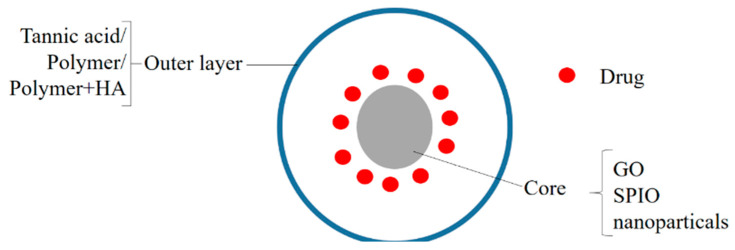
Figure 5
A generalized structure of polypyrrole-based nanohybrids.
Figure 6
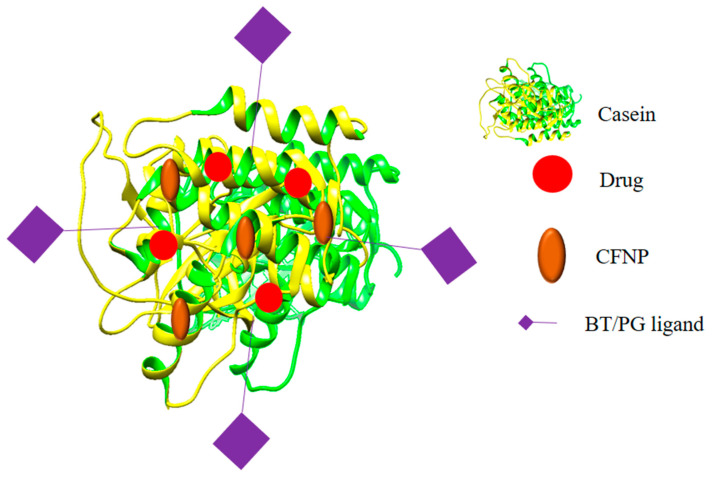
Figure 6
A generalized structure of casein-based nanohybrids.
Figure 7
Figure 7
A generalized structure of Poly(ethyleneimine)-based nanohybrids.
Figure 8
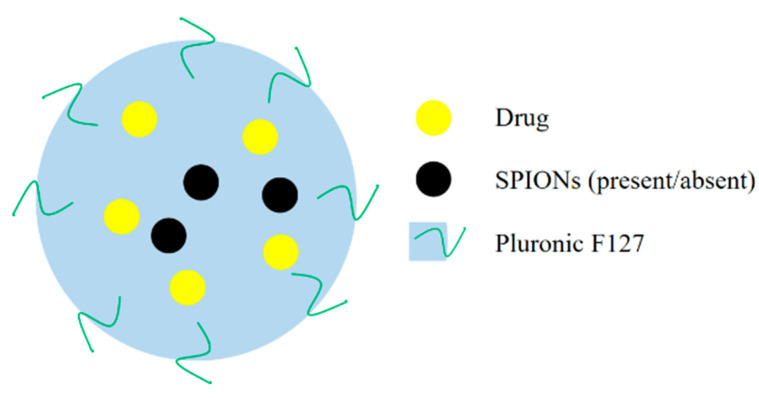
Figure 8
A generalized structure of Pluronic F127-based nanohybrids.
Figure 9
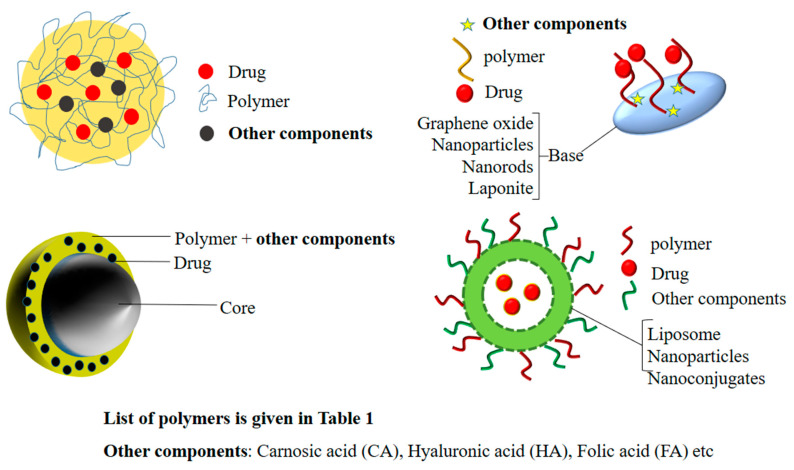
Figure 9
A generalized structure of other polymer-based nanohybrids.

References

    1. Sung H., Ferlay J., Siegel R.L., Laversanne M., Soerjomataram I., Jemal A., Bray F. Global Cancer Statistics 2020: GLOBOCAN Estimates of Incidence and Mortality Worldwide for 36 Cancers in 185 Countries. CA A Cancer J. Clin. 2021;71:209–249. doi: 10.3322/caac.21660. - DOI - PubMed
    1. Bray F., Ferlay J., Soerjomataram I., Siegel R.L., Torre L.A., Jemal A. Global Cancer Statistics 2018: GLOBOCAN Estimates of Incidence and Mortality Worldwide for 36 Cancers in 185 Countries. CA A Cancer J. Clin. 2018;68:394–424. doi: 10.3322/caac.21492. - DOI - PubMed
    1. Torre L.A., Bray F., Siegel R.L., Ferlay J., Lortet-Tieulent J., Jemal A. Global Cancer Statistics, 2012. CA A Cancer J. Clin. 2015;65:87–108. doi: 10.3322/caac.21262. - DOI - PubMed
    1. Galmarini D., Galmarini C.M., Galmarini F.C. Cancer Chemotherapy: A Critical Analysis of Its 60 Years of History. Crit. Rev. Oncol./Hematol. 2012;84:181–199. doi: 10.1016/j.critrevonc.2012.03.002. - DOI - PubMed
    1. Wyld L., Audisio R.A., Poston G.J. The Evolution of Cancer Surgery and Future Perspectives. Nat. Rev. Clin. Oncol. 2015;12:115–124. doi: 10.1038/nrclinonc.2014.191. - DOI - PubMed

LinkOut - more resources