


Systematic Review of COVID-19-Related Physical Activity-Based Rehabilitations: Benefits to Be Confirmed by More Robust Methodological Approaches
- PMID: 35897400
- PMCID: PMC9331032
- DOI: 10.3390/ijerph19159025
Systematic Review of COVID-19-Related Physical Activity-Based Rehabilitations: Benefits to Be Confirmed by More Robust Methodological Approaches
Abstract
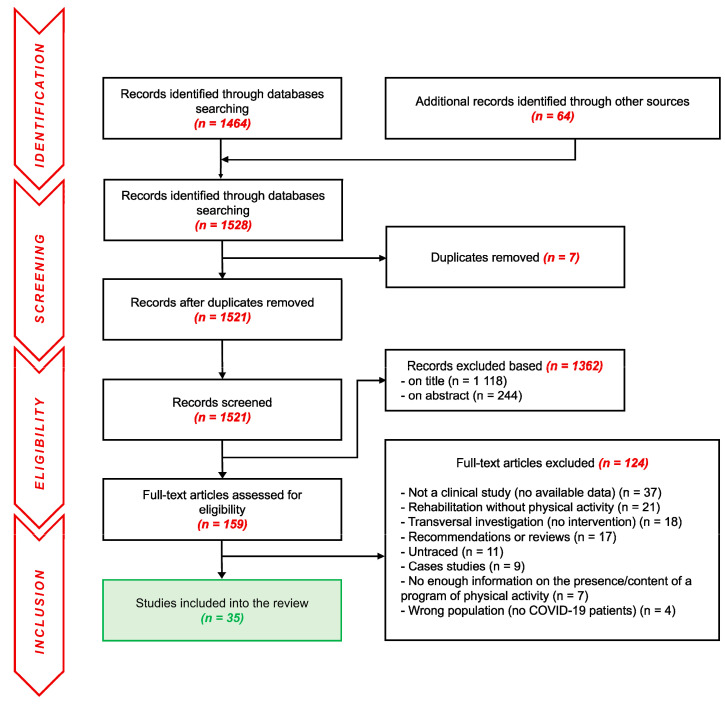
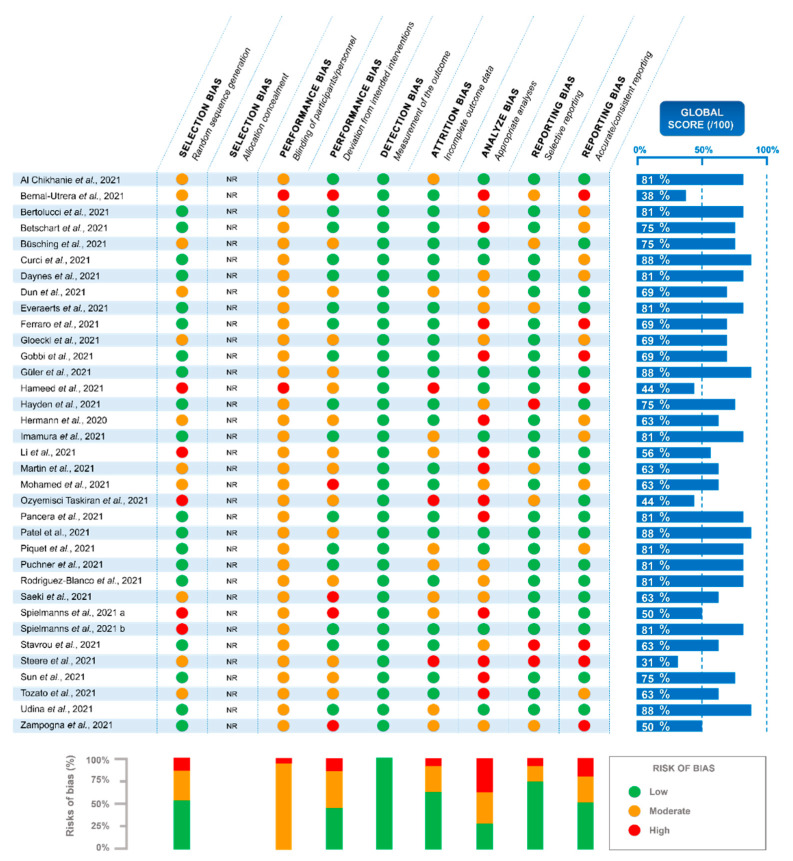
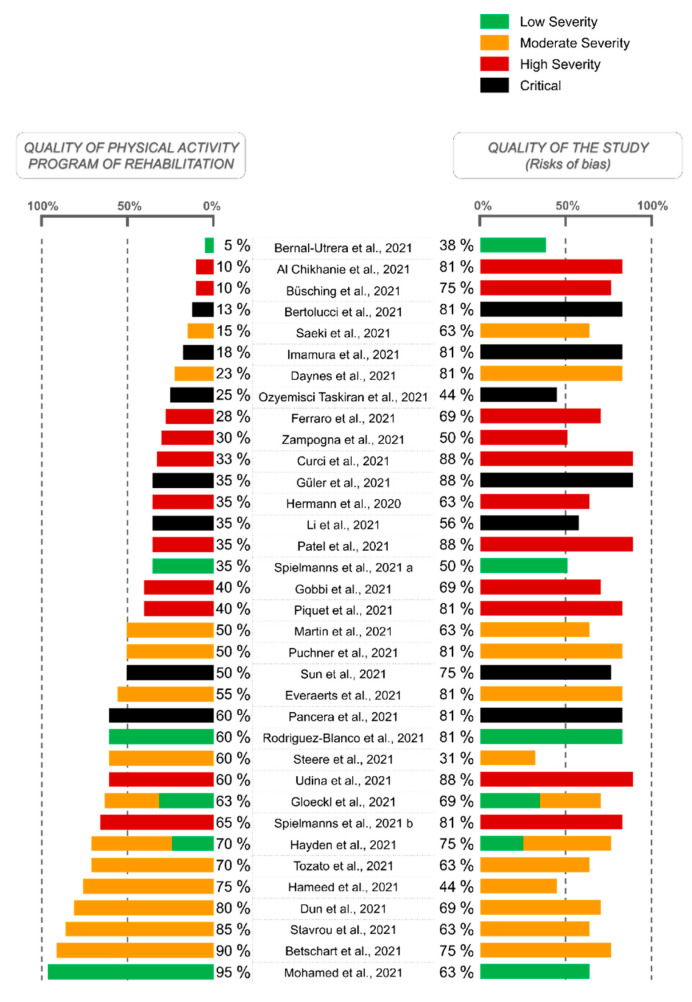
The first emergency was to receive and treat COVID-19 patients in their acute phase; today, there is a clear need to propose appropriate post-acute rehabilitation programs. The aim of this research was to systematically review the effects of physical activity programs in the recovery of post-COVID-19 patients. The literature search followed the Preferred Reporting Items for Systematic Review and Meta-Analysis (PRISMA) guidelines, was registered in the PROSPERO database (CRD42022289219), and was conducted between August and December 2021. A total of 35 studies out of the 1528 initially identified were finally included in the analysis. The systematic review clearly showed the health benefits of rehabilitation including physical activity in post-COVID-19 recovery, regardless of exercise modalities. These positive results were even observed using minor muscle re-mobilization for severe cases (i.e., postural changes, few steps-2 times/day) or using low volumes of exercise for mild-to-moderate cases (i.e., 120 min/week). A total of 97% of the 29 studies that performed statistical analyses demonstrated a significant increase in at least one parameter of functional capacity, and 96% of the 26 studies that statistically investigated the effects on the quality of life, mental health, and general state reported improvements. Yet, most of the studies were retrospective, uncontrolled, and enrolled aged people with comorbidities presented in severe forms of COVID-19. Physical activity programs, in addition to their high heterogeneity, remained poorly described in 83% of the studies and were part of a multidisciplinary program for 89% of the studies. Despite promising results, there is today a real need for prospective well-designed studies specifically assessing the effects of physical activity. In addition, it might appear relevant to propose standardized programs further considering the main characteristics of patients such as age, comorbidities, or the severity of COVID-19.
Keywords: COVID-19; SARS-CoV-2; functional capacity; physical activity; rehabilitation.
Conflict of interest statement
The authors declare no conflict of interest.
Figures
References
-
- World Health Organization WHO Coronavirus (COVID-19) Dashboard—25 February 2022 n.d. [(accessed on 28 February 2022)]. Available online: https://covid19.who.int.
-
- Garrigues E., Janvier P., Kherabi Y., Le Bot A., Hamon A., Gouze H., Doucet L., Berkani S., Oliosi E., Mallart E., et al. Post-discharge persistent symptoms and health-related quality of life after hospitalization for COVID-19. J. Infect. 2020;81:e4–e6. doi: 10.1016/j.jinf.2020.08.029. - DOI - PMC - PubMed
Publication types
MeSH terms
LinkOut - more resources
Full Text Sources
Medical
Miscellaneous
