


Sweet Taste Signaling: The Core Pathways and Regulatory Mechanisms
- PMID: 35897802
- PMCID: PMC9329783
- DOI: 10.3390/ijms23158225
Sweet Taste Signaling: The Core Pathways and Regulatory Mechanisms
Abstract
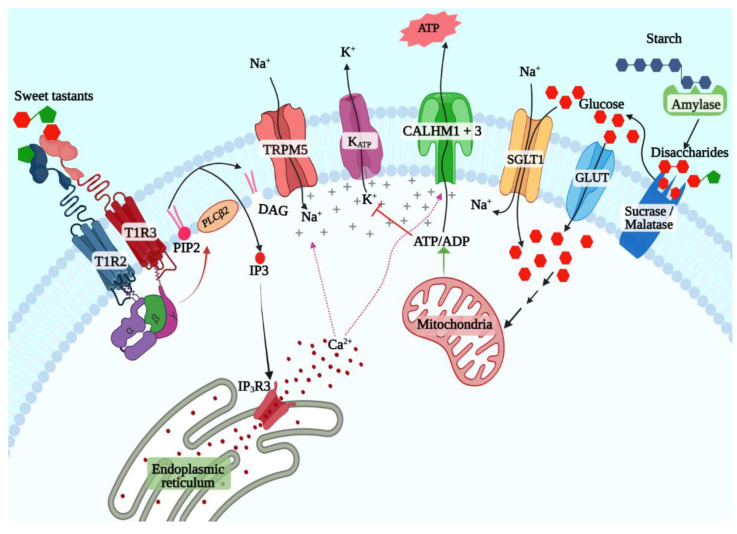
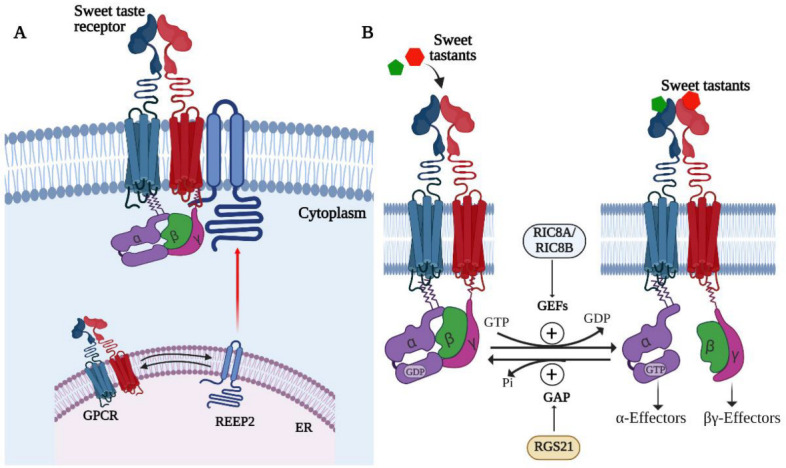
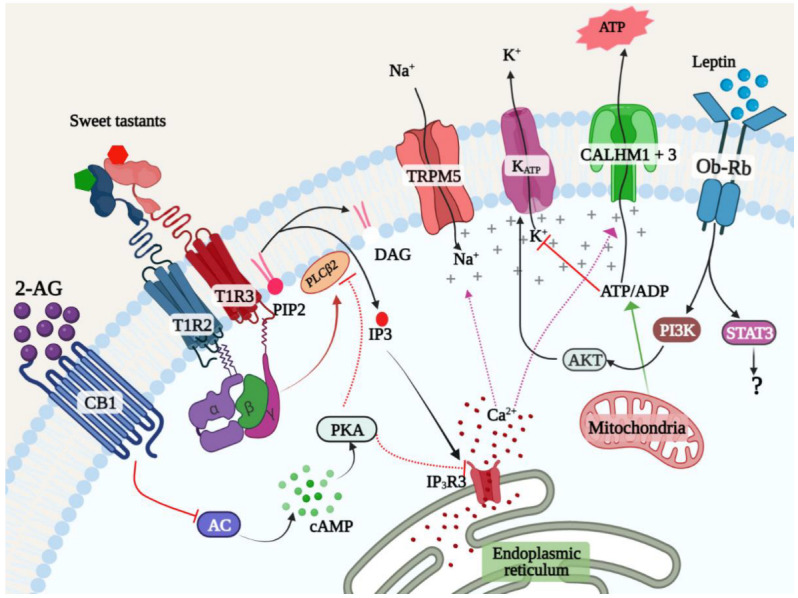
Sweet taste, a proxy for sugar-derived calories, is an important driver of food intake, and animals have evolved robust molecular and cellular machinery for sweet taste signaling. The overconsumption of sugar-derived calories is a major driver of obesity and other metabolic diseases. A fine-grained appreciation of the dynamic regulation of sweet taste signaling mechanisms will be required for designing novel noncaloric sweeteners with better hedonic and metabolic profiles and improved consumer acceptance. Sweet taste receptor cells express at least two signaling pathways, one mediated by a heterodimeric G-protein coupled receptor encoded by taste 1 receptor members 2 and 3 (TAS1R2 + TAS1R3) genes and another by glucose transporters and the ATP-gated potassium (KATP) channel. Despite these important discoveries, we do not fully understand the mechanisms regulating sweet taste signaling. We will introduce the core components of the above sweet taste signaling pathways and the rationale for having multiple pathways for detecting sweet tastants. We will then highlight the roles of key regulators of the sweet taste signaling pathways, including downstream signal transduction pathway components expressed in sweet taste receptor cells and hormones and other signaling molecules such as leptin and endocannabinoids.
Keywords: G-protein-coupled receptor; gustation; noncaloric sweeteners; sweet taste receptor.
Conflict of interest statement
The authors declare no conflict of interest. The funders had no role in the design of the study; in the collection, analyses, or interpretation of data; in the writing of the manuscript, or in the decision to publish the results.
Figures
References
Publication types
MeSH terms
Substances
LinkOut - more resources
Full Text Sources
