


This is a preprint.
The First Geographic Identification by Country of Sustainable Mutations of SARS-COV2 Sequence Samples: Worldwide Natural Selection Trends
- PMID: 35898341
- PMCID: PMC9327626
- DOI: 10.1101/2022.07.18.500565
The First Geographic Identification by Country of Sustainable Mutations of SARS-COV2 Sequence Samples: Worldwide Natural Selection Trends
Abstract
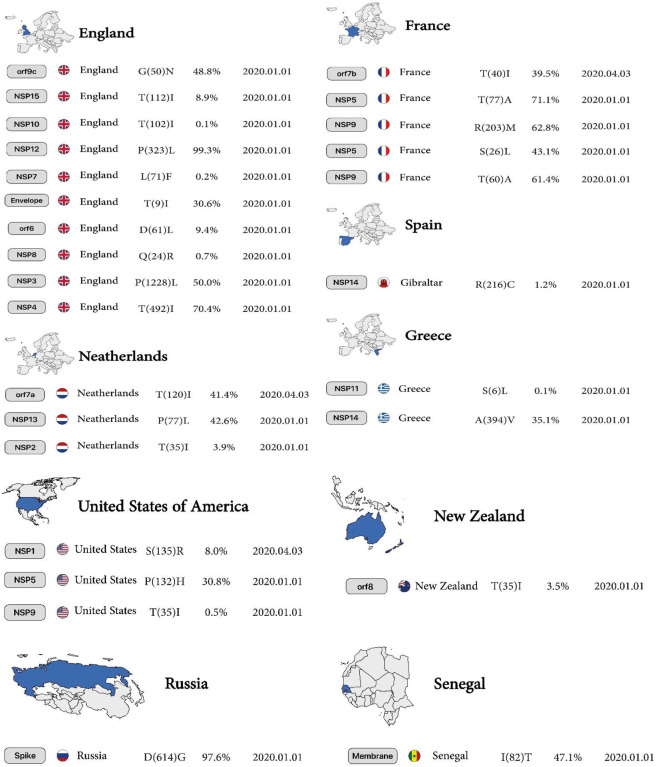
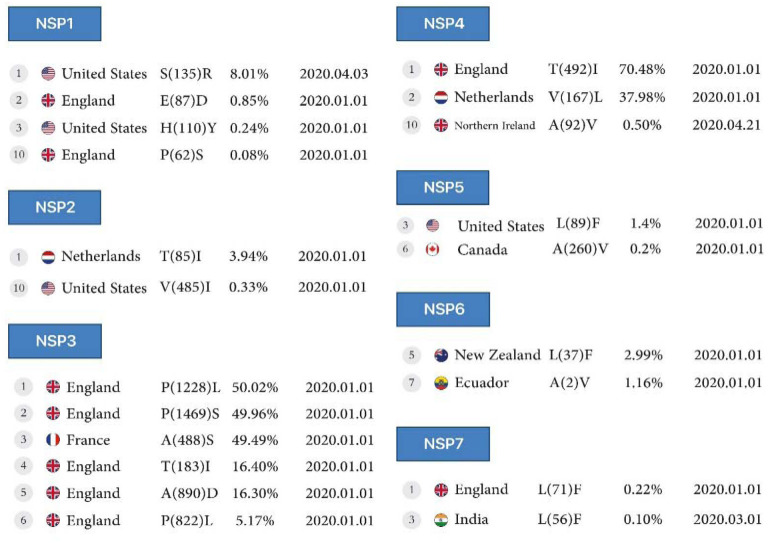
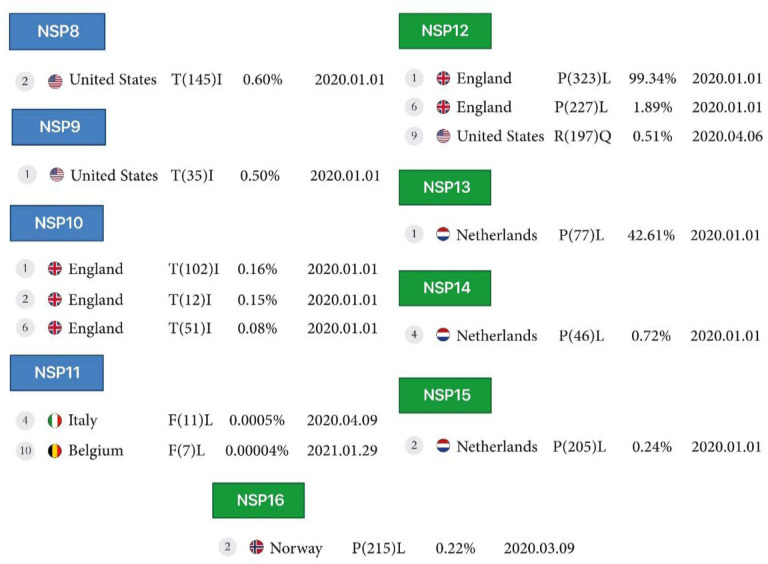
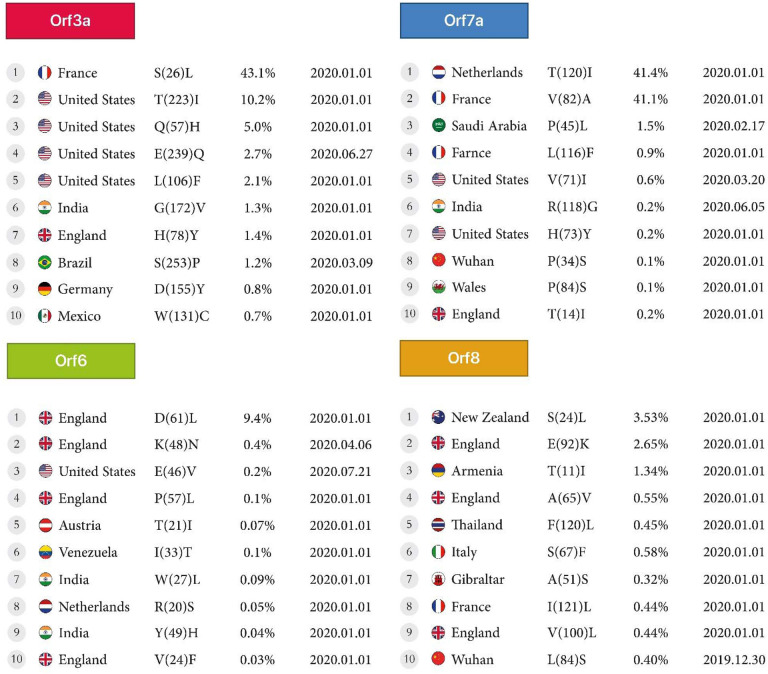
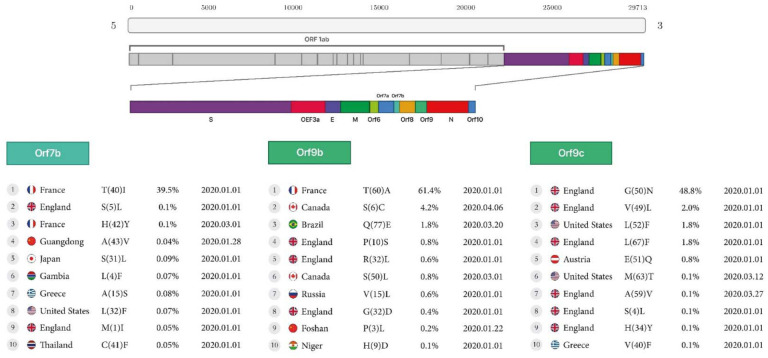
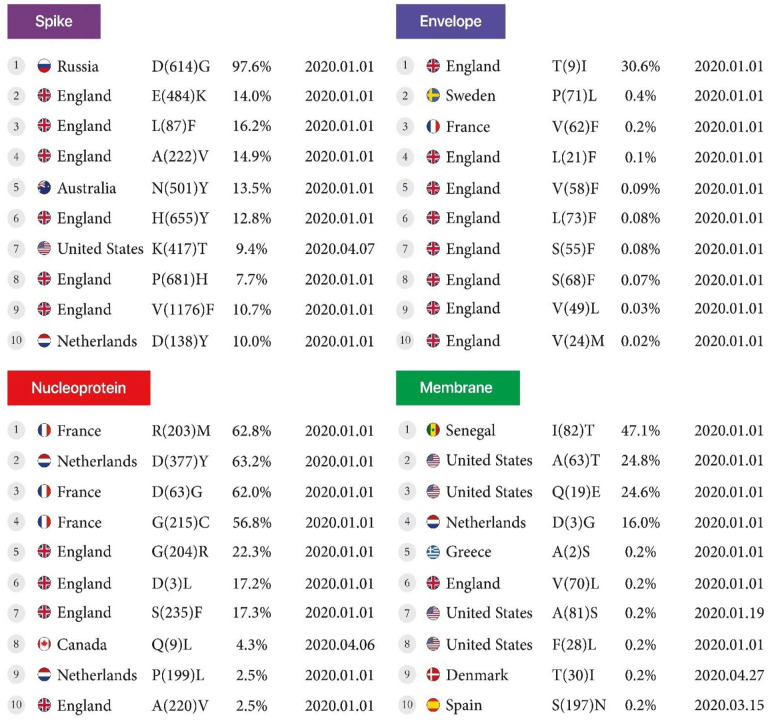
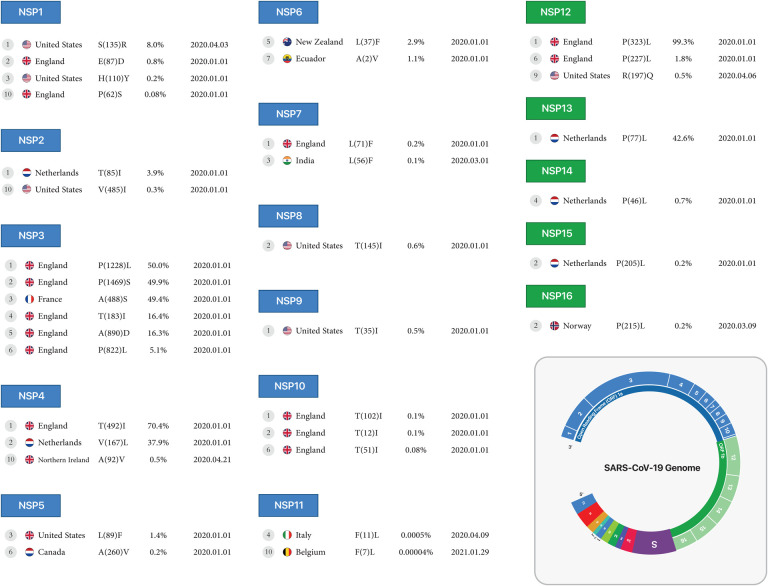
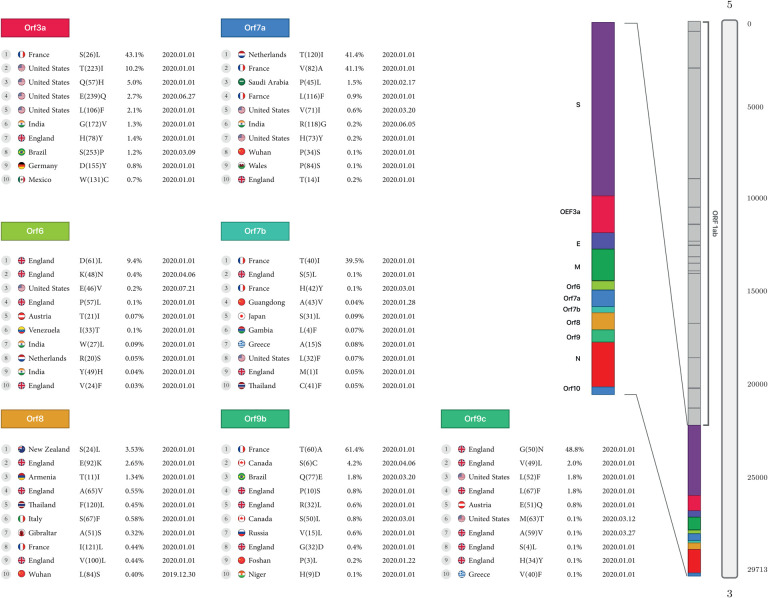
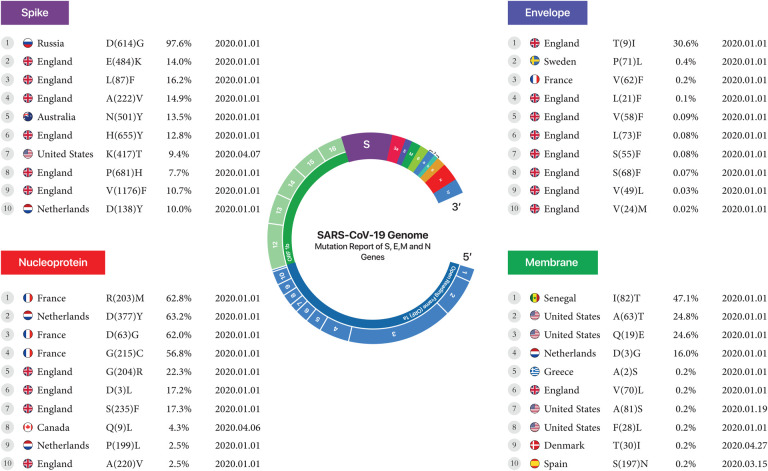
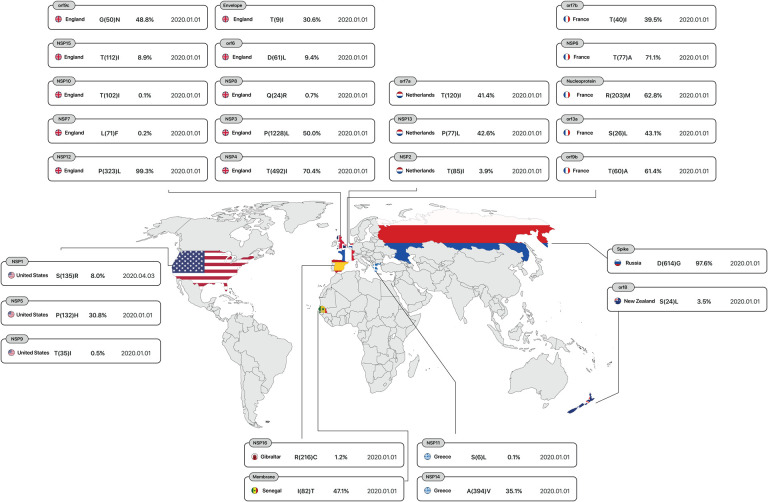
The high mutation rates of RNA viruses, coupled with short generation times and large population sizes, allow viruses to evolve rapidly and adapt to the host environment. The rapidity of viral mutation also causes problems in developing successful vaccines and antiviral drugs. With the spread of SARS-CoV-2 worldwide, thousands of mutations have been identified, some of which have relatively high incidences, but their potential impacts on virus characteristics remain unknown. The present study analyzed mutation patterns, SARS-CoV-2 AASs retrieved from the GISAID database containing 10,500,000 samples. Python 3.8.0 programming language was utilized to pre-process FASTA data, align to the reference sequence, and analyze the sequences. Upon completion, all mutations discovered were categorized based on geographical regions and dates. The most stable mutations were found in nsp1(8% S135R), nsp12(99.3% P323L), nsp16 (1.2% R216C), envelope (30.6% T9I), spike (97.6% D614G), and Orf8 (3.5% S24L), and were identified in the United States on April 3, 2020, and England, Gibraltar, and, New Zealand, on January 1, 2020, respectively. The study of mutations is the key to improving understanding of the function of the SARS-CoV-2, and recent information on mutations helps provide strategic planning for the prevention and treatment of this disease. Viral mutation studies could improve the development of vaccines, antiviral drugs, and diagnostic assays designed with high accuracy, specifically useful during pandemics. This knowledge helps to be one step ahead of new emergence variants.
Keywords: Amino Acid; Epidemiology; Mutation; Natural selection; SARS-CoV2; region.
Conflict of interest statement
Declaration of competing interest The authors declare that they have no conflicts of interest that might be relevant to the contents of this manuscript, and the research was carried out regardless of commercial or financial relationships that may cause any conflict of interest.
Figures
References
-
- Hodcroft EB, Domman DB, Snyder DJ, Oguntuyo KY, Van Diest M, Densmore KH, Schwalm KC, Femling J, Carroll JL, Scott RS, Whyte MM, Edwards MW, Hull NC, Kevil CG, Vanchiere JA, Lee B, Dinwiddie DL, Cooper VS, Kamil JP. 2021. Emergence in late 2020 of multiple lineages of SARS-CoV-2 Spike protein variants affecting amino acid position 677. medRxiv doi: 10.1101/2021.02.12.21251658. - DOI
-
- Ortiz-Prado E, Simbana-Rivera K, Gomez-Barreno L, Rubio-Neira M, Guaman LP, Kyriakidis NC, Muslin C, Jaramillo AMG, Barba-Ostria C, Cevallos-Robalino D, Sanches-SanMiguel H, Unigarro L, Zalakeviciute R, Gadian N, Lopez-Cortes A. 2020. Clinical, molecular, and epidemiological characterization of the SARS-CoV-2 virus and the Coronavirus Disease 2019 (COVID-19), a comprehensive literature review. Diagn Microbiol Infect Dis 98:115094. - PMC - PubMed
Publication types
Grants and funding
LinkOut - more resources
Full Text Sources
Miscellaneous
