


Equine Anti-SARS-CoV-2 Serum (ECIG) Binds to Mutated RBDs and N Proteins of Variants of Concern and Inhibits the Binding of RBDs to ACE-2 Receptor
- PMID: 35898497
- PMCID: PMC9310548
- DOI: 10.3389/fimmu.2022.871874
Equine Anti-SARS-CoV-2 Serum (ECIG) Binds to Mutated RBDs and N Proteins of Variants of Concern and Inhibits the Binding of RBDs to ACE-2 Receptor
Abstract
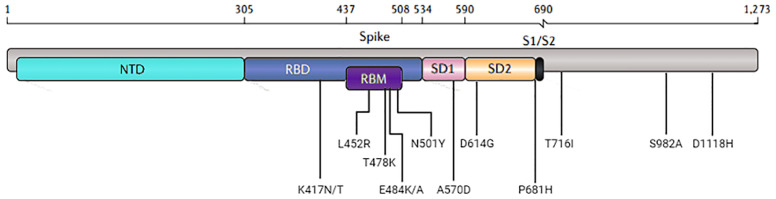
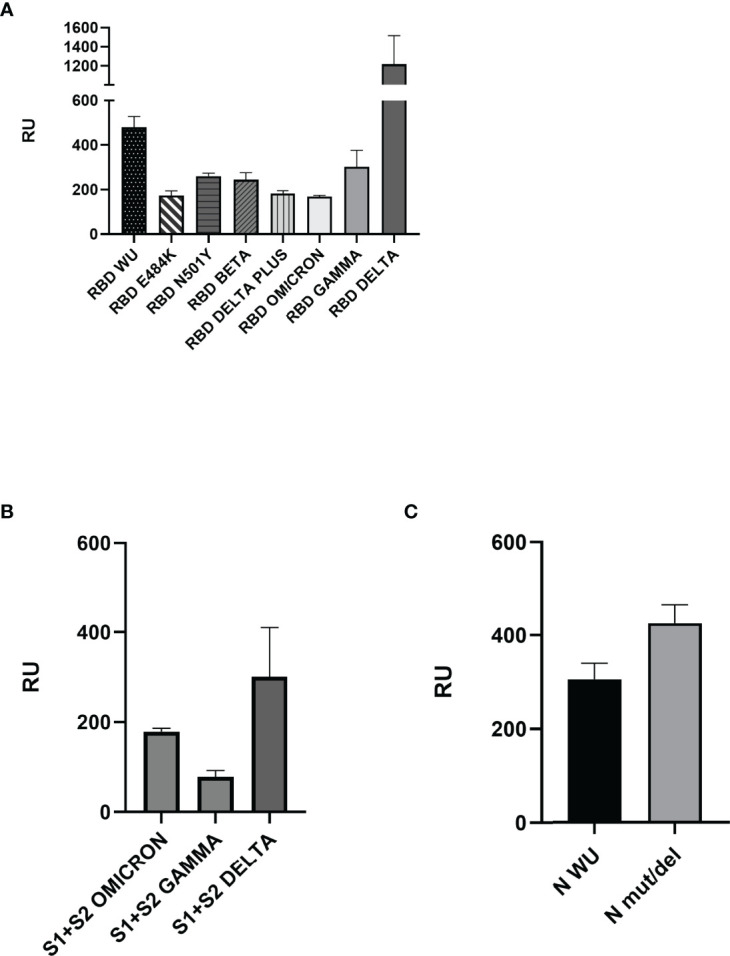
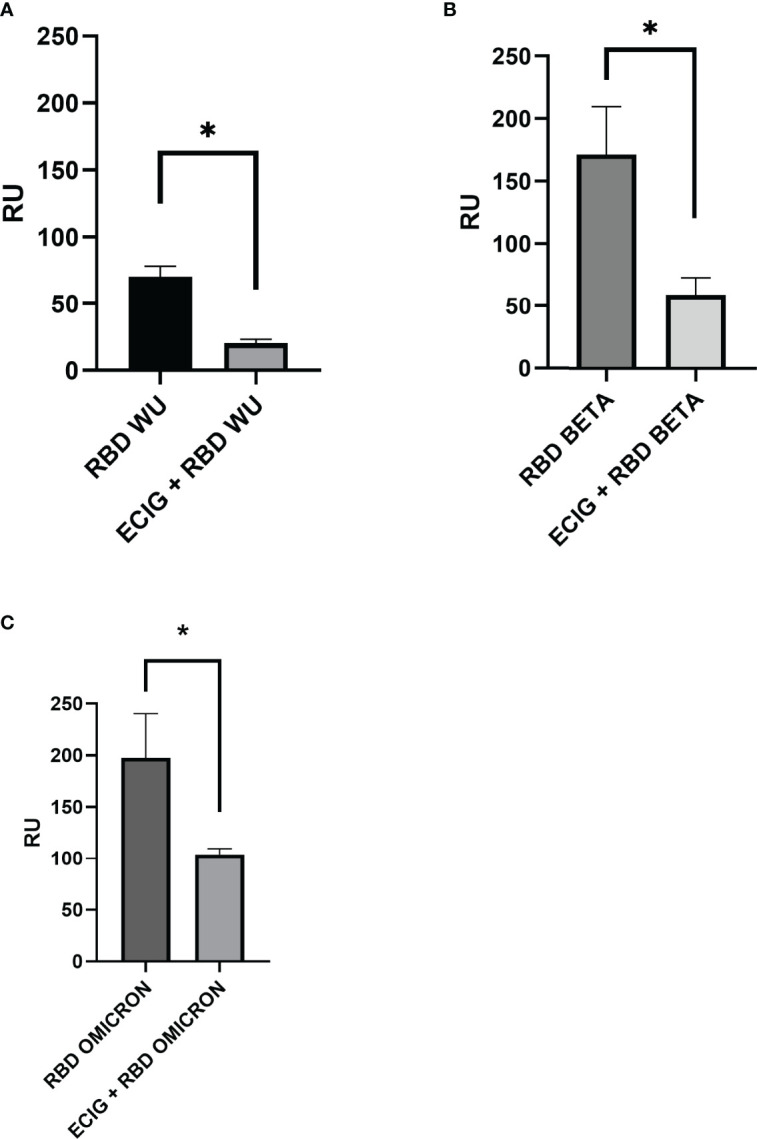
The COVID-19 pandemic caused by the severe acute syndrome virus 2 (SARS-CoV-2) has been around since November 2019. As of early June 2022, more than 527 million cases were diagnosed, with more than 6.0 million deaths due to this disease. Coronaviruses accumulate mutations and generate greater diversity through recombination when variants with different mutations infect the same host. Consequently, this virus is predisposed to constant and diverse mutations. The SARS-CoV-2 variants of concern/interest (VOCs/VOIs) such as Alpha (B.1.1.7), Beta (B.1.351), Gamma (B.1.1.28/P.1), Delta (B.1.617.2), and Omicron (B.1.1.529) have quickly spread across the world. These VOCs and VOIs have accumulated mutations within the spike protein receptor-binding domain (RBD) which interacts with the angiotensin-2 converting enzyme (ACE-2) receptor, increasing cell entry and infection. The RBD region is the main target for neutralizing antibodies; however, other notable mutations have been reported to enhance COVID-19 infectivity and lethality. Considering the urgent need for alternative therapies against this virus, an anti-SARS-CoV-2 equine immunoglobulin F(ab')2, called ECIG, was developed by the Butantan Institute using the whole gamma-irradiated SARS-CoV-2 virus. Surface plasmon resonance experiments revealed that ECIG binds to wild-type and mutated RBD, S1+S2 domains, and nucleocapsid proteins of known VOCs, including Alpha, Gamma, Beta, Delta, Delta Plus, and Omicron. Additionally, it was observed that ECIG attenuates the binding of RBD (wild-type, Beta, and Omicron) to human ACE-2, suggesting that it could prevent viral entry into the host cell. Furthermore, the ability to concomitantly bind to the wild-type and mutated nucleocapsid protein likely enhances its neutralizing activity of SARS-CoV-2. We postulate that ECIG benefits COVID-19 patients by reducing the infectivity of the original virus and existing variants and may be effective against future ones. Impacting the course of the disease, mainly in the more vulnerable, reduces infection time and limits the appearance of new variants by new recombination.
Keywords: COVID-19; RBD; SPR; VOCs; equine serum; neutralizing antibodies; nucleocapsid.
Copyright © 2022 Andrade, Batalha-Carvalho, Curi, Wen, Covas, Chudzinski-Tavassi and Moro.
Conflict of interest statement
AC-T is co-author of the patent “Processo de produção de um antígeno, correspondente aos vírus SARS-CoV-2 inativado e seus usos”. BR1020200166689, (2020). The remaining authors declare that the research was conducted in the absence of any commercial or financial relationships that could be construed as a potential conflict of interest.
Figures

References
-
- WHO . COVID-19 Dashboard. Geneva: World Health Organization; (2020). Available at: https://covid19.who.int/.
-
- Sanches PRS, Charlie-Silva I, Braz HLB, Bittar C, Calmon MF, Rahal P, et al. . Recent Advances in SARS-CoV-2 Spike Protein and RBD Mutations Comparison Between New Variants Alpha (B.1.1.7, United Kingdom), Beta (B.1.351, South Africa), Gamma (P.1, Brazil) and Delta (B.1.617.2, India). J Virus Erad (2021) 7(3):1–7. doi: 10.1016/j.jve.2021.100054 - DOI - PMC - PubMed
Publication types
MeSH terms
Substances
Supplementary concepts
LinkOut - more resources
Full Text Sources
Other Literature Sources
Medical
Research Materials
Miscellaneous
