


Chronic Conditions Among Adults Aged 18─34 Years - United States, 2019
- PMID: 35900929
- PMCID: PMC9345173
- DOI: 10.15585/mmwr.mm7130a3
Chronic Conditions Among Adults Aged 18─34 Years - United States, 2019
Abstract
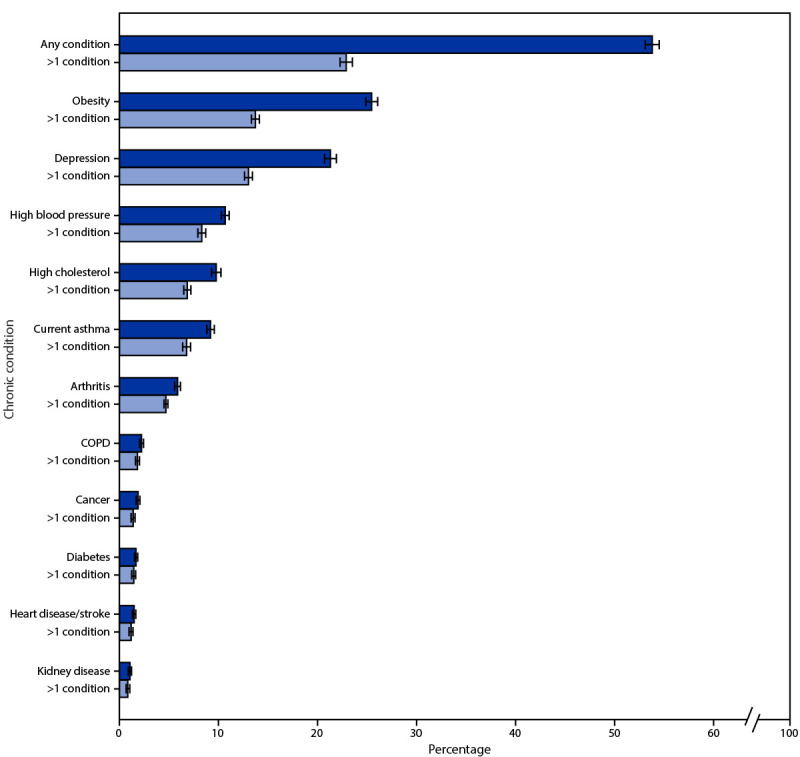
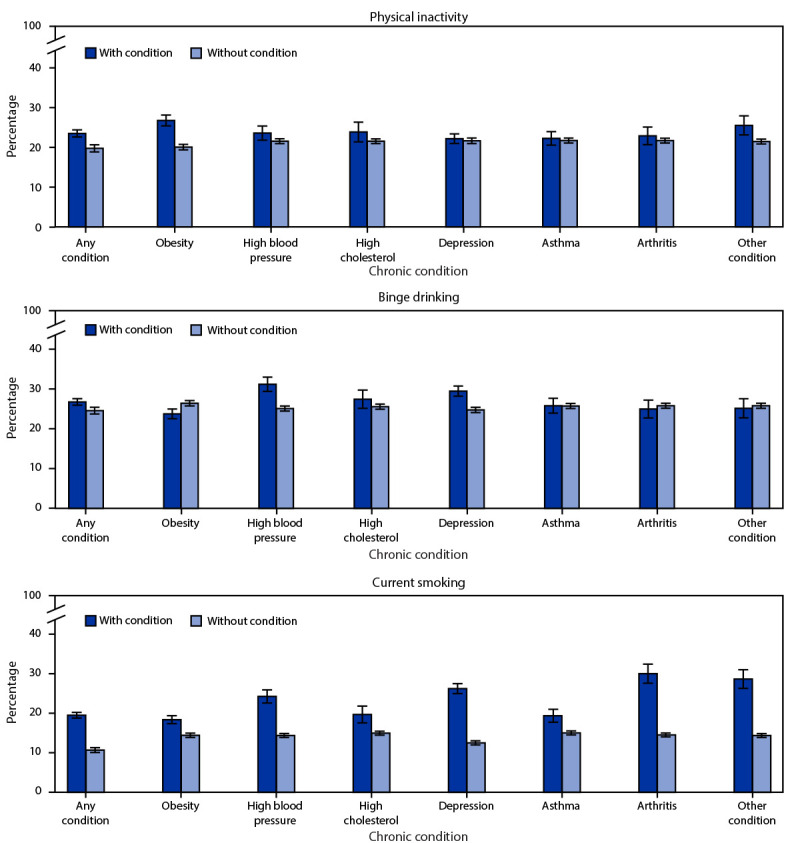
Chronic conditions are common, costly, and major causes of death and disability.* Addressing chronic conditions and their determinants in young adulthood can help slow disease progression and improve well-being across the life course (1); however, recent prevalence estimates examining chronic conditions in young adults overall and by subgroup have not been reported. CDC analyzed data from the Behavioral Risk Factor Surveillance System (BRFSS) to measure prevalence of 11 chronic conditions among adults aged 18-34 years overall and by selected characteristics, and to measure prevalence of health-related risk behaviors by chronic condition status. In 2019, more than one half (53.8%) of adults aged 18-34 years reported having at least one chronic condition, and nearly one quarter (22.3%) reported having more than one chronic condition. The most prevalent conditions were obesity (25.5%), depression (21.3%), and high blood pressure (10.7%). Differences in the prevalence of having a chronic condition were most noticeable between young adults with a disability (75.8%) and without a disability (48.3%) and those who were unemployed (62.3%) and students (45.8%). Adults aged 18-34 years with a chronic condition were more likely than those without one to report binge drinking, smoking, or physical inactivity. Coordinated efforts by public and private sectors might help raise awareness of chronic conditions among young adults and help improve the availability of evidence-based interventions, policies, and programs that are effective in preventing, treating, and managing chronic conditions among young adults (1).
Conflict of interest statement
All authors have completed and submitted the International Committee of Medical Journal Editors form for disclosure of potential conflicts of interest. No potential conflicts of interest were disclosed.
Figures
References
-
- Committee on Improving the Health, Safety, and Well-Being of Young Adults; Board on Children, Youth, and Families; Institute of Medicine; National Research Council. Investing in the health and well-being of young adults. Bonnie RJ, Stroud C, Breiner H, eds. Washington, DC: National Academies Press; 2015. https://www.ncbi.nlm.nih.gov/books/NBK284787/#!po=16.6667 - PubMed
-
- US Department of Health and Human Services. Healthy people 2020. Washington, DC: US Department of Health and Human Services; 2021. https://www.healthypeople.gov/2020/data-search/Search-the-Data?nid=4968
-
- Villarroel MA, Blackwell DL, Jen A. 2018 National Health Interview Survey. Tables of summary health statistics for US adults. Atlanta, GA: US Department of Health and Human Services, CDC; 2019. https://www.cdc.gov/nchs/nhis/SHS/tables.htm
MeSH terms
LinkOut - more resources
Full Text Sources
