


Secretion of functional α1-antitrypsin is cell type dependent: Implications for intramuscular delivery for gene therapy
- PMID: 35901208
- PMCID: PMC9351467
- DOI: 10.1073/pnas.2206103119
Secretion of functional α1-antitrypsin is cell type dependent: Implications for intramuscular delivery for gene therapy
Abstract
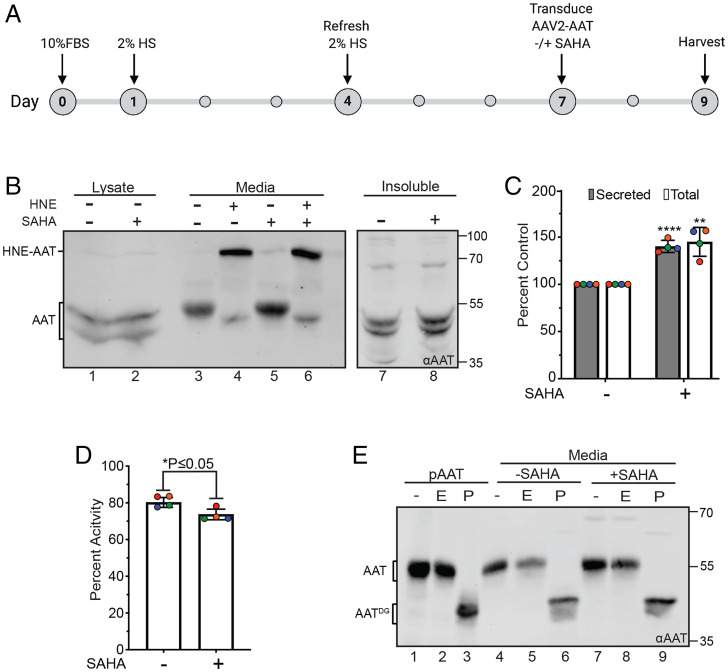
Heterologous expression of proteins is used widely for the biosynthesis of biologics, many of which are secreted from cells. In addition, gene therapy and messenger RNA (mRNA) vaccines frequently direct the expression of secretory proteins to nonnative host cells. Consequently, it is crucial to understand the maturation and trafficking of proteins in a range of host cells including muscle cells, a popular therapeutic target due to the ease of accessibility by intramuscular injection. Here, we analyzed the production efficiency for α1-antitrypsin (AAT) in Chinese hamster ovary cells, commonly used for biotherapeutic production, and myoblasts (embryonic progenitor cells of muscle cells) and compared it to the production in the major natural cells, liver hepatocytes. AAT is a target protein for gene therapy to address pathologies associated with insufficiencies in native AAT activity or production. AAT secretion and maturation were most efficient in hepatocytes. Myoblasts were the poorest of the cell types tested; however, secretion of active AAT was significantly augmented in myoblasts by treatment with the proteostasis regulator suberoylanilide hydroxamic acid, a histone deacetylase inhibitor. These findings were extended and validated in myotubes (mature muscle cells) where AAT was transduced using an adeno-associated viral capsid transduction method used in gene therapy clinical trials. Overall, our study sheds light on a possible mechanism to enhance the efficacy of gene therapy approaches for AAT and, moreover, may have implications for the production of proteins from mRNA vaccines, which rely on the expression of viral glycoproteins in nonnative host cells upon intramuscular injection.
Keywords: endoplasmic reticulum; protein quality control; proteostasis; proteostasis regulator; serpin.
Conflict of interest statement
Competing interest statement: The authors declare a competing interest. T.R.F. serves on the scientific advisory board of Ferring Ventures, S.A., and was a scientific founder of Applied Genetic Technologies Corporation. The other authors declare no competing or financial interests.
Figures


References
-
- Gettins P. G. W., Serpin structure, mechanism, and function. Chem. Rev. 102, 4751–4804 (2002). - PubMed
Publication types
MeSH terms
Substances
Grants and funding
LinkOut - more resources
Full Text Sources
Other Literature Sources
Medical
Research Materials
Miscellaneous
