


MDM2 is a Potential Target Gene of Glycyrrhizic Acid for Circumventing Breast Cancer Resistance to Tamoxifen: Integrative Bioinformatics Analysis
- PMID: 35901340
- PMCID: PMC9727350
- DOI: 10.31557/APJCP.2022.23.7.2341
MDM2 is a Potential Target Gene of Glycyrrhizic Acid for Circumventing Breast Cancer Resistance to Tamoxifen: Integrative Bioinformatics Analysis
Abstract
Background: Tamoxifen is the drug of choice for treating breast cancer, particularly the estrogen receptor-positive luminal A subtype. However, the increased occurrence of Tamoxifen resistance highlights the need to develop an agent to enhance the effectiveness of this drug.
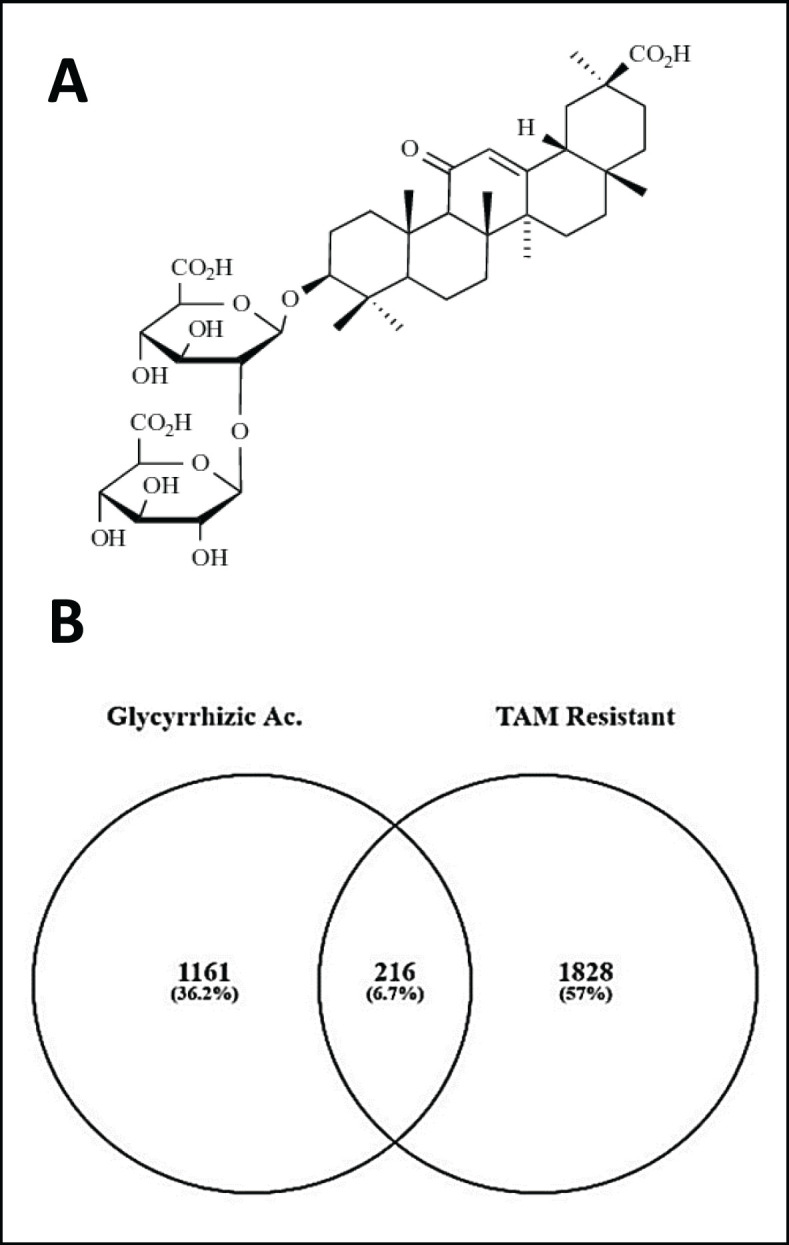
Objective: Although glycyrrhizic acid (GA) is known to exhibit cytotoxic effects on Michigan Cancer Foundation-7 cells, the specific gene targets and pathways it employs to overcome Tamoxifen resistance are incompletely understood. Therefore, the goal of the present research is to discover the potential targets and pathways of GA by using a bioinformatics approach.
Methods: Differentially expressed genes (DEGs) were identified in the Gene Expression Omnibus NCBI database using microarray data from GSE67916 and GSE85871. Further analyses were performed on these DEGs by using DAVID v6.8, STRING-DB v11.0, and Cytoscape v3.8.0. Analysis of gene alterations was performed using cBioPortal for target validation, and the relevant interaction process was examined via the molecular docking method.
Results: Gene Ontology and Kyoto Encyclopedia of Genes and Genomes pathway enrichment analyses identified the PI3K-AKT signaling as the potential target mechanism. Construction of the protein-protein interaction network and analysis of hub genes identified the top 25 hub genes. Genetic alterations were observed in six potential target genes, such as CDK2, MDM2, NF1, SMAD3, PTPN11, and CALM1. Molecular docking analysis demonstrated that the docking score of GA is lower than that of the native ligand of p53. More importantly, 3n the PI3K-AKT signaling pathway is a potential target for overcoming Tamoxifen resistance in breast cancer.
Conclusion: MDM2 may be a potential gene target of GA and the PI3K-AKT signaling may be a prospective mechanism for overcoming Tamoxifen resistance in breast cancer cells. Additional research is required to validate the findings of this study.
Keywords: Bioinformatics; Glycyrrhizic Acid; breast cancer; tamoxifen resistance.
Figures


References
-
- Comşa Ş, Cîmpean AM, Raica M. The story of MCF-7 breast cancer cell line: 40 years of experience in research. Anticancer Res. 2015;35:3147–54. - PubMed
-
- Dey R, Nandi S, Samadder A. Pelargonidin mediated selective activation of p53 and parp proteins in preventing food additive induced genotoxicity: an in vivo coupled in silico molecular docking study. Eur J Pharm Sci. 2021;156:105586. - PubMed
MeSH terms
Substances
LinkOut - more resources
Full Text Sources
Medical
Research Materials
Miscellaneous
