


Review
doi: 10.1007/s11418-022-01640-3.
Epub 2022 Jul 28.
Recent studies on chemical constituents of Ophiorrhiza plants
Affiliations
- PMID: 35902551
- PMCID: PMC9411090
- DOI: 10.1007/s11418-022-01640-3
Item in Clipboard
Review
Recent studies on chemical constituents of Ophiorrhiza plants
J Nat Med.
2022 Sep.
Abstract
Ophiorrhiza plants (Family Rubiaceae) are known to produce diverse monoterpenoid indole alkaloids including camptothecin with potent antitumor activity. This review contains a summary of recent chemical studies reported over the past 10 years regarding alkaloids (monoterpenoid indole and tetrahydroisoquinoline alkaloids, and cyclopeptide) in Ophiorrhiza plants. In addition, the alkaloid biosynthetic pathways based on their reported structures were proposed.
Keywords: Alkaloid; Biosynthesis; Camptothecin; Ophiorrhiza; Rubiaceae.
© 2022. The Author(s).
Figures
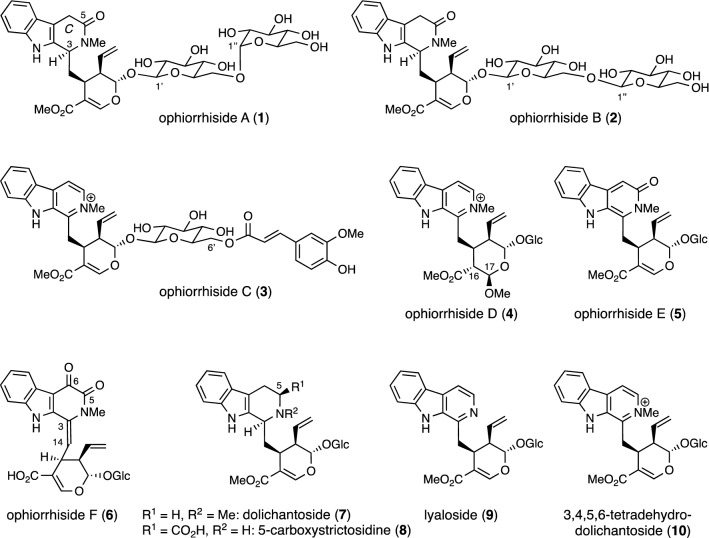
Structures of ophiorrhisides A–F (1–6) and alkaloids 7–10 isolated from Ophiorrhiza trichocarpon

Structures of ophiorrhisine A (11), 7’,10-dide-O-methylcephaeline (12), and alkaloids 8, 9, and 13–16 isolated from Ophiorrhiza nutans
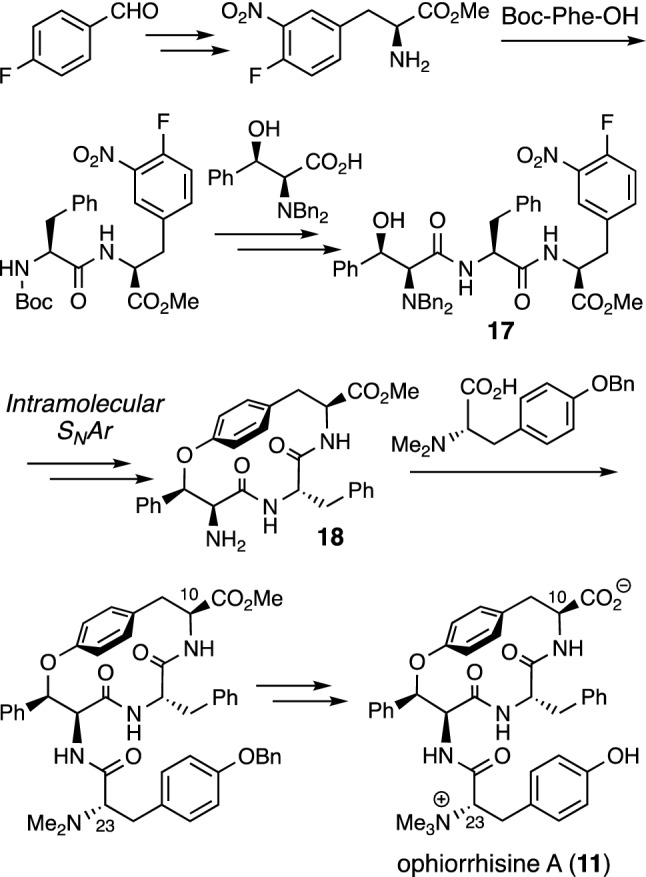
Asymmetric total synthesis of ophiorrhisine A (11)
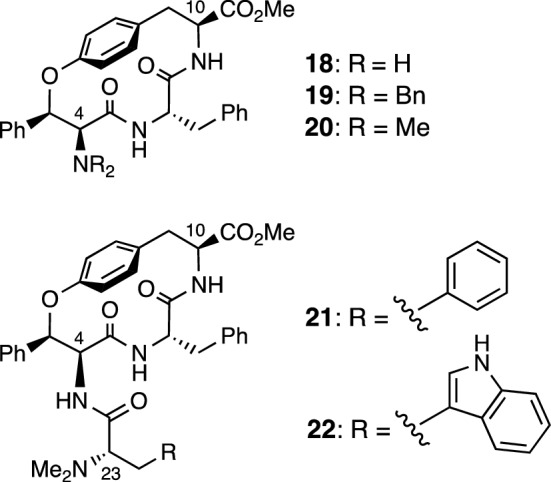
Structures of ophiorrhisine A derivatives having cytotoxicity against human cancer cell lines
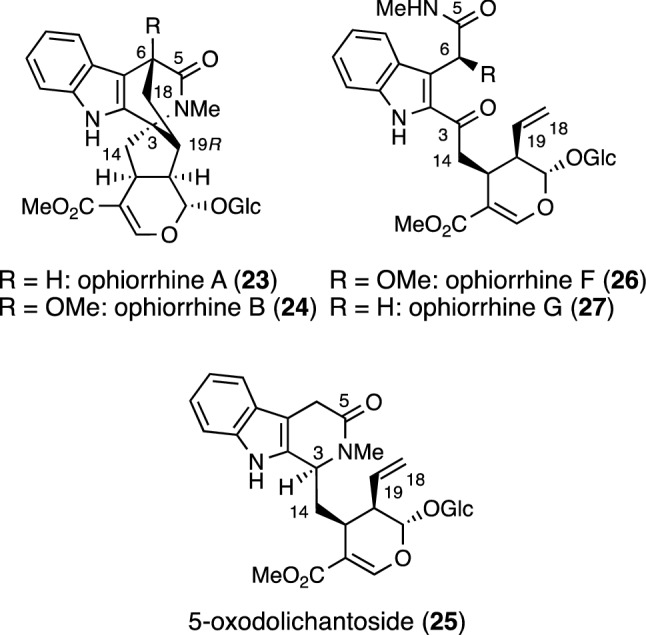
Structures of ophiorrhines A (23), B (24), F (26), and G (27) and alkaloid 25 isolated from Ophiorrhiza japonica

Structures of ophiorrhines C–E (28–30) and alkaloids 31 and 32 isolated from Ophiorrhiza cantoniensis
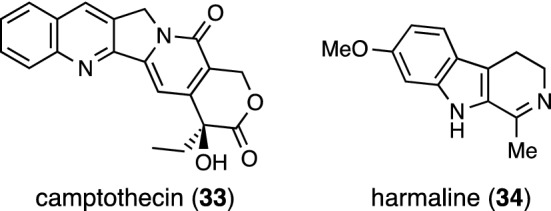
Structures of camptothecin (33) and harmaline (34)
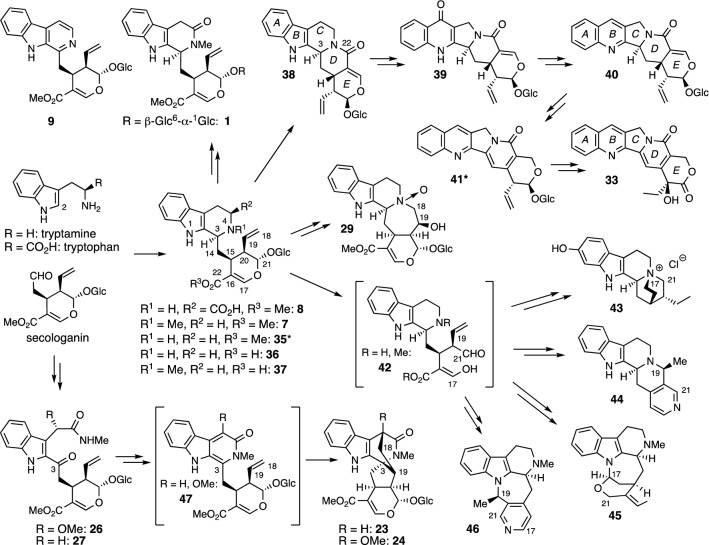
Plausible biosynthetic pathways of some monoterpenoid indole alkaloids in Ophiorrhiza plants (* not isolated from Ophiorrhiza plants but found in other plants)
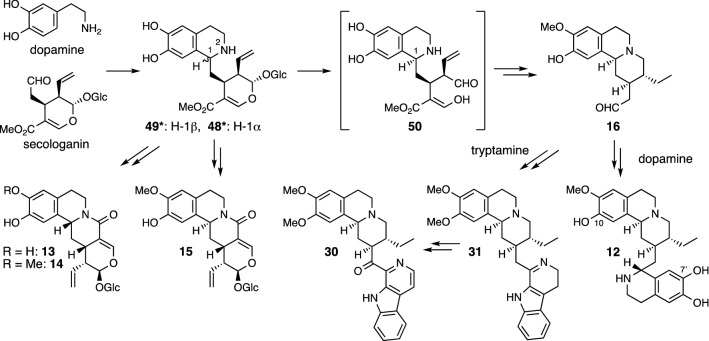
Proposed biosynthetic pathways for monoterpenoid tetrahydroisoquinoline alkaloids in Ophiorrhiza plants (* not isolated from Ophiorrhiza plants but found in other plants)
References
-
- Krishnakumar G, Dintu KP, Varghese SC, Nair DS, Gopinath G, Rameshkumar KB, Satheeshkumar K, Krishnan PN. Ophiorrhiza, a promising herbaceous source of the anticancer compound camptothecin. Plant Sci Today. 2020;7:240–250. doi: 10.14719/pst.2020.7.2.660. - DOI
-
- Johnson AJ, Rajan R, Baby S. Secondary metabolites from Ophiorrhiza. Nat Prod J. 2018;8:248–267.
-
- Arbain D. Inventory, constituents and conservation of biologically important Sumatran plants. Nat Prod Commun. 2012;7:799–806. - PubMed
-
- Kitajima M. Chemical studies on monoterpenoid indole alkaloids from medicinal plant resources, Gelsemium and Ophiorrhiza. J Nat Med. 2007;61:14–23. doi: 10.1007/s11418-006-0101-z. - DOI
Publication types
MeSH terms
Substances
LinkOut - more resources
Full Text Sources
Miscellaneous
