


Trends in prevalence, mortality, and disability-adjusted life-years relating to chronic obstructive pulmonary disease in Europe: an observational study of the global burden of disease database, 2001-2019
- PMID: 35902833
- PMCID: PMC9336030
- DOI: 10.1186/s12890-022-02074-z
Trends in prevalence, mortality, and disability-adjusted life-years relating to chronic obstructive pulmonary disease in Europe: an observational study of the global burden of disease database, 2001-2019
Abstract
Introduction: Chronic Obstructive Pulmonary Disease (COPD) is associated with significant mortality and well-defined aetiological factors. Previous reports indicate that mortality from COPD is falling worldwide. This study aims to assess the burden of COPD using prevalence, mortality, and disability-adjusted life years (DALYs) between 2001 and 2019 in 28 European countries (the European Union and the United Kingdom).
Methods: We extracted COPD data from the Global Burden of Disease database based on the International Classification of Diseases versions 10 (J41, 42, 43, 44 and 47). Age-standardised prevalence rates (ASPRs), age-standardised mortality rates (ASMRs), and DALYs were analysed for European countries by sex for each year (2001-2019) and reported per 100,000 population. We used Joinpoint regression analysis to quantify changing trends in the burden of COPD.
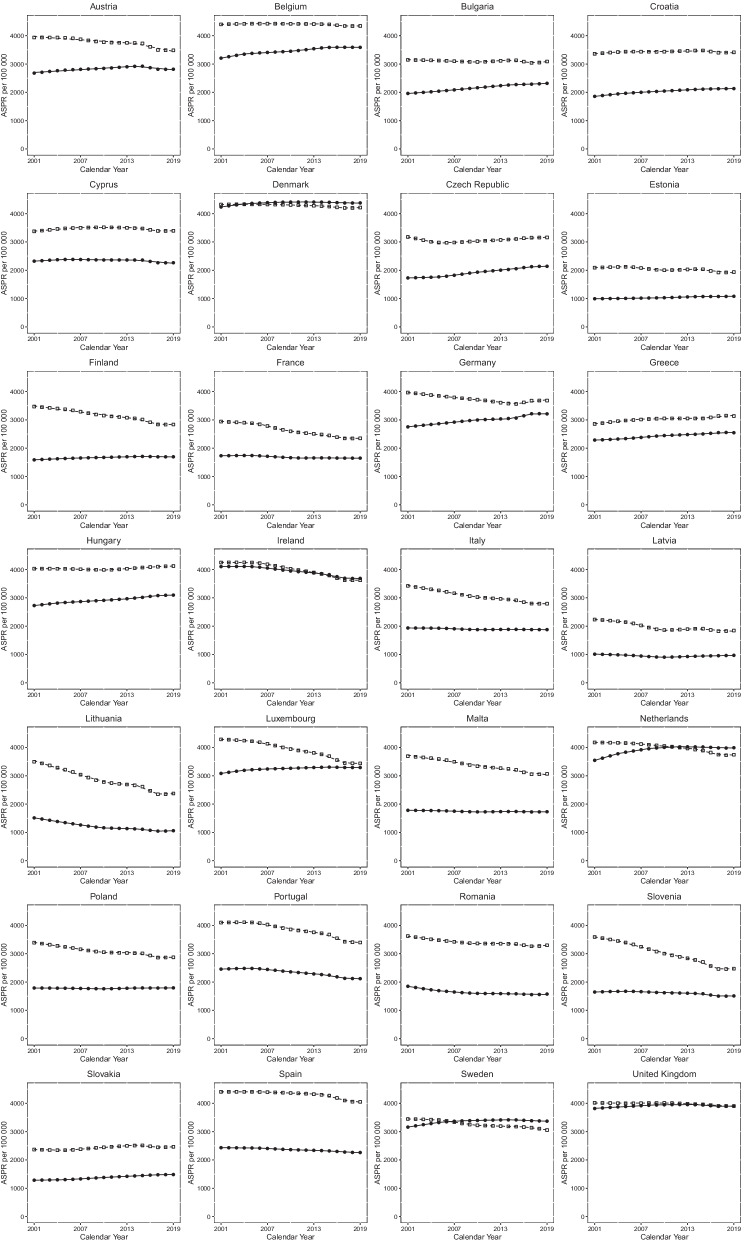
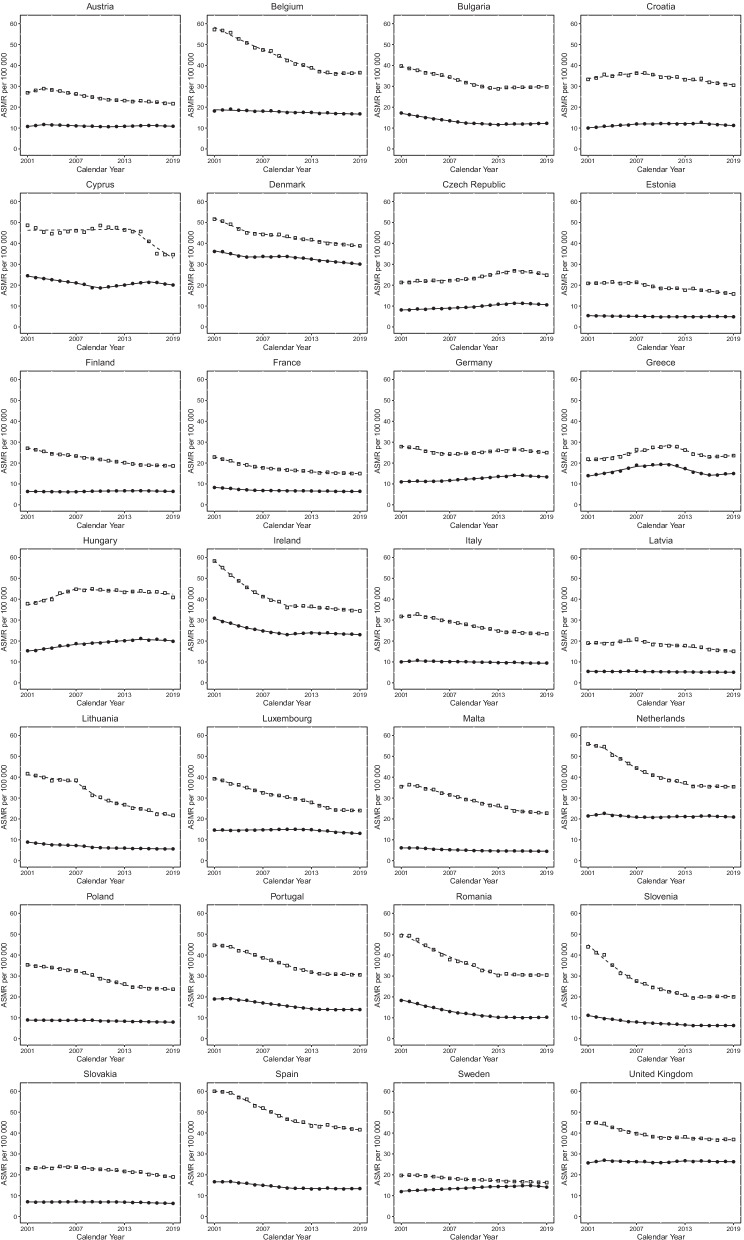
Results: In 2019, the median ASPR across Europe was 3230/100,000 for males and 2202/100,000 for females. Between 2001 and 2019, the median percentage change in ASPR was - 9.7% for males and 4.3% for females. 23/28 countries demonstrated a decrease in ASPRs in males, and 11/28 demonstrated a decrease in females. The median percentage change in ASMR between 2001 and 2019 was - 27.5% for males and - 10.4% for females. 25/28 and 19/28 countries demonstrated a decrease in ASMR in males and females, respectively.
Conclusion: In the EU between 2001 and 2019 COPD prevalence has overall increased in females but continues to decrease in males and in some countries, female prevalence now exceeds that of males. COPD mortality in the EU has decreased overall between 2001 and 2019; however, this decrease is not universal, particularly in females, and therefore remains a substantial source of amenable mortality.
Keywords: COPD; Chronic obstructive pulmonary disease; Mortality; Prevalence; Trends.
© 2022. The Author(s).
Conflict of interest statement
KFC has received honoraria for participating in Advisory Board meetings of GSK, AZ, Roche, Novartis, Merck, BI, TEVA and Shionogi regarding treatments for asthma, chronic obstructive pulmonary disease and chronic cough and has also been renumerated for speaking engagements. IA has received honoraria for speaking engagements from AZ, Sanofi, Eurodrug and Sunovion. No other authors have any relevant conflicts of interest.
Figures
References
-
- GBD2015 LRI Collaborators Estimates of the global, regional, and national morbidity, mortality, and aetiologies of lower respiratory tract infections in 195 countries: a systematic analysis for the global Burden of disease study 2015. Lancet Infect Dis. 2017;17:1133–1161. doi: 10.1016/S1473-3099(17)30396-1. - DOI - PMC - PubMed
-
- Soriano JB, Kendrick PJ, Paulson KR, Gupta V, Abrams EM, Adedoyin RA, et al. Prevalence and attributable health burden of chronic respiratory diseases, 1990–2017: a systematic analysis for the global Burden of disease study 2017. Lancet Respir Med. 2020;8:585–596. doi: 10.1016/S2213-2600(20)30105-3. - DOI - PMC - PubMed
Publication types
MeSH terms
Grants and funding
LinkOut - more resources
Full Text Sources
Medical
