


Mapping Colombians' positions on sentencing for substance offenses
- PMID: 35902875
- PMCID: PMC9330639
- DOI: 10.1186/s13011-022-00485-z
Mapping Colombians' positions on sentencing for substance offenses
Abstract
Background: In Colombia, a person caught in possession of an illicit substance is not judicially sanctioned as long as the quantity does not exceed the maximum allowable amounts. Given that the public is divided on the appropriateness of this policy, an examination of the various public positions was undertaken.
Method: A convenience sample of 302 adults were presented with 48 vignettes depicting a situation of everyday life easily recognizable by all in Colombia; that of a male person who is apprehended in the street by the police because he is suspected of illicit trafficking. These vignettes were created by orthogonal variation of four factors: Type of substance, amount of substance, type of charge against the offender, and offender's age.
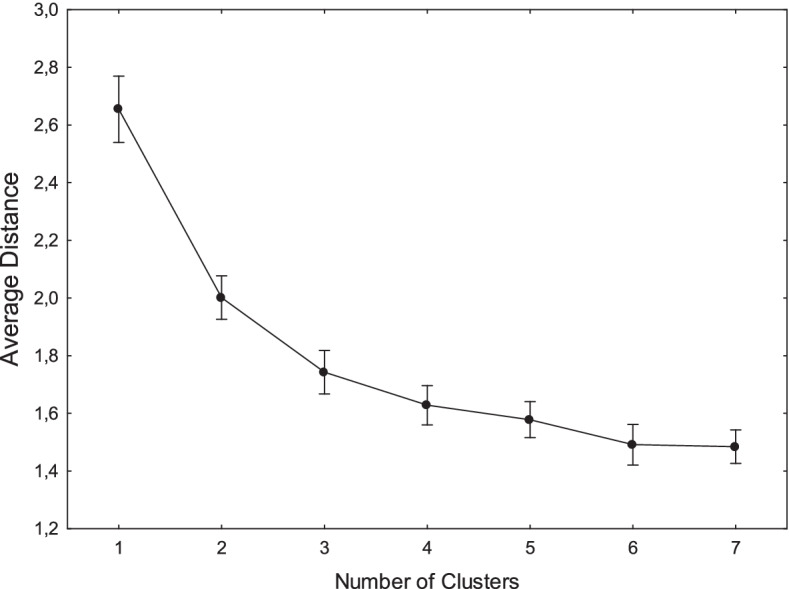
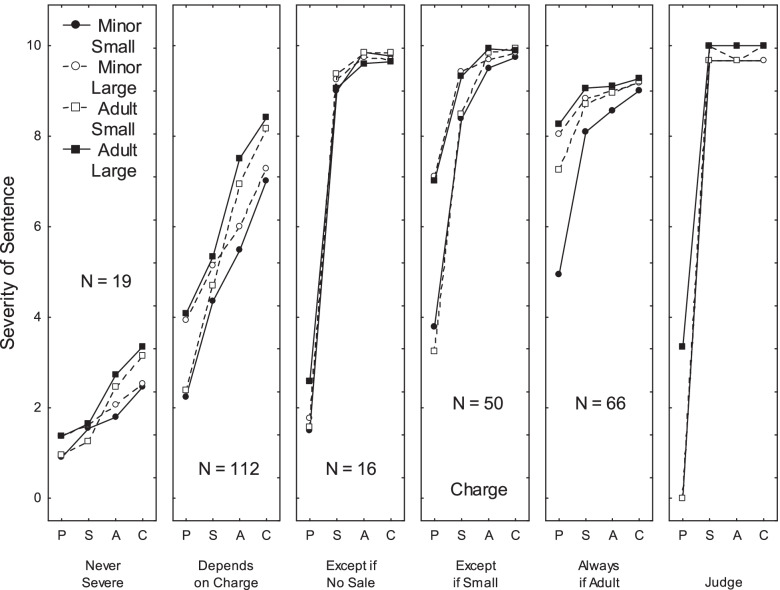
Results: Through cluster analysis, six qualitatively different positions were found. These positions corresponded to three distinct, classical philosophies (a) a libertarian, free-market philosophy - punishment should never be extremely severe because the trade in psychotropic substances is a trade like any other (6%), (b) a moralistic, conservative philosophy - punishment should always be extremely severe except perhaps in certain cases (52%), and (c) a progressive, human rights-inspired philosophy - punishment should always be proportional to the seriousness of the facts (42%).
Conclusion: Half of Colombian people supported a control policy according to which the use of psychotropic substances is considered profoundly immoral. Most of the other segment of the population express views similar to those of international organizations. It is therefore desirable that legislators rely on progressive international legislation to support domestic policies that are not strictly moralistic and conservative.
Keywords: Colombia; Drug offences; Personal positions; Sentencing.
© 2022. The Author(s).
Conflict of interest statement
The authors declare that they have no competing interests.
Figures

References
-
- Departamento Administrativo Nacional de Estadística . Estatisticas por tema [statistics by subject] 2020.
-
- Observatorio de Drogas de Colombia . Reporte de Drogas de Colombia. 2015.
-
- Jurisdicción Especial para la Paz. Acuerdo final para la terminación del conflicto y la construcción de una paz estable y duradera [Final agreement to end the conflict and build a stable and lasting peace]. Biblioteca del proceso de paz con las FARC-EP. Bogotá: Presidencia de la República, Oficina del Alto Comisionado para la Paz; 2016. https://www.jep.gov.co/Documents/Acuerdo%20Final/Acuerdo%20Final%20Firma... . [Accessed 5 June 2022].
-
- Tate W. Drugs, thugs, and diplomats: U.S. policymaking in Colombia. Stanford: Stanford University Press; 2015.
-
- Quintero IS, Posada IC. Estrategias políticas Para el tratamiento de las drogas ilegales en Colombia [policy strategies for the treatment of illegal drugs in Colombia] Revista Facultad Nacional Salud Pública. 2013;31(3):373–380.
Publication types
MeSH terms
Substances
LinkOut - more resources
Full Text Sources
Medical
