


Severe acute hepatitis of unknown aetiology in children-what is known?
- PMID: 35906650
- PMCID: PMC9336128
- DOI: 10.1186/s12916-022-02471-5
Severe acute hepatitis of unknown aetiology in children-what is known?
Abstract
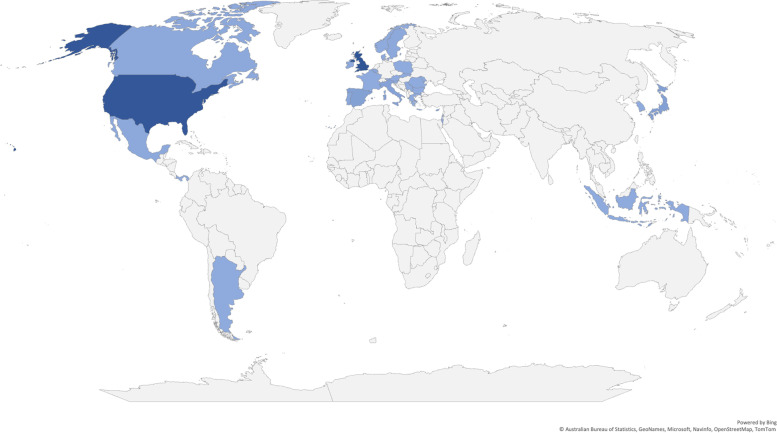
The ongoing investigations into clusters of children affected by severe acute hepatitis of unknown aetiology have put our global capacity for a coordinated, effective response to the test. The global health community have rapidly convened to share data and inform the response. In the UK, where most cases were initially identified, a coordinated public health and clinical research response was rapidly initiated. Since then, cases have been reported from other countries, predominantly from higher-income countries. While agencies are keeping an open mind to the cause, the working hypothesis and case notifications raise important questions about our capacity to detect emerging cases in lower-resourced settings with a recognised lack of access to diagnostics even for commonly circulating viruses such as hepatitis A. The limited capability to generate integrated global pathogen surveillance data is a challenge for the outbreak investigations, highlighting an urgent need to strengthen access to diagnostics, with a focus on lower-resourced settings, to improve the capacity to detect emerging diseases to inform care and to improve outcomes and outbreak control.
Keywords: Acute severe hepatitis of unknown origin; Child health; Global health; Outbreak response; Paediatrics; Preparedness.
© 2022. The Author(s).
Conflict of interest statement
The authors declare that they have no competing interests.
Figures


References
-
- Marsh K, Tayler R, Pollock L, Roy K, Lakha F, Ho A, et al. Investigation into cases of hepatitis of unknown aetiology among young children, Scotland, 1 January 2022 to 12 April 2022. Eurosurveillance. 2022;27(15). Available at: https://www.eurosurveillance.org/content/10.2807/1560-7917.ES.2022.27.15... - DOI - PMC - PubMed
-
- World Health Organization. Acute hepatitis of unknown aetiology - the United Kingdom of Great Britain and. Northern Ireland; 2022. Available at: https://www.who.int/emergencies/disease-outbreak-news/item/2022-DON368. Accessed 15 Jun 2022.
-
- ECDC. Increase in severe acute hepatitis cases of unknown aetiology in children. Rapid Risk Assessment. 2022. Available at: https://www.ecdc.europa.eu/en/publications-data/increase-severe-acute-he....
-
- World Health Organization. Acute hepatitis of unknown aetiology in children - multi-country. Disease Outbreak News. 2022. Available at: https://www.who.int/emergencies/disease-outbreak-news/item/DON-389. Accessed 8 June 2022.
-
- UK Health Security Agency. Investigation into acute hepatitis of unknown aetiology in children in England. Technical Briefing 3. 2022. Available at: https://assets.publishing.service.gov.uk/government/uploads/system/uploa.... Accessed 8 June 2022.
Publication types
MeSH terms
Grants and funding
LinkOut - more resources
Full Text Sources
Medical
