


Drug repurposing: a systematic review on root causes, barriers and facilitators
- PMID: 35906687
- PMCID: PMC9336118
- DOI: 10.1186/s12913-022-08272-z
Drug repurposing: a systematic review on root causes, barriers and facilitators
Abstract
Background: Repurposing is a drug development strategy receiving heightened attention after the Food and Drug Administration granted emergency use authorization of several repurposed drugs to treat Covid-19. There remain knowledge gaps on the root causes, facilitators and barriers for repurposing.
Method: This systematic review used controlled vocabulary and free text terms to search ABI/Informa, Academic Search Premier, Business Source Complete, Cochrane Library, EconLit, Google Scholar, Ovid Embase, Ovid Medline, Pubmed, Scopus, and Web of Science Core Collection databases for the characteristics, reasons and example of companies deprioritizing development of promising drugs and barriers, facilitators and examples of successful re-purposing.
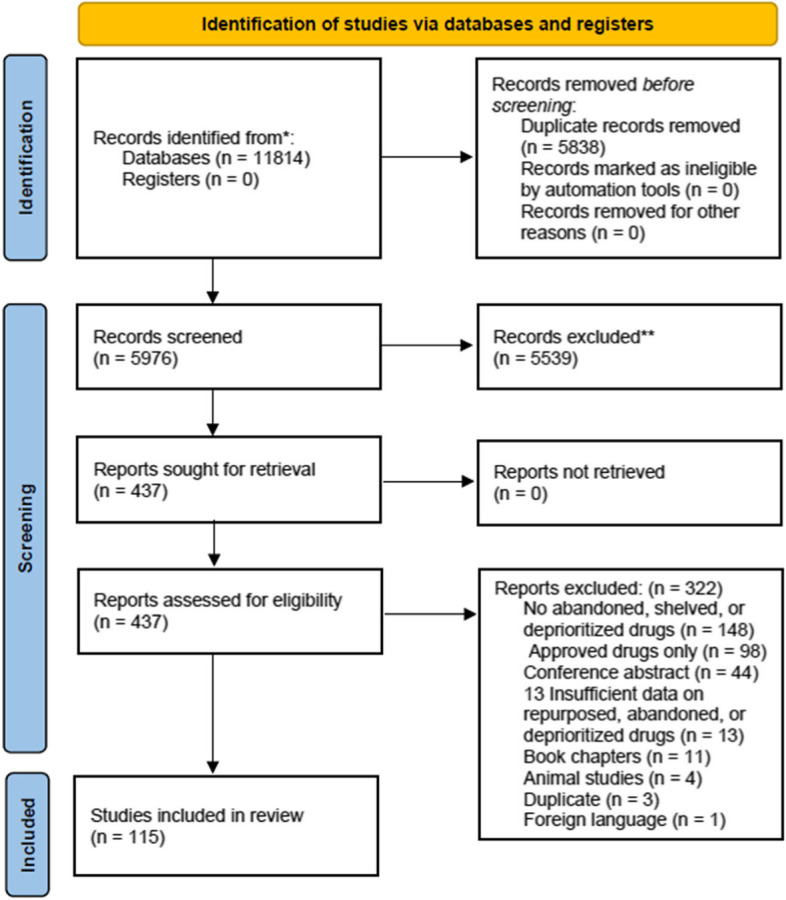
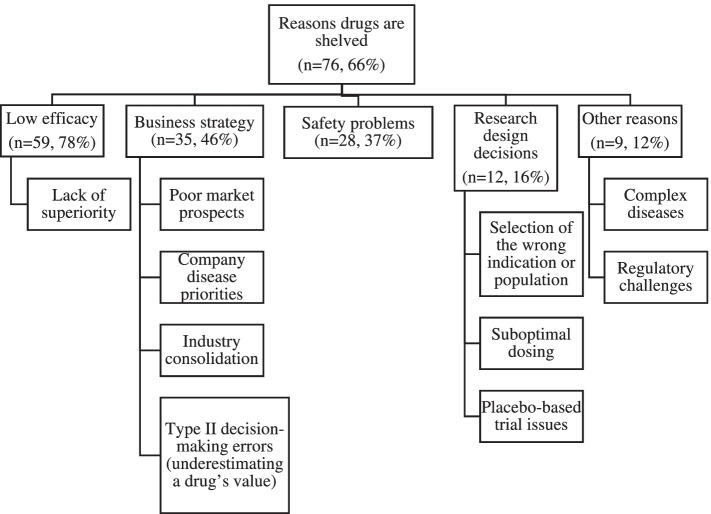
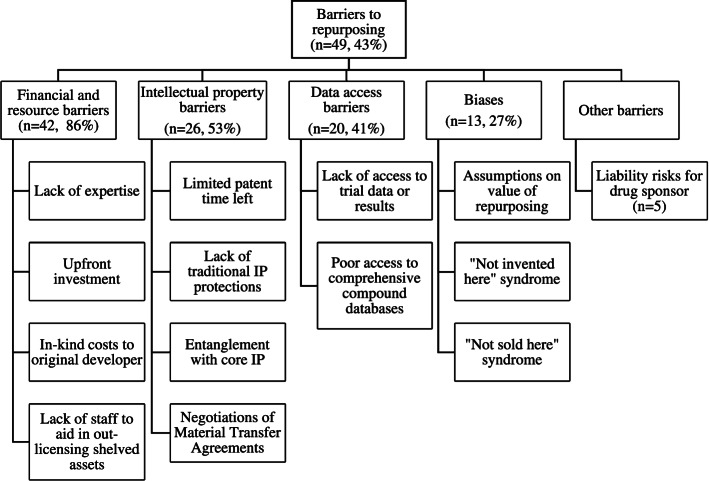
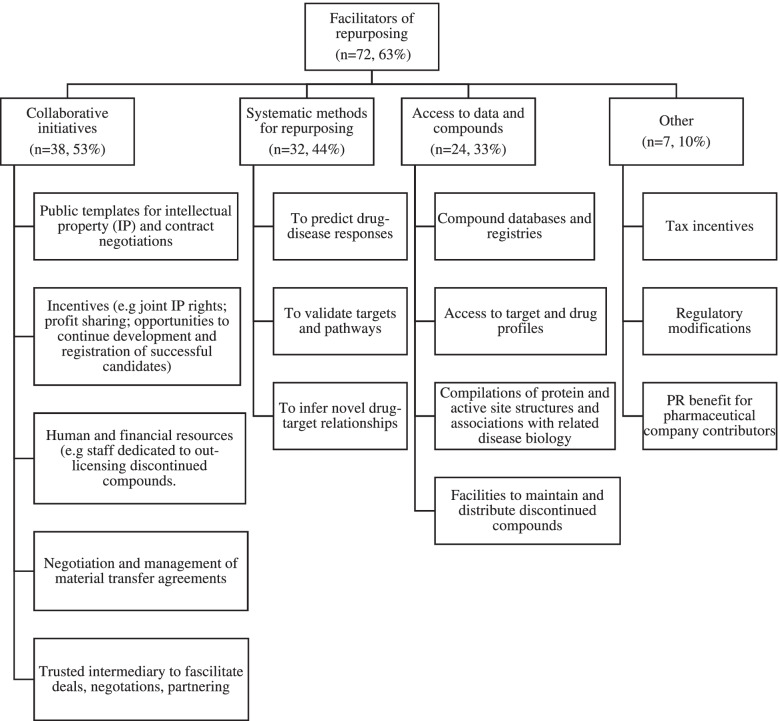
Results: We identified 11,814 articles, screened 5,976 for relevance, found 437 eligible for full text review, 115 of which were included in full analysis. Most articles (66%, 76/115) discussed why promising drugs are abandoned, with lack of efficacy or superiority to other therapies (n = 59), strategic business reasons (n = 35), safety problems (n = 28), research design decisions (n = 12), the complex nature of a studied disease or drug (n = 7) and regulatory bodies requiring more information (n = 2) among top reasons. Key barriers to repurposing include inadequate resources (n = 42), trial data access and transparency around abandoned compounds (n = 20) and expertise (n = 11). Additional barriers include uncertainty about the value of repurposing (n = 13), liability risks (n = 5) and intellectual property (IP) challenges (n = 26). Facilitators include the ability to form multi-partner collaborations (n = 38), access to compound databases and database screening tools (n = 32), regulatory modifications (n = 5) and tax incentives (n = 2).
Conclusion: Promising drugs are commonly shelved due to insufficient efficacy or superiority to alternate therapies, poor market prospects, and industry consolidation. Inadequate resources and data access and challenges negotiating IP are key barriers to repurposing reaching its full potential as a core approach in drug development. Multi-partner collaborations and the availability and use of compound databases and tax incentives are key facilitators for repurposing. More research is needed on the current value of repurposing in drug development and how to better facilitate resources to support it, where valuable, especially financial, staffing for out-licensing shelved products, and legal expertise to negotiate IP agreements in multi-partner collaborations.
Trial registration: The protocol was registered on Open Science Framework ( https://osf.io/f634k/ ) as it was not eligible for registration on PROSPERO as the review did not focus on a health-related outcome.
Keywords: Drug abandonment; Drug development; Repurposing.
© 2022. The Author(s).
Conflict of interest statement
Dr. Miller receives grant funding from the National Institutes of Health, Susan G. Komen Foundation, Milken Institute, and Arnold Ventures, and serves on the Alexion bioethics advisory committee, the board of the nonprofit Bioethics International, and Cambia Health pharmacy and therapeutics committee. Sung Hee Choe is an employee of Faster Cures at the Milken Institute. Nithya Krishnamurthy, Alyssa Grimshaw and Sydney Axson have no competing interests to declare.
Figures
References
Publication types
MeSH terms
Substances
Grants and funding
LinkOut - more resources
Full Text Sources
