Assessment of mycorrhizal association of a threatened medicinal plant Clerodendrum indicum (L.) O. Kuntze (Verbenaceae) in different ecological variations
- PMID: 35907141
- PMCID: PMC9679132
- DOI: 10.1007/s42770-022-00805-2
Assessment of mycorrhizal association of a threatened medicinal plant Clerodendrum indicum (L.) O. Kuntze (Verbenaceae) in different ecological variations
Abstract
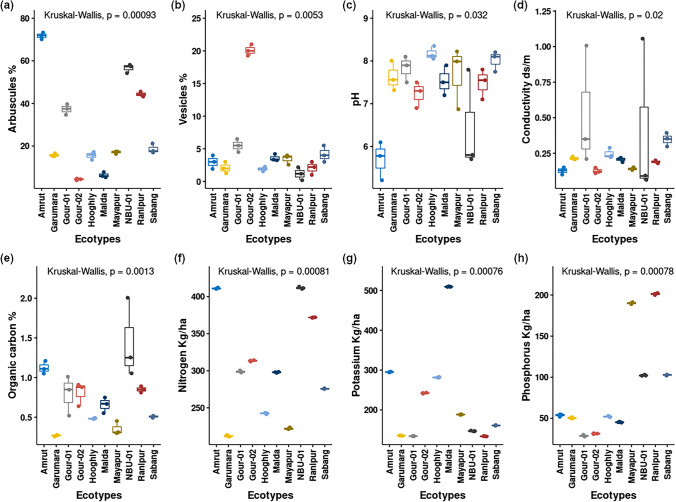
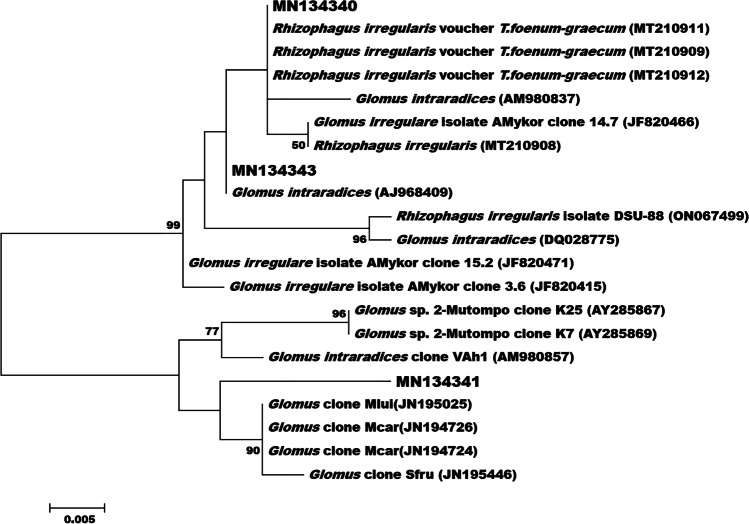
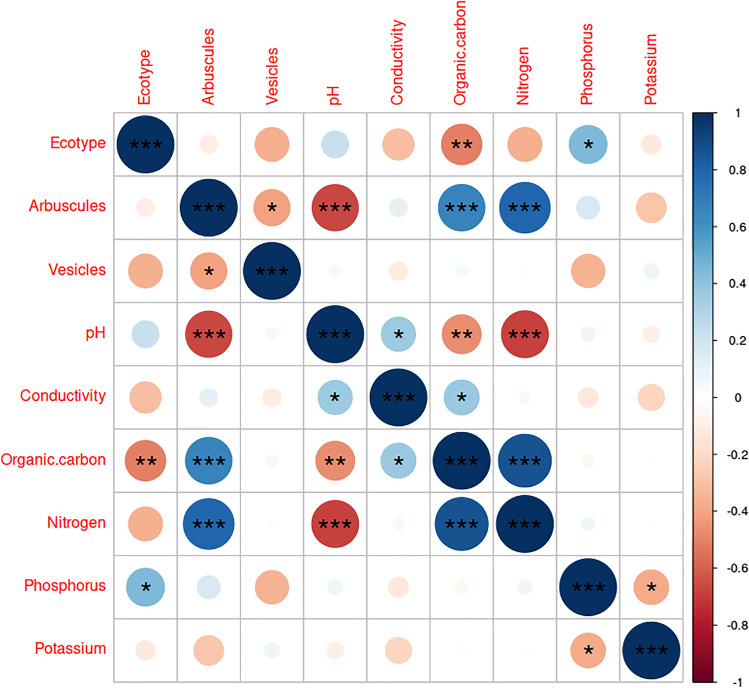
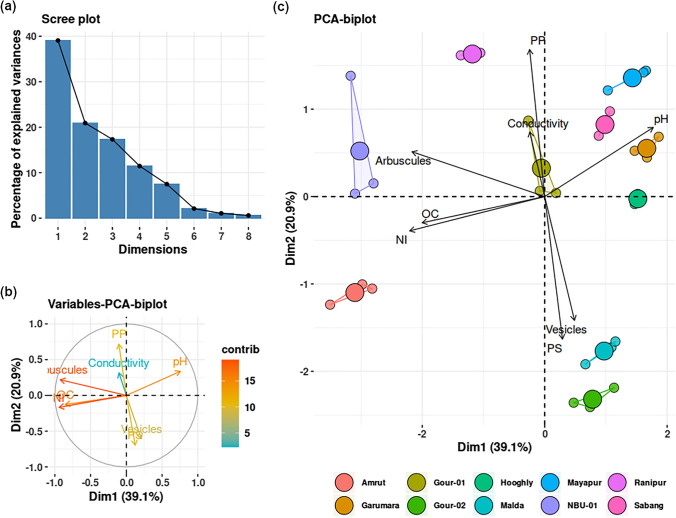
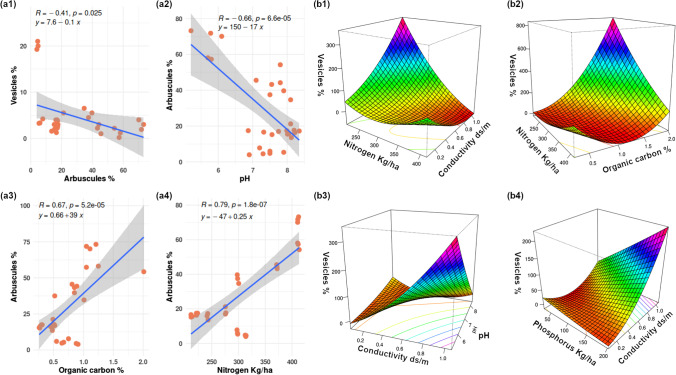
Mycorrhizae association is reported to enhance the survivability of the host plant under adverse environmental conditions. The present study aims to explore the mycorrhizal association in the roots of different ecotypes of a threatened medicinal plant, Clerodendrum indicum (L.) O. Kuntze (Verbenaceae), collected from W.B., India, which correlates the degree of root colonization to the nutritional status of the native soil. Ten ecotypes of C. indicum having diverse morphological variations were collected. The mycorrhizae were characterized by both morphological and molecular methods. The nutritional status of the native soils was estimated. The study revealed that all the ecotypes have an association with mycorrhizal forms like hyphae, arbuscules, and vesicles. The molecular analysis showed Glomus intraradices and Rhizophagus irregularis as the associated arbuscular mycorrhizal fungi (AMF). A significant variation in arbuscule and vesicle formation was found growing in the varied nutritional statuses concerning soil parameters. The arbuscule was found negatively correlated with pH, conductivity, and potassium and positively correlated with organic carbon, nitrogen, and phosphorus. The vesicle was found positively correlated with pH, organic carbon, and potassium and negatively correlated with conductivity, nitrogen, and phosphorus. The interaction between conductivity: nitrogen, conductivity: phosphorus, organic-carbon: nitrogen, and pH: conductivity was significant in influencing vesicle formation. However, none of the interactions between parameters was found significant in influencing arbuscule formation. Thus, the study concludes that G. intraradices and R. irregularis are the principle mycorrhizae forming the symbiotic association with the threatened medicinal plant, C. indicum. They form vesicles and arbuscules based on their soil nutritive factors. Therefore, a large-scale propagation through a selective AMF association would help in the conservation of this threatened species from extinction.
Keywords: Arbuscular mycorrhizal fungi; Glomus intraradices; Rhizophagus irregularis; Soil nutritional content.
© 2022. The Author(s) under exclusive licence to Sociedade Brasileira de Microbiologia.
Conflict of interest statement
The authors declare no competing interests.
Figures
References
-
- Taram M, Borah D, Tag H, Choudhary RK (2020) An inventory of the native flowering plants in East Siang District of Arunachal Pradesh, India. J Threatened Taxa 12(17):17299–17322. 10.11609/jott.6241.12.17.17299-17322
-
- Srivastava N, Patel T. Clerodendrum and healthcare: an overview-part II phytochemistry and biotechnology. Med Aromat Plant Sci Biotechnol. 2007;1(2):209–223.
-
- Kyaw EH, Iwasaki A, Suenaga K, Kato-Noguchi H. Phytotoxic activity of Clerodendrum indicum (L.) Kuntze and its potential phytotoxic substance. Emir J Food Agric. 2021;33(10):884–892.
-
- Sidde LS, Malathi S, Malathi SS (2018) A brief review on Clerodendrum indicum. Int J Indig Med Plants 31:1-4
MeSH terms
Substances
LinkOut - more resources
Full Text Sources