


New insights into the comorbid conditions of Turner syndrome: results from a long-term monocentric cohort study
- PMID: 35907176
- PMCID: PMC9646560
- DOI: 10.1007/s40618-022-01853-z
New insights into the comorbid conditions of Turner syndrome: results from a long-term monocentric cohort study
Abstract
Purpose: Many questions concerning Turner syndrome (TS) remain unresolved, such as the long-term complications and, therefore, the optimal care setting for adults. The primary aim of this long-term cohort study was to estimate the incidence of comorbid conditions along the life course.
Methods: A total of 160 Italian patients with TS diagnosed from 1967 to 2010 were regularly and structurally monitored from the diagnosis to December 2019 at the University Hospital of Bologna using a structured multidisciplinary monitoring protocol.
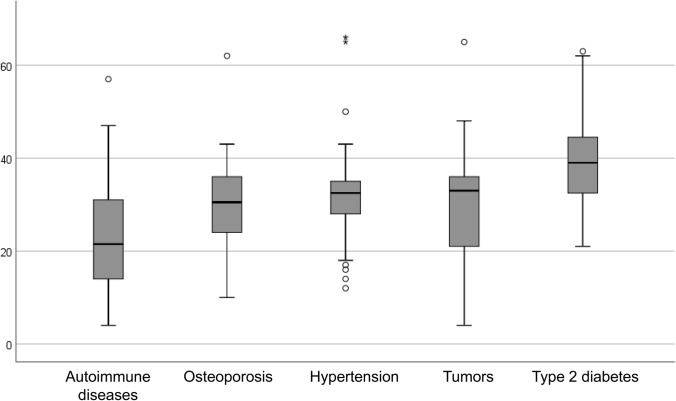
Results: The study cohort was followed up for a median of 27 years (IQR 12-42). Autoimmune diseases were the comorbid condition with the highest incidence (61.2%), followed by osteoporosis and hypertension (23.8%), type 2 diabetes (16.2%) and tumours (15.1%). Median age of onset ranged from 22 years for autoimmune diseases to 39 years for type 2 diabetes. Malignant tumours were the most prominent type of neoplasm, with a cumulative incidence of 11.9%. Papillary thyroid carcinoma was the most common form of cancer, followed by skin cancer and cancer of the central nervous system. Only one major cardiovascular event (acute aortic dissection) was observed during follow-up. No cases of ischaemic heart disease, heart failure, stroke or death were recorded.
Conclusions: This cohort study confirms the need for continuous, structured and multidisciplinary lifelong monitoring of TS, thus ensuring the early diagnosis of important comorbid conditions, including cancer, and their appropriate and timely treatment. In addition, these data highlight the need for the increased surveillance of specific types of cancer in TS, including thyroid carcinoma.
Keywords: Cancer; Cardiovascular events; Osteoporosis; Turner syndrome; Type 2 diabetes.
© 2022. The Author(s).
Conflict of interest statement
This research did not receive any specific grant from any funding agency in the public, commercial or not-for-profit sector. The corresponding author states that there is no conflict of interest.
Figures
References
-
- Saenger P, Wikland KA, Conway GS, Davenport M, Gravholt CH, Hintz R, Hovatta O, Hultcrantz M, Landin-Wilhelmsen K, Lin A, et al.; Fifth International Symposium on Turner Syndrome. Recommendations for the diagnosis and management of Turner Syndrome. J Clin Endocrinol Metab. 2001; 86: 3061–3069. 10.1210/jcem.86.7.7683. - PubMed
-
- Freriks K, Timmermans J, Beerendonk CCM, Verhaak CM, Netea-Maier RT, Otten BJ, Braat DDM, Smeets DFCM, Kunst DHPM, Hermus ARMM, et al. Standardized multidisciplinary evaluation yields significant previously undiagnosed morbidity in adult women with Turner Syndrome. J Clin Endocrinol Metab. 2011;96:E1517–E1526. doi: 10.1210/jc.2011-0346. - DOI - PubMed
-
- Fiot E, Zénaty D, Boizeau P, Haignere J, Dos Santos S, Léger J, French Turner Syndrome Study Group. X chromosome gene dosage as a determinant of congenital malformations and of age-related comorbidity risk in patients with Turner Syndrome, from childhood to early adulthood. Eur J Endocrinol 2019;180: 397–406. 10.1530/EJE-18-0878. - PubMed
MeSH terms
LinkOut - more resources
Full Text Sources
Medical
