


p300 arrests intervertebral disc degeneration by regulating the FOXO3/Sirt1/Wnt/β-catenin axis
- PMID: 35907249
- PMCID: PMC9381896
- DOI: 10.1111/acel.13677
p300 arrests intervertebral disc degeneration by regulating the FOXO3/Sirt1/Wnt/β-catenin axis
Abstract
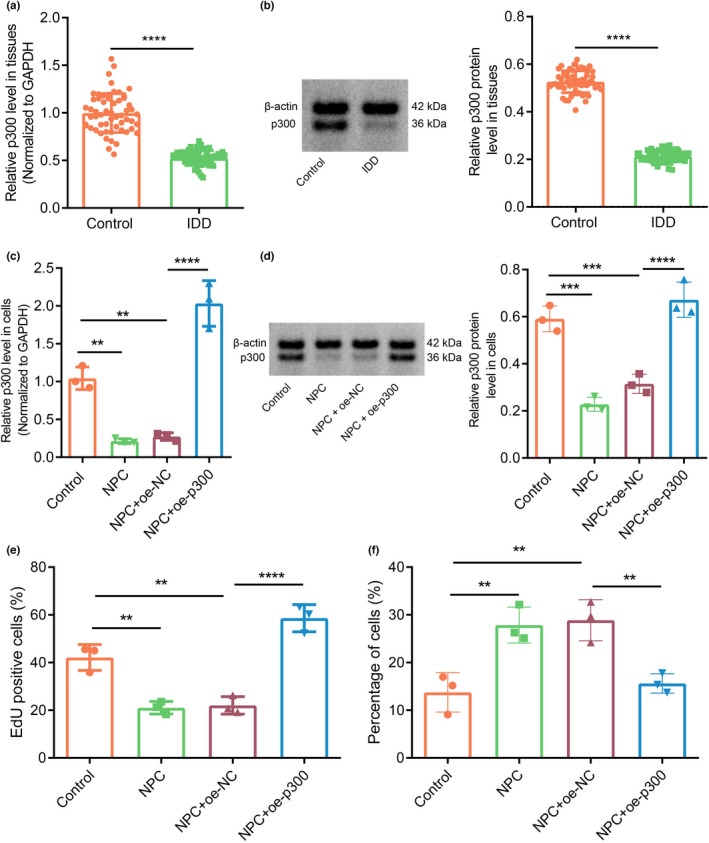
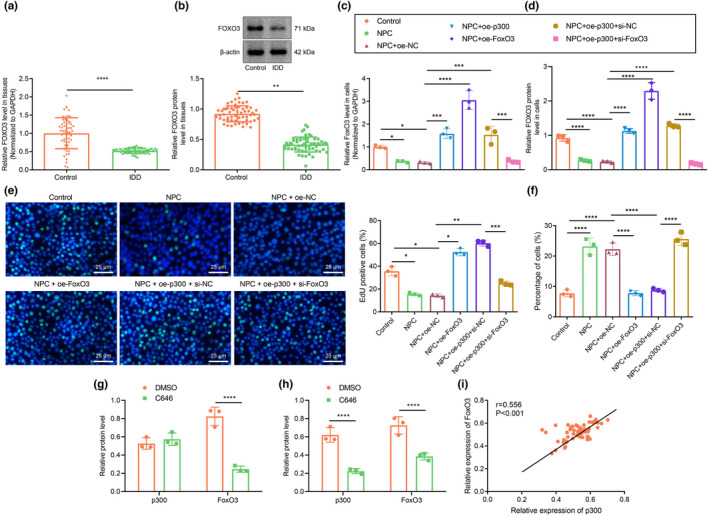
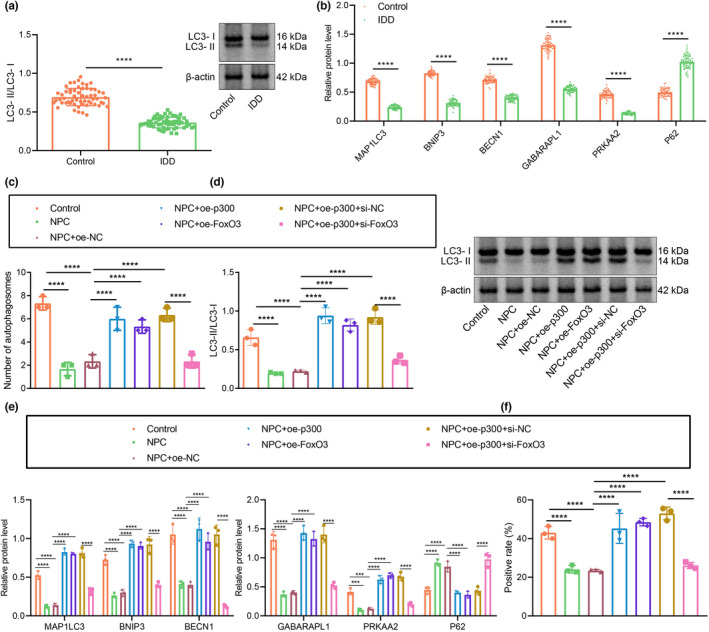
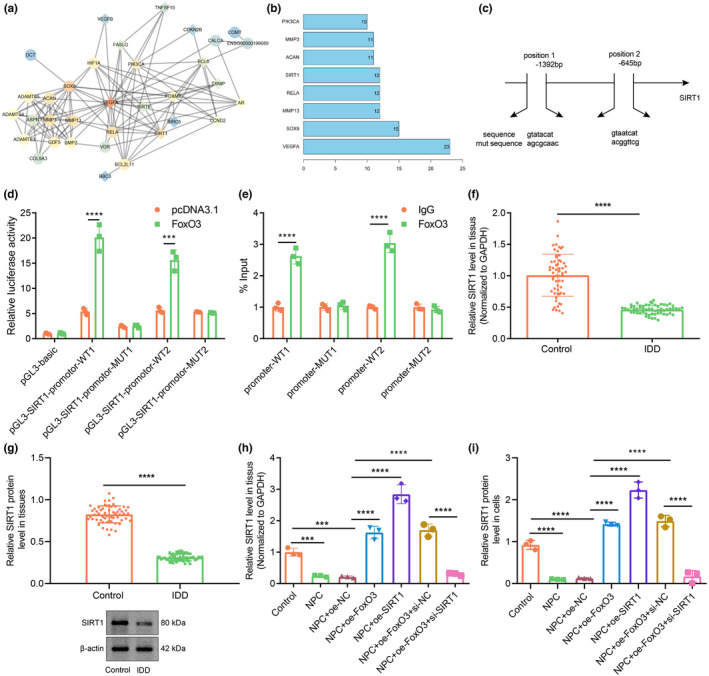
The transcription factor p300 is reportedly involved in age-associated human diseases, including intervertebral disc degeneration (IDD). In this study, we investigate the potential role and pathophysiological mechanism of p300 in IDD. Clinical tissue samples were collected from patients with lumbar disc herniation (LDH), in which the expression of p300, forkhead box O3 (FOXO3), and sirtuin 1 (Sirt1) was determined. Nucleus pulposus cells (NPCs) isolated from clinical degenerative intervertebral disc (IVD) tissues were introduced with oe-p300, oe-FOXO3, Wnt/β-catenin agonist 1, C646 (p300/CBP inhibitor), or si-p300 to explore the functional role of p300 in IDD and to characterize the relationship between p300 and the FOXO3/Sirt1/Wnt/β-catenin pathway. Also, we established a rat IDD model by inducing needle puncture injuries in the caudal IVDs for further verification of p300 functional role. We found that p300 was downregulated in the clinical tissues and NPCs of IDD. Overexpression of p300 promoted the proliferation and autophagy of NPCs while inhibiting cell apoptosis, which was associated with FOXO3 upregulation. p300 could increase the expression of FOXO3 by binding to the Sirt1 promoter, and thus, contributed to inactivation of the Wnt/β-catenin pathway. In vivo results further displayed that p300 slowed down the progression of IDD by disrupting the Wnt/β-catenin pathway through the FOXO3/Sirt1 axis. Taken together, we suggest that p300 can act to suppress IDD via a FOXO3-dependent mechanism, highlighting a potential novel target for treatment of IDD.
Keywords: Autophagy; FOXO3; Intervertebral disc degeneration; Nucleus pulposus cells; Sirt1; Wnt/β-catenin pathway; p300.
© 2022 The Authors. Aging Cell published by Anatomical Society and John Wiley & Sons Ltd.
Conflict of interest statement
The authors declare that they have no competing interests.
Figures
References
-
- Alvarez‐Garcia, O. , Matsuzaki, T. , Olmer, M. , Masuda, K. , & Lotz, M. K. (2017). Age‐related reduction in the expression of FOXO transcription factors and correlations with intervertebral disc degeneration. Journal of Orthopaedic Research, 35(12), 2682–2691. 10.1002/jor.23583 - DOI - PMC - PubMed
-
- Alvarez‐Garcia, O. , Matsuzaki, T. , Olmer, M. , Miyata, K. , Mokuda, S. , Sakai, D. , Masuda, K. , Asahara, H. , & Lotz, M. K. (2018). FOXO are required for intervertebral disk homeostasis during aging and their deficiency promotes disk degeneration. Aging Cell, 17(5), e12800. 10.1111/acel.12800 - DOI - PMC - PubMed
-
- Chen, D. , Xia, D. , Pan, Z. , Xu, D. , Zhou, Y. , Wu, Y. , Cai, N. , Tang, Q. , Wang, C. , Yan, M. , Zhang, J. J. , Zhou, K. , Wang, Q. , Feng, Y. , Wang, X. , Xu, H. , Zhang, X. , & Tian, N. (2016). Metformin protects against apoptosis and senescence in nucleus pulposus cells and ameliorates disc degeneration in vivo. Cell Death & Disease, 7(10), e2441. 10.1038/cddis.2016.334 - DOI - PMC - PubMed
Publication types
MeSH terms
Substances
LinkOut - more resources
Full Text Sources
Research Materials
Miscellaneous
