


Detecting and describing heterogeneity in health care cost trajectories among asylum seekers
- PMID: 35907845
- PMCID: PMC9339203
- DOI: 10.1186/s12913-022-08346-y
Detecting and describing heterogeneity in health care cost trajectories among asylum seekers
Abstract
Background: The mechanism underlying the health care cost trajectories among asylum seekers is not well understood. In the canton of Vaud in Switzerland, a nurse-led health care and medical Network for Migrant Health ("Réseau santé et migration" RESAMI) has established a health care model focusing on the first year after arrival of asylum seekers, called the "community health phase". This model aims to provide tailored care and facilitate integration into the Swiss health care system. The aim of this study is to explore different health care cost trajectories among asylum seekers during this phase and identify the associated factors.
Methods: We detected different patterns of health care cost trajectories using time-series clustering of longitudinal data of asylum seekers in the canton of Vaud in Switzerland. These data included all adult asylum seekers and recipients of emergency aid who entered the canton between 2012 and 2015 and were followed until 2018. The different clusters of health care cost trajectories were then described using a multinomial logistic regression model.
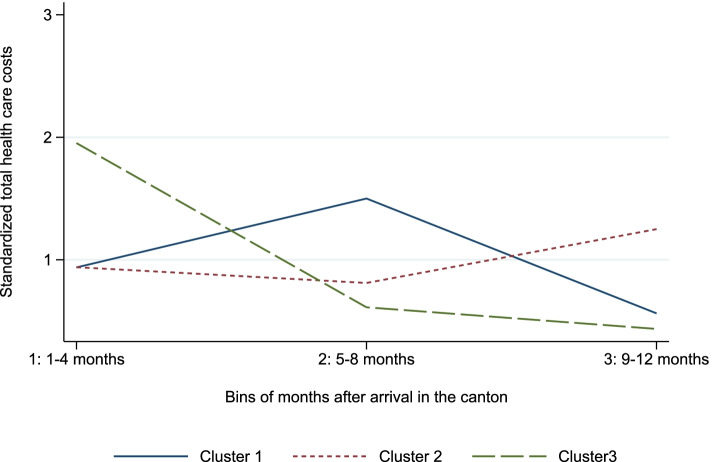
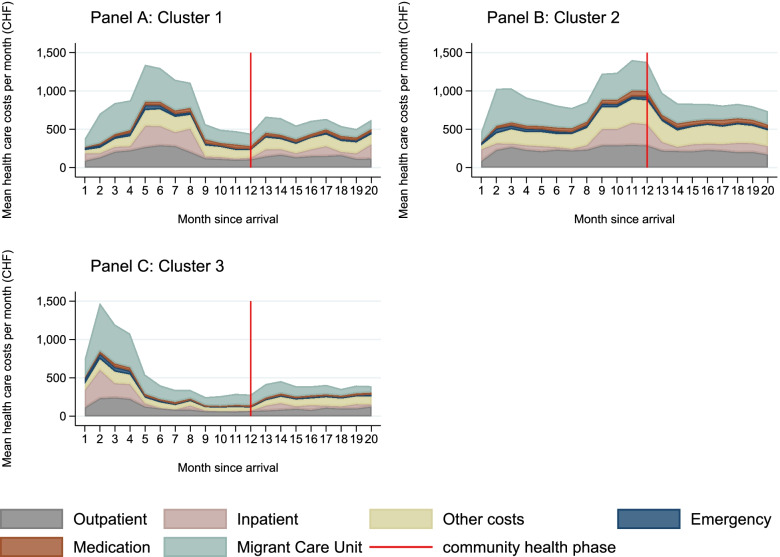
Results: We identified a concave, an upward trending, and a downward trending cluster of health care cost trajectories with different characteristics being associated with each cluster. The likelihood of being in the concave cluster is positively associated with coming from the Eastern Mediterranean region or Africa rather than Europe and with a higher share of consultations with an interpreter. The likelihood of being in the upward trending cluster, which accrued the highest costs, is positively associated with 20-24-year-olds rather than older individuals, coming from Europe than any other region and having a mental disorder. In contrast to the other two clusters, the likelihood of being in the downward trending cluster is positively associated with having contacted the RESAMI network within the first month after arrival, which might indicate the potential of early intervention. It is also positively associated with older age and living in a group lodge.
Conclusions: Asylum seekers are heterogeneous in terms of health care cost trajectories. Exploring these differences can help point to possible ways to improve the care and supporting services provided to asylum seekers. Our findings could indicate that early and patient-centered interventions might be well-suited to this aim.
Keywords: Asylum seekers; Health care cost trajectories; Health care utilization; Recipients of emergency aid; Switzerland.
© 2022. The Author(s).
Conflict of interest statement
The authors declare that they have no competing interests.
Figures
References
-
- Dowling A, Enticott J, Kunin M, Russell G. An investigation into the association of pre-and post-migration experiences on the self-rated health status among new resettled adult humanitarian refugees to Australia: a protocol for a mixed methods study. BMC Int Health Hum Rights. 2019;19:15. doi: 10.1186/s12914-019-0198-2. - DOI - PMC - PubMed
MeSH terms
LinkOut - more resources
Full Text Sources
