


Mobile health application for Thai women: investigation and model
- PMID: 35907950
- PMCID: PMC9338500
- DOI: 10.1186/s12911-022-01944-0
Mobile health application for Thai women: investigation and model
Abstract
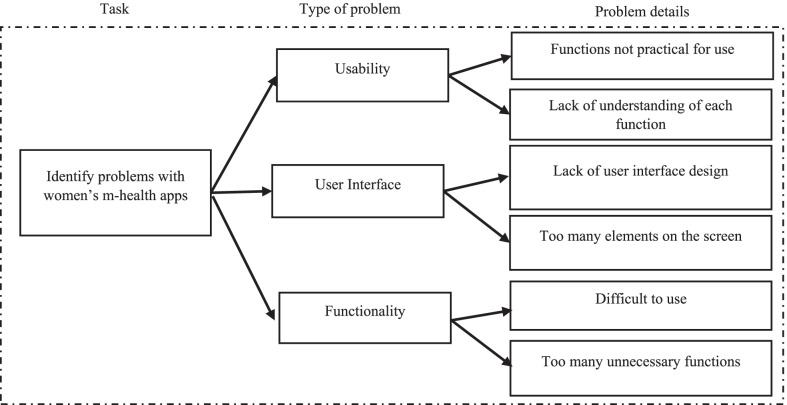
Background: Women's mobile health (m-health) applications are currently widely used for health education, medication, prevention of illness, etcetera. However, women are extremely sensitive to their design. While the number of m-health applications for women is increasing, many are of poor quality and have development issues.
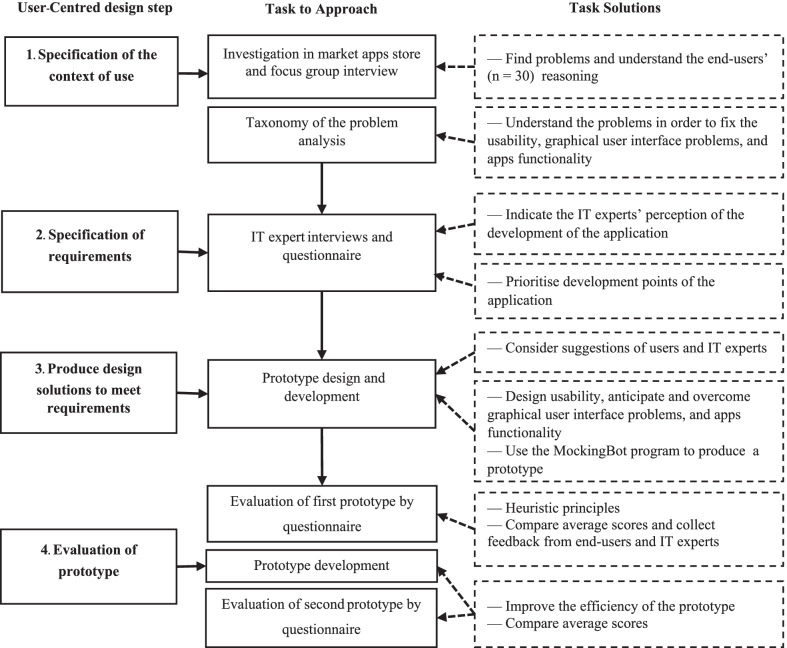
Objective: This paper aims to develop and evaluate an m-health application for Thai women based on a user-centred design (UCD). Current women's m-health applications were investigated to identify any lack of development in usability, functionality and graphical user interface. The results were evaluated and used to create criteria for the trial of a prototype application.
Methods: UCD methodology was used to design a graphical user interface, analyse the application's functionality, and enhance its usability. Data from thirty female end-users were collected and maintained locally, and thirteen information technology (IT) experts provided feedback on the prototype trial. Interviews and questionnaires were used to gather user data and identify problems.
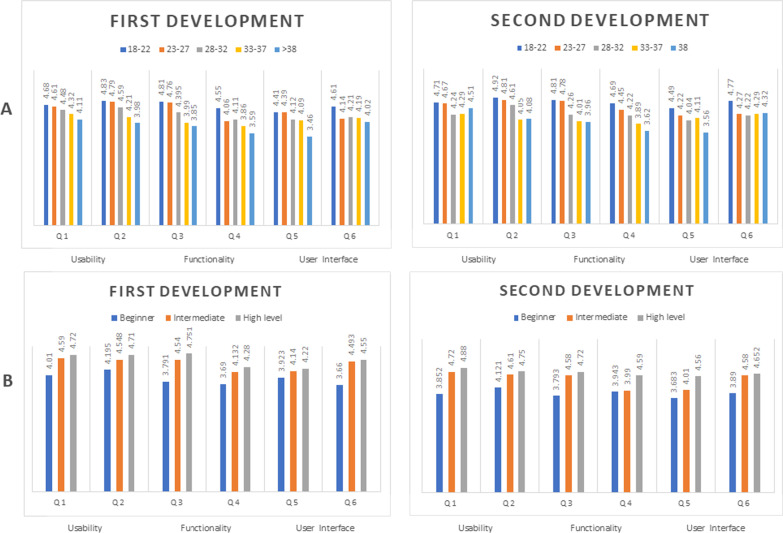
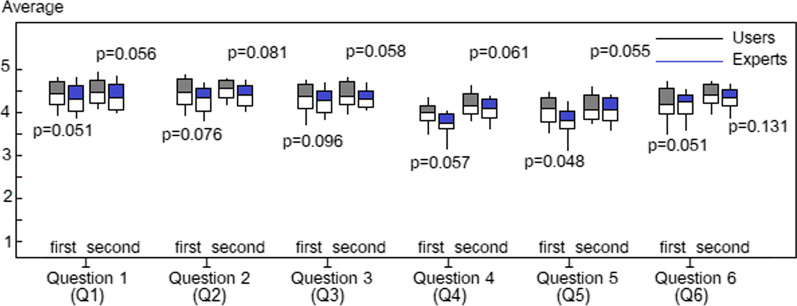
Results: The average scores of the evaluation by the end-users (n = 30) and IT experts (n = 13) were compared using a t-test statistical analysis. For the first version, the end-users gave higher usability scores (average = 4.440), with no statistical significance and a P value of 0.05. In comparison, lower scores for functionality were given by the IT experts (average = 4.034), with no statistical significance and a P value of 0.05. For the second version, the average scores from the end-users were higher than those from the IT experts. The highest score was related to usability (average = 4.494), with no statistical significance and a P value of 0.05. The lowest score was for the user interface from the group of IT experts (average = 4.084), with no statistical significance and a P value of 0.05.
Conclusion: A UCD was utilised to construct a process taxonomy to understand, analyse, design and develop an application suitable for Thai women. It was found from an evaluation of the currently-available women's m-health applications that usability is their main weakness; therefore, this aspect needed to be prioritised in the new design. According to the results, IT experts' perspective of the development of an m-health application was different from that of end-users. Hence, it was evident that both end-users and IT experts needed to be involved in helping developers to analyse, prioritise and establish a strategy for developing an m-health application, particularly one for women's health. This would give researchers an in-depth understanding of the end-users' expectations.
Keywords: Application functionality; Graphical user interface; Usability; User-centered design; Women’s health application.
© 2022. The Author(s).
Conflict of interest statement
The authors declare no competing interests.
Figures

References
-
- Thinnukool O, Khuwuthyakorn P, Wientong P. Pharmacy Assistant Mobile Application (PAMA): development and reviews. Int J Interact Mob Technol. 2017;11(3):178–194. doi: 10.3991/ijim.v11i3.6757. - DOI
-
- Thinnukool O, Khuwuthyakorn P, Wientong P, Panityakul T. Non-prescription medicine mobile healthcare application: smartphone-based software design and development review. Int J Interact Mob Technol. 2017;11(5):130–146. doi: 10.3991/ijim.v11i5.7123. - DOI
-
- Lakhan A, Li J, Groenli TM, Sodhro AH, Zardari NA, Imran AS, Thinnukool O, Khuwuthyakorn P. Dynamic application partitioning and task-scheduling secure schemes for biosensor healthcare workload in mobile edge cloud. Electronics. 2021;10:2797. doi: 10.3390/electronics10222797. - DOI
MeSH terms
LinkOut - more resources
Full Text Sources
Medical
