


Neural Mechanism Underlying Task-Specific Enhancement of Motor Learning by Concurrent Transcranial Direct Current Stimulation
- PMID: 35908004
- PMCID: PMC9849633
- DOI: 10.1007/s12264-022-00901-1
Neural Mechanism Underlying Task-Specific Enhancement of Motor Learning by Concurrent Transcranial Direct Current Stimulation
Abstract
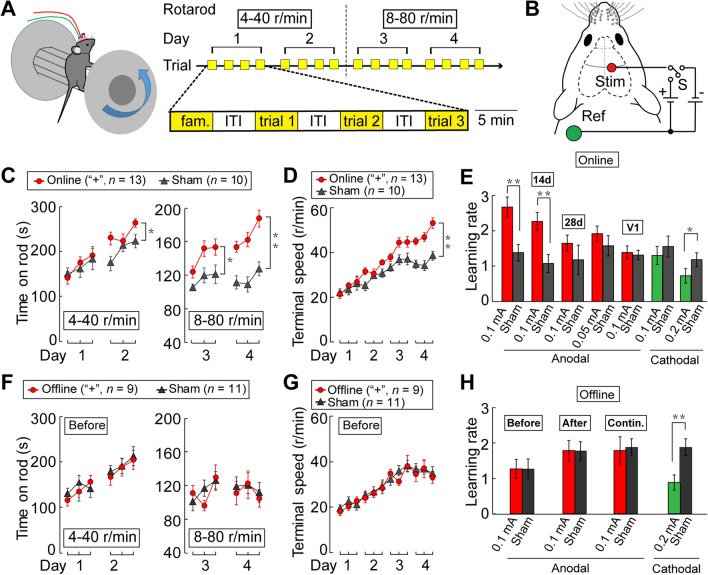
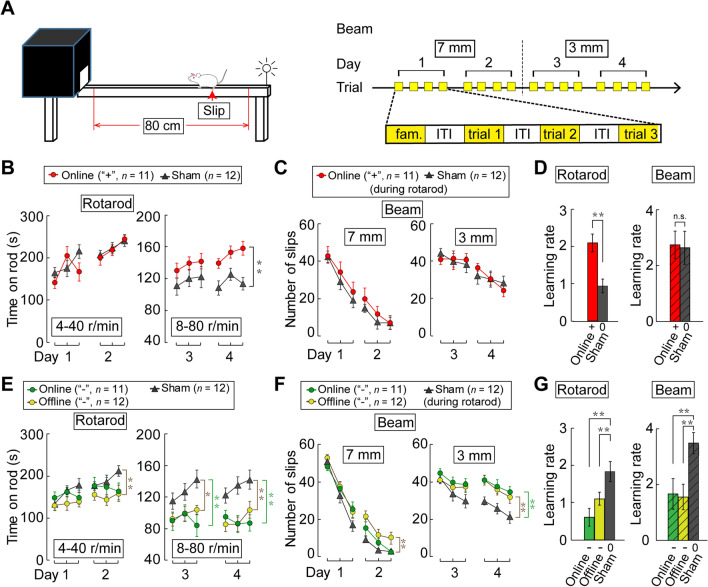
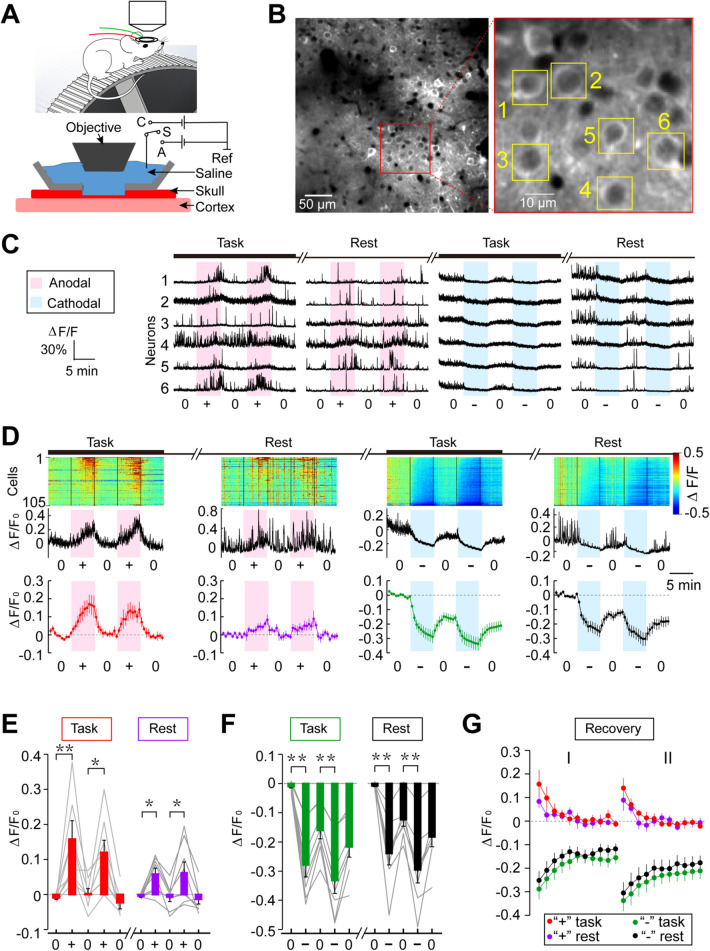
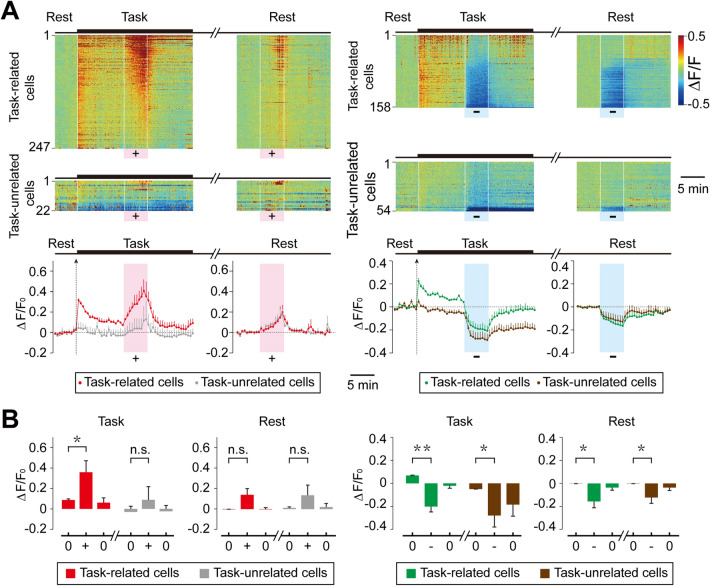
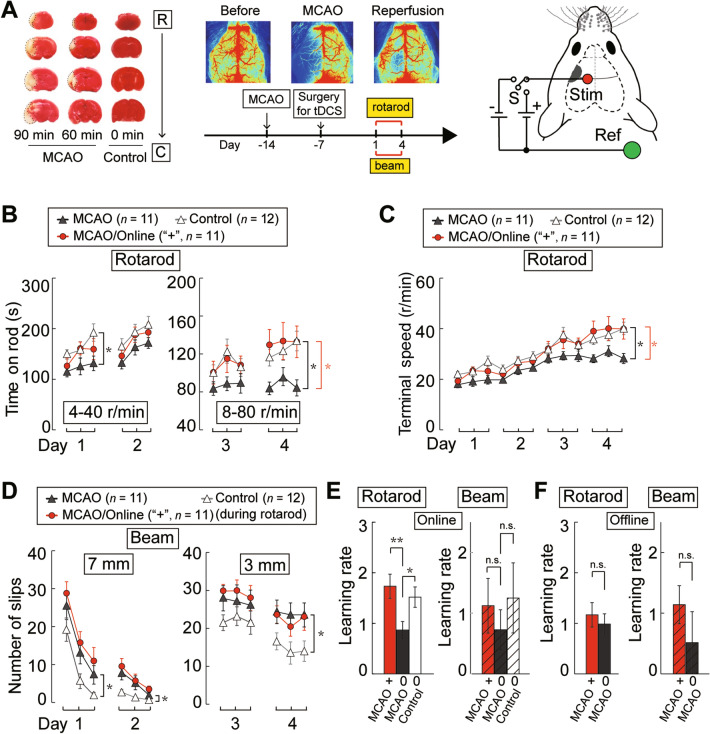
The optimal protocol for neuromodulation by transcranial direct current stimulation (tDCS) remains unclear. Using the rotarod paradigm, we found that mouse motor learning was enhanced by anodal tDCS (3.2 mA/cm2) during but not before or after the performance of a task. Dual-task experiments showed that motor learning enhancement was specific to the task accompanied by anodal tDCS. Studies using a mouse model of stroke induced by middle cerebral artery occlusion showed that concurrent anodal tDCS restored motor learning capability in a task-specific manner. Transcranial in vivo Ca2+ imaging further showed that anodal tDCS elevated and cathodal tDCS suppressed neuronal activity in the primary motor cortex (M1). Anodal tDCS specifically promoted the activity of task-related M1 neurons during task performance, suggesting that elevated Hebbian synaptic potentiation in task-activated circuits accounts for the motor learning enhancement. Thus, application of tDCS concurrent with the targeted behavioral dysfunction could be an effective approach to treating brain disorders.
Keywords: Motor learning; Neural mechanism of tDCS; Neuronal excitability; Stroke model mouse; tDCS effect.
© 2022. Center for Excellence in Brain Science and Intelligence Technology, Chinese Academy of Sciences.
Conflict of interest statement
The authors declare no conflicts of interest.
Figures
References
-
- Kuo MF, Paulus W, Nitsche MA. Therapeutic effects of non-invasive brain stimulation with direct currents (tDCS) in neuropsychiatric diseases. Neuro Image. 2014;85(Pt 3):948–960. - PubMed
-
- Fregni F, Boggio PS, Mansur CG, Wagner T, Ferreira MJL, Lima MC, et al. Transcranial direct current stimulation of the unaffected hemisphere in stroke patients. Neuro Report. 2005;16:1551–1555. - PubMed
MeSH terms
LinkOut - more resources
Full Text Sources
Miscellaneous
