


Long-term wellbeing and neurocognitive functioning of diffuse low-grade glioma patients and their caregivers: A longitudinal study spanning two decades
- PMID: 35908832
- PMCID: PMC9925694
- DOI: 10.1093/neuonc/noac185
Long-term wellbeing and neurocognitive functioning of diffuse low-grade glioma patients and their caregivers: A longitudinal study spanning two decades
Abstract
Background: While patients with diffuse low-grade glioma (LGG) often survive for years, there is a risk of tumor progression which may impact patients' long-term health-related quality of life (HRQOL) and neurocognitive functioning (NCF). We present a follow-up of LGG patients and their informal caregivers (T3) who took part in our previous HRQOL investigations (T1, M = 7 and T2 M = 13 years after diagnosis).
Methods: Participants completed HRQOL (short form-36 health survey [SF-36]; EORTC-BN20), fatigue (Checklist Individual Strength [CIS]), and depression (Center for Epidemiological Studies-Depression [CES-D]) questionnaires and underwent NCF assessments. T3 scores were compared with matched controls. Changes over time (T1-T2-T3) on group and participant level were assessed. Where available, histology of the initial tumor was revised and immunohistochemical staining for IDH1 R132H mutant protein was performed.
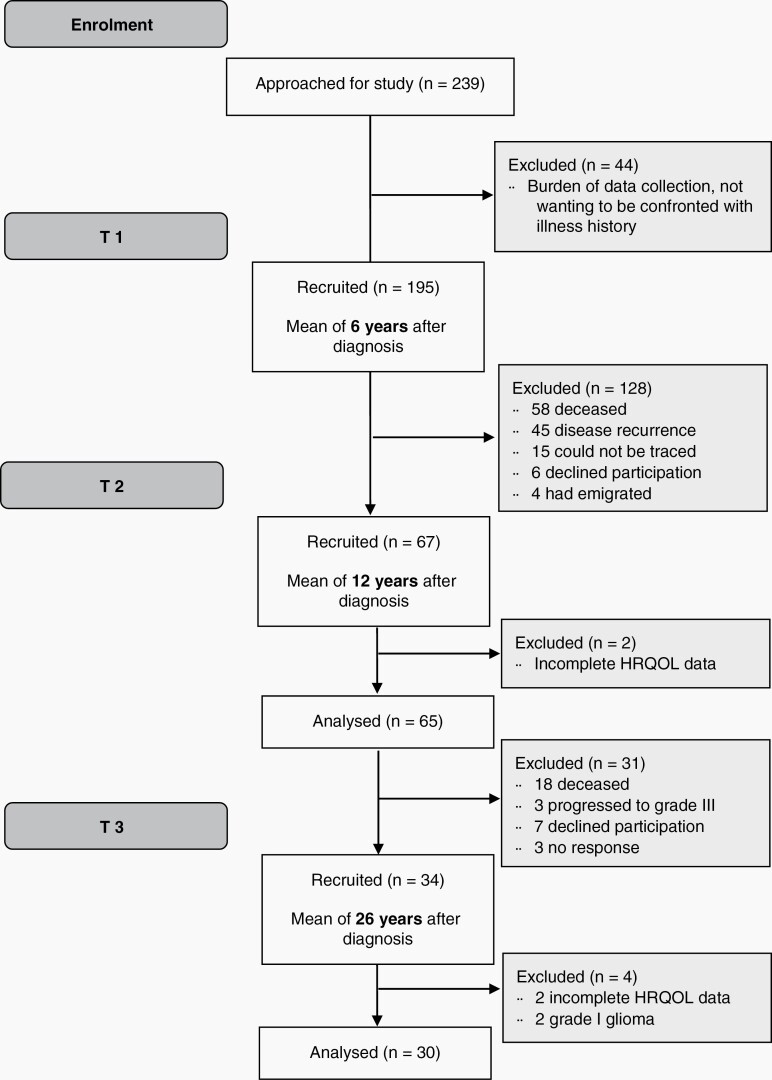
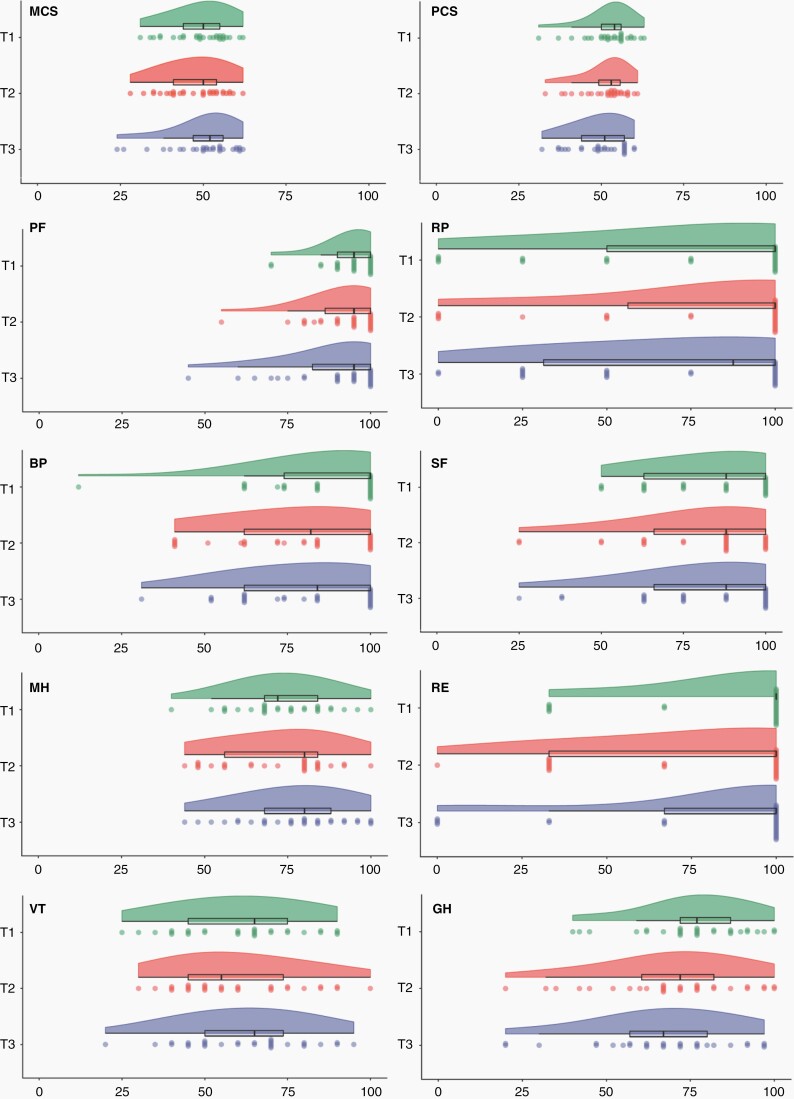
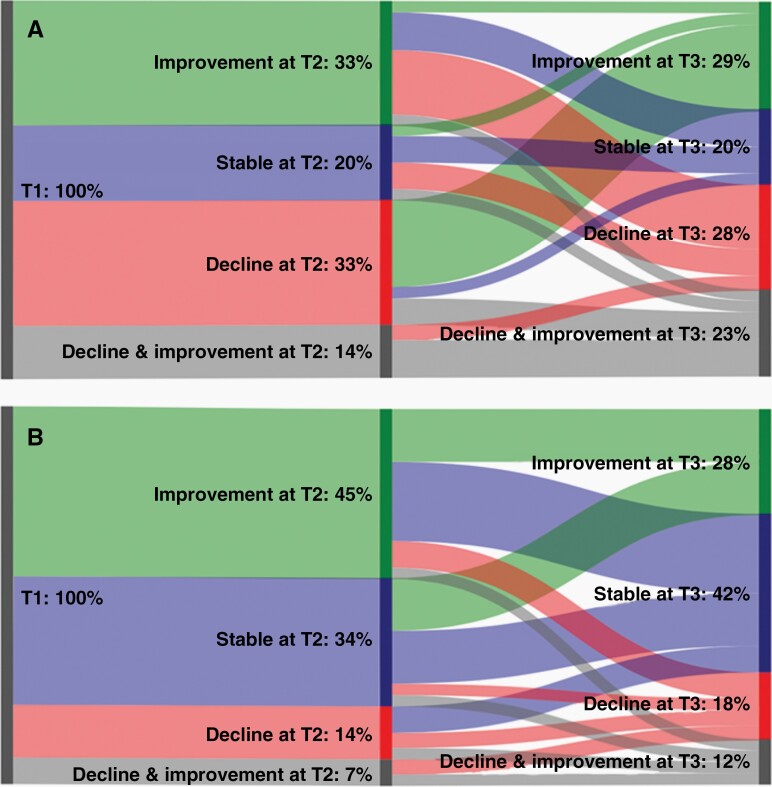
Results: Thirty patients and nineteen caregivers participated. Of N = 11 with tissue available, 3 patients had confirmed diffuse LGG. At T3, patients (M = 26 years after diagnosis) had HRQOL and NCF similar to, or better than controls, yet 23.3% and 53.3% scored above the cut-off for depression (≥16 CES-D) and fatigue (≥35 CIS), respectively. Caregivers' HRQOL was similar to controls but reported high rates of fatigue (63.2%). Over time, patients' mental health improved (P < .05). Minimal detectable change in HRQOL over time was observed in individual patients (30% improvement; 23.3% decline; 20% both improvement and decline) with 23.3% remaining stable. NCF remained stable or improved in 82.8% of patients.
Conclusions: While HRQOL and NCF do not appear greatly impacted during long-term survivorship in LGG, depressive symptoms and fatigue are persistent.
Keywords: depression; fatigue; low-grade glioma; quality of life; survivorship.
© The Author(s) 2022. Published by Oxford University Press on behalf of the Society for Neuro-Oncology.
Figures
References
-
- Louis DN, Perry A, Reifenberger G, et al. . The 2016 World Health Organization classification of tumors of the central nervous system: a summary. Acta Neuropathol. 2016;131(6):803–820. - PubMed
-
- Olson JD, Riedel E, DeAngelis LM. Long-term outcome of low-grade oligodendroglioma and mixed glioma. Neurology. 2000;54(7):1442–1448. - PubMed
-
- Pignatti F, van den Bent M, Curran D, et al. . Prognostic factors for survival in adult patients with cerebral low-grade glioma. J Clin Oncol. 2002;20(8):2076–2084. - PubMed
-
- Reijneveld J, Sitskoorn M, Klein M, Nuyen J, Taphoorn M. Cognitive status and quality of life in patients with suspected versus proven low-grade gliomas. Neurology. 2001;56(5):618–623. - PubMed
MeSH terms
LinkOut - more resources
Full Text Sources
Medical
Miscellaneous
