


Couplants in Acoustic Biosensing Systems
- PMID: 35909809
- PMCID: PMC9169999
- DOI: 10.3390/chemosensors10050181
Couplants in Acoustic Biosensing Systems
Abstract
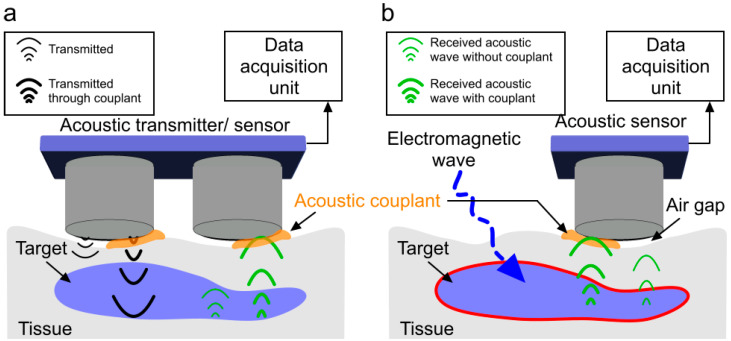
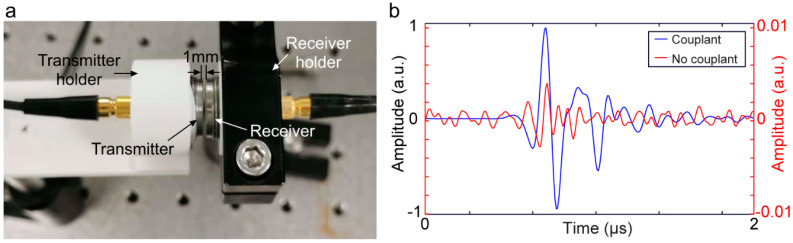
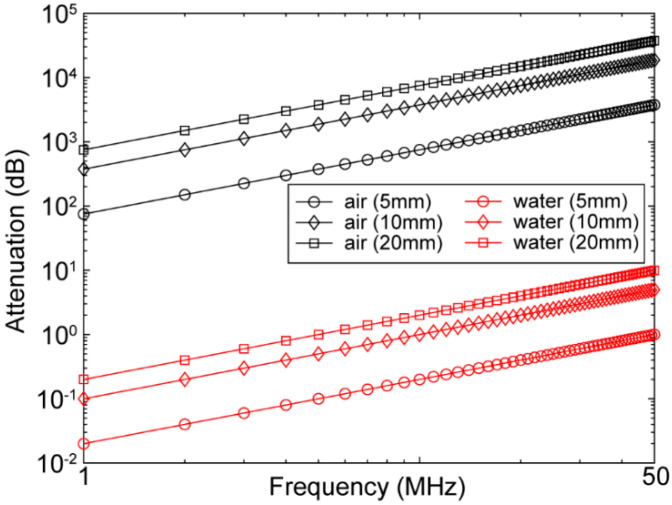
Acoustic biosensors are widely used in physical, chemical, and biosensing applications. One of the major concerns in acoustic biosensing is the delicacy of the medium through which acoustic waves propagate and reach acoustic sensors. Even a small airgap diminishes acoustic signal strengths due to high acoustic impedance mismatch. Therefore, the presence of a coupling medium to create a pathway for an efficient propagation of acoustic waves is essential. Here, we have reviewed the chemical, physical, and acoustic characteristics of various coupling material (liquid, gel-based, semi-dry, and dry) and present a guide to determine a suitable application-specific coupling medium.
Keywords: acoustic sensors; couplant; coupling agent; dry; liquid/gel; semi-dry.
© 2022 by the authors.
Conflict of interest statement
Conflicts of InterestThe authors declare no conflict of interest.
Figures
References
-
- Gooding J.J. Biosensor technology for detecting biological warfare agents: Recent progress and future trends. Anal. Chim. Acta. 2006;559:137–151. doi: 10.1016/j.aca.2005.12.020. - DOI
-
- Bhardwaj T. Review on biosensor technologies. Int. J. Adv. Res. Eng. Technol. 2015;6:36–62.
-
- Pohanka M., Skládal P. Electrochemical biosensors—Principles and applications. J. Appl. Biomed. 2008;6:57–64. doi: 10.32725/jab.2008.008. - DOI
Publication types
Grants and funding
LinkOut - more resources
Full Text Sources