


An Overview of Circulating Pulmonary Arterial Hypertension Biomarkers
- PMID: 35911521
- PMCID: PMC9333554
- DOI: 10.3389/fcvm.2022.924873
An Overview of Circulating Pulmonary Arterial Hypertension Biomarkers
Abstract
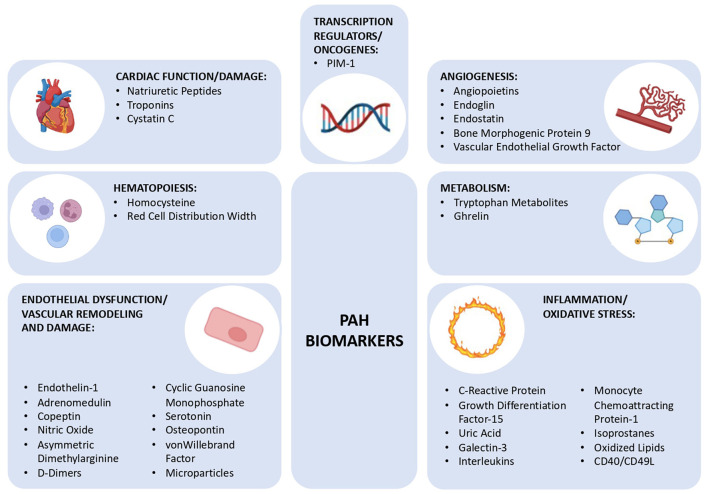
Pulmonary arterial hypertension (PAH), also known as Group 1 Pulmonary Hypertension (PH), is a PH subset characterized by pulmonary vascular remodeling and pulmonary arterial obstruction. PAH has an estimated incidence of 15-50 people per million in the United States and Europe, and is associated with high mortality and morbidity, with patients' survival time after diagnosis being only 2.8 years. According to current guidelines, right heart catheterization is the gold standard for diagnostic and prognostic evaluation of PAH patients. However, this technique is highly invasive, so it is not used in routine clinical practice or patient follow-up. Thereby, it is essential to find new non-invasive strategies for evaluating disease progression. Biomarkers can be an effective solution for determining PAH patient prognosis and response to therapy, and aiding in diagnostic efforts, so long as their detection is non-invasive, easy, and objective. This review aims to clarify and describe some of the potential new candidates as circulating biomarkers of PAH.
Keywords: biomarkers; circulating levels; diagnosis; prognosis; pulmonary arterial hypertension; pulmonary hypertension.
Copyright © 2022 Santos-Gomes, Gandra, Adão, Perros and Brás-Silva.
Conflict of interest statement
The authors declare that the research was conducted in the absence of any commercial or financial relationships that could be construed as a potential conflict of interest.
Figures
References
Publication types
LinkOut - more resources
Full Text Sources
Other Literature Sources
