


A review of the effects of Urtica dioica (nettle) in metabolic syndrome
- PMID: 35911652
- PMCID: PMC9282742
- DOI: 10.22038/IJBMS.2022.58892.13079
A review of the effects of Urtica dioica (nettle) in metabolic syndrome
Abstract
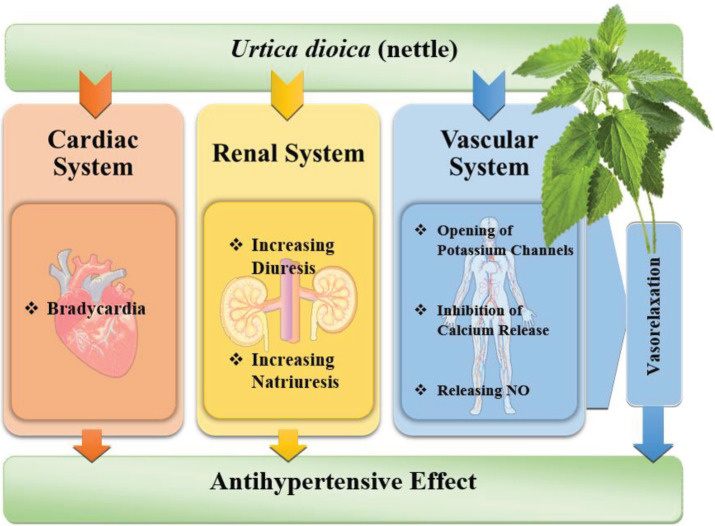
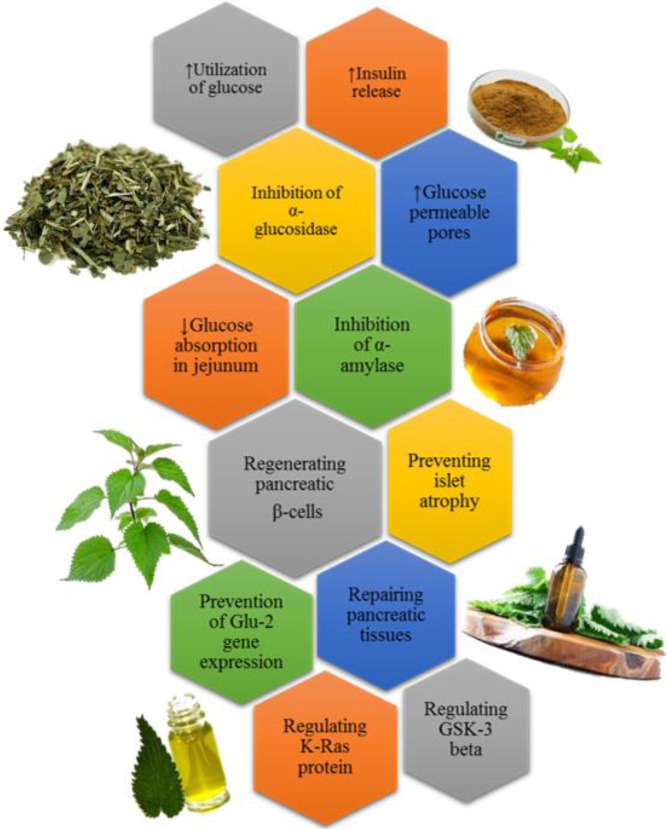
Metabolic syndrome is a serious health condition, yet a common worldwide disorder. It includes several risk factors such as hypertension, dyslipidemia, and high glucose levels which lead the patients to higher risks of cardiovascular diseases, diabetes, and stroke. Phytotherapy plays an important role in treating components of metabolic syndrome. Nettle (Urtica dioica) is considered a valuable plant due to bioactive compounds such as formic acid and rich sources of flavonoids. To acknowledge the role of nettle in metabolic syndrome, several mechanisms have been suggested such as alterations in potassium and calcium channels which improve hypertension. Antihyperlipidemic properties of nettle are mediated by inhibition of HMGCoA reductase and amelioration of lipid peroxidation via antioxidant effects. Also, one of the flavonoids in nettle, quercetin, is responsible for decreasing total cholesterol. Moreover, nettle is responsible for anti-diabetic effects through processes such as increasing insulin secretion and proliferation of pancreatic β-cells. This review aims to gather different studies to confirm the potential efficacy of nettle in metabolic syndrome.
Keywords: Diabetes; Hyperlipidemia; Hypertension; Metabolic syndrome; Nettle; Urtica dioica.
Conflict of interest statement
The authors have no conflicts of interest to declare.
Figures
References
-
- Payab M, Hasani-Ranjbar S, Shahbal N, Qorbani M, Aletaha A, Haghi-Aminjan H, et al. Effect of the herbal medicines in obesity and metabolic syndrome: a systematic review and meta-analysis of clinical trials. Phytother Res. 2020;34:526–545. - PubMed
-
- Hosseini A, Hosseinzadeh H. A review on the effects of Allium sativum (Garlic) in metabolic syndrome. J Endocrinol Invest. 2015;38:1147–1157. - PubMed
-
- Razavi B, Hosseinzadeh H. A review of the effects of Nigella sativa L and its constituent, thymoquinone, in metabolic syndrome. J Endocrinol Invest. 2014;37:1031–1040. - PubMed
-
- Akaberi M, Hosseinzadeh H. Grapes (Vitis vinifera) as a potential candidate for the therapy of the metabolic syndrome. Phytother Res. 2016;30:540–556. - PubMed
Publication types
LinkOut - more resources
Full Text Sources