


The Therapeutic Potential for Targeting Group 2 Innate Lymphoid Cells in Asthma
- PMID: 35911708
- PMCID: PMC9327784
- DOI: 10.3389/fimmu.2022.930862
The Therapeutic Potential for Targeting Group 2 Innate Lymphoid Cells in Asthma
Abstract
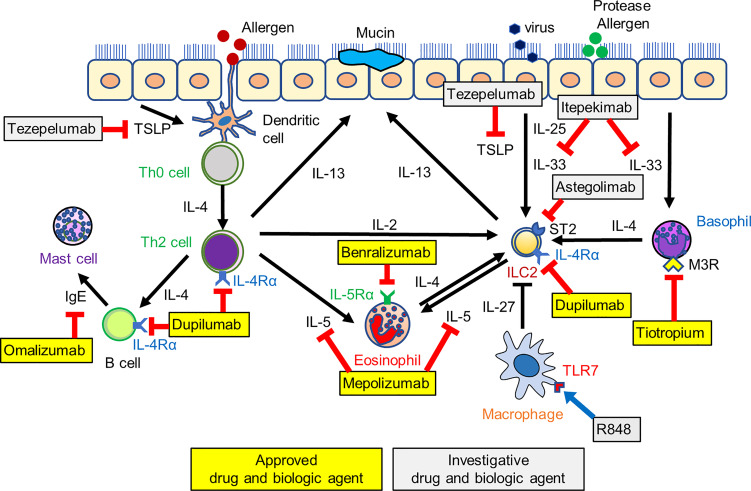
T helper type 2 cells (Th2 cells) and group 2 innate lymphoid cells (ILC2s) play an important role in the pathophysiology of asthma, including airway eosinophilic inflammation. ILC2s are activated by epithelial-derived cytokines [interleukin-25 (IL-25), IL-33, and thymic stromal lymphopoietin (TSLP)] from airway epithelial cells, leading to the release of high amounts of type 2 cytokines, such as IL-5 and IL-13. ILC2s induce airway inflammation in an antigen-independent manner, and ILC2s are considered to be involved in the pathogenesis of asthma exacerbation. Furthermore, ILC2 activation might also confer steroid resistance. Many recent studies in humans and mice are increasingly demonstrating that the function of ILC2s is regulated not just by epithelial-derived cytokines but by a variety of cytokines and mediators derived from innate immune cells. Furthermore, the biologics targeting these cytokines and/or their receptors have been shown to reduce asthma exacerbations and improve lung function and quality of life in asthmatics. This article reviews the current treatment landscape for type 2 airway inflammation in asthma and discusses the therapeutic potential for targeting ILC2s.
Keywords: airway inflammation; asthma; biologics; group 2 innate lymphoid cells (ILC2s); innate immune network.
Copyright © 2022 Matsuyama, Matsuyama, Dotake, Takagi, Machida and Inoue.
Conflict of interest statement
HI reports grants from Boehringer Ingelheim, Novartis and GlaxoSmithKline unrelated to this study; and personal fees from AstraZeneca, Boehringer Ingelheim, GlaxoSmithKline, Kyorin, and Sanofi. The remaining author declares that the research was conducted in the absence of any commercial or financial relationships that could be construed as a potential conflict of interest.
Figures
References
-
- Global Initiative for Asthma . Global Strategy for Asthma Management and Prevention 2021 (2021). Bethesda, Md, USA: Gina; (Accessed Novemver 2021).
