


Bovine coronavirus nucleocapsid suppresses IFN-β production by inhibiting RIG-I-like receptors pathway in host cells
- PMID: 35913638
- PMCID: PMC9341154
- DOI: 10.1007/s00203-022-03149-5
Bovine coronavirus nucleocapsid suppresses IFN-β production by inhibiting RIG-I-like receptors pathway in host cells
Abstract
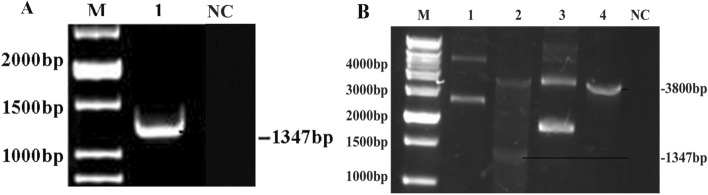
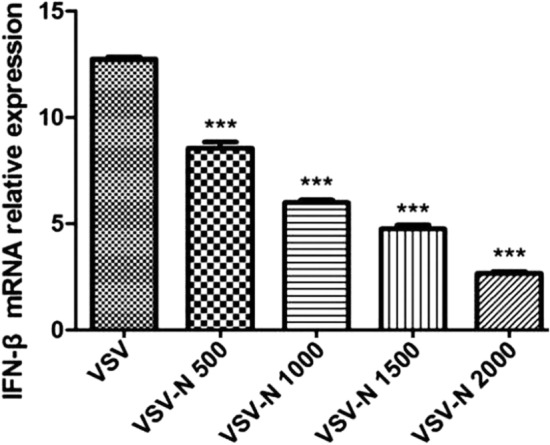
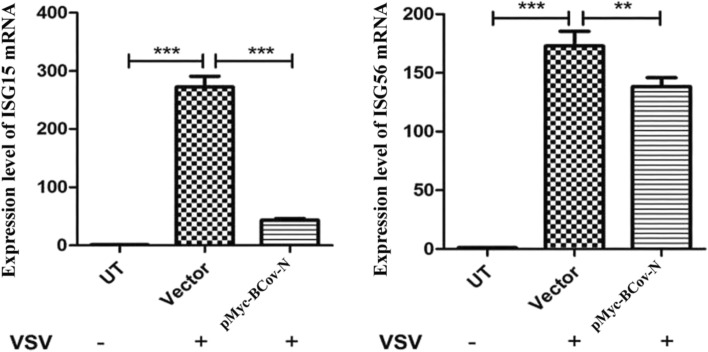
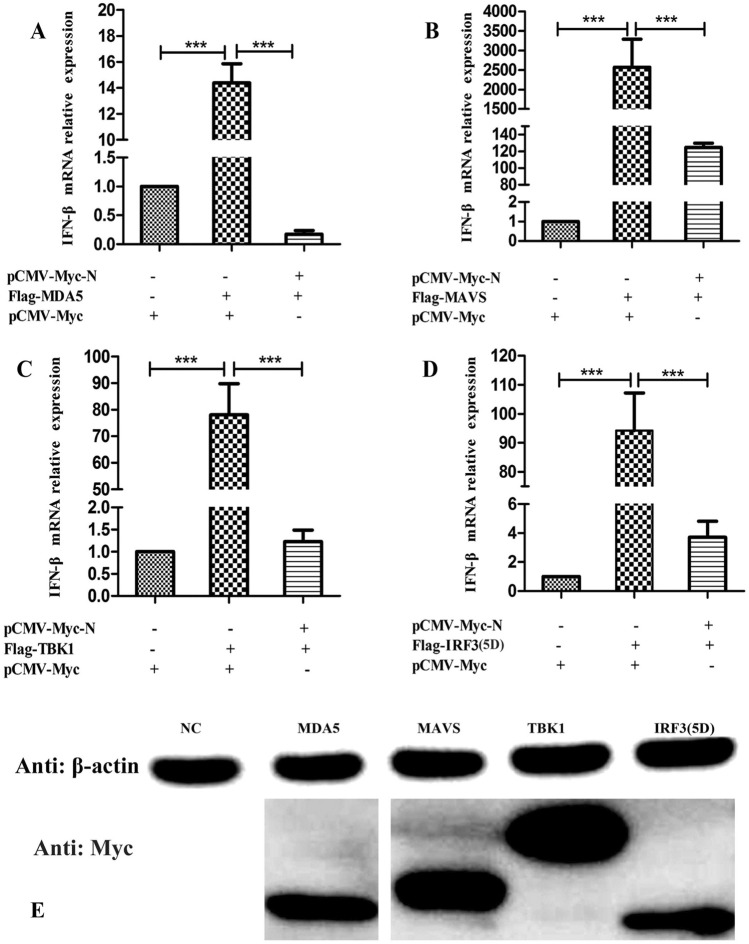
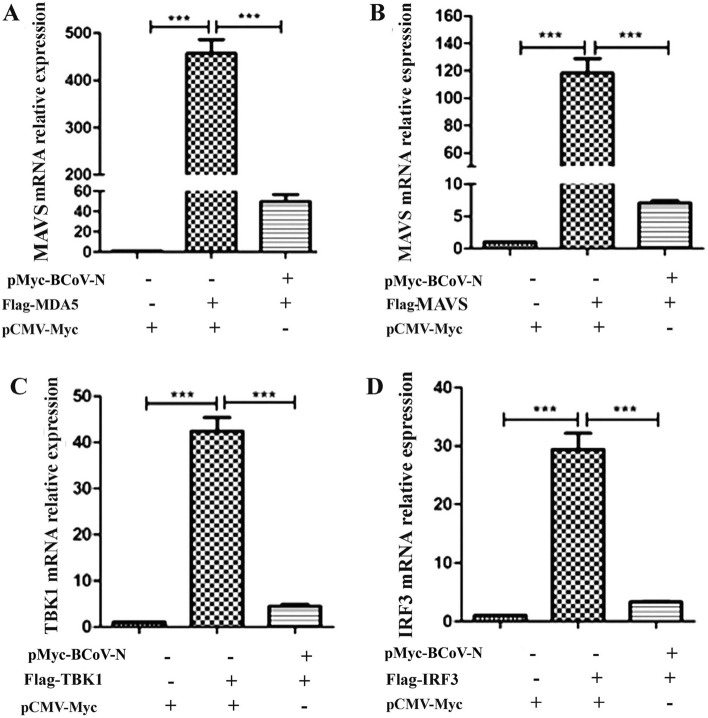
The present study aimed to explore if bovine coronavirus nucleocapsid (BCoV N) impacts IFN-β production in the host cells and to reveal further molecular mechanism of BCoV pathogenesis. Human embryonic kidney (HEK) 293 T cells were transiently transfected with pMyc-BCoV-N recombinant plasmids, then infected with the vesicular stomatitis virus (VSV). Expression levels of beta interferon (IFN-β) mRNA were detected using RT-qPCR. The results showed that BCoV N gene was 1347 bp that was consistent with the expected size. pMyc-BCoV-N recombinant protein was 1347 bp which was successfully transcribed and overexpressed in HEK 293 T cells. BCoV-N recombinant protein inhibited dose-dependently VSV-induced IFN-β production (p < 0.01). MDA5, MAVS, TBK1 and IRF3 could promote transcription levels of IFN-β mRNA. But, BCoV-N protein demoted IFN-β transcription levels induced by MDA5, MAVS, TBK1 and IRF3. Furthermore, expression levels of MDA5, MAVS, TBK1 and IRF3 mRNAs were reduced in RIG-I-like receptor (RLR) pathway. In conclusion, BCoV-N reduced IFN-β levels in RIG-I-like receptor (RLR) pathway in HEK 293 T cells which were induced by MDA5, MAVS, TBK1 and IRF3(5D). BCoV-N protein inhibited IFN-β production and activation of RIG-I-like receptors (RLRs) signal pathway. Our findings demonstrated BCoV N protein is an IFN-β antagonist through inhibition of MDA5, MAVS, TBK1 and IRF3(5D) in RLRs pathway, also revealed a new mechanism of BCoV N protein to evade host innate immune response by inhibiting type I IFN production, which is beneficial to developing novel prevention strategy for BCoV disease in the animals and humans.
Keywords: Bovine coronavirus; IFN-β; Nucleocapsid protein; RIG-I-like receptor.
© 2022. The Author(s), under exclusive licence to Springer-Verlag GmbH Germany, part of Springer Nature.
Conflict of interest statement
All authors have no conflicts of interest. The authors alone are responsible for the content and writing of the paper.
Figures
References
MeSH terms
Substances
LinkOut - more resources
Full Text Sources
Miscellaneous
