


Teaching gross anatomy during the Covid-19 pandemic: Effects on medical students' gain of knowledge, confidence levels and pandemic-related concerns
- PMID: 35914632
- PMCID: PMC9334863
- DOI: 10.1016/j.aanat.2022.151986
Teaching gross anatomy during the Covid-19 pandemic: Effects on medical students' gain of knowledge, confidence levels and pandemic-related concerns
Abstract
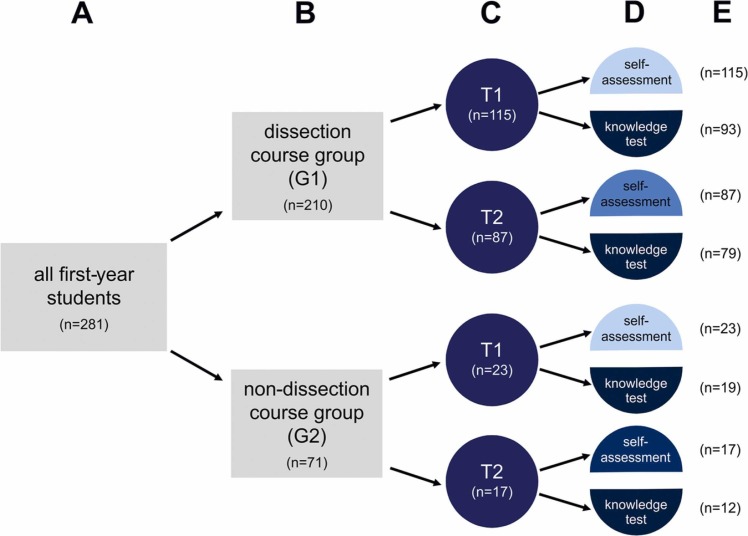
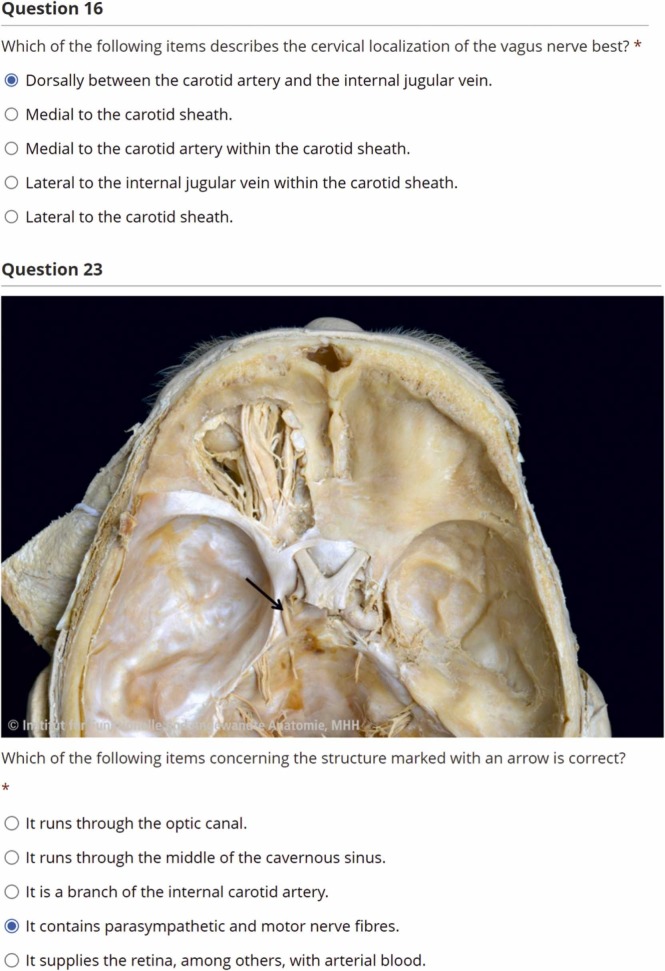
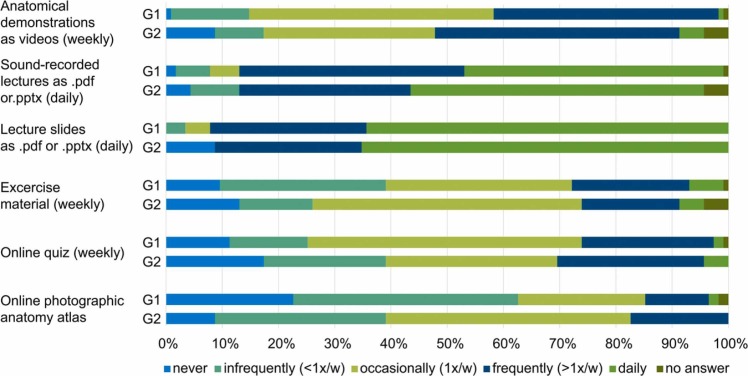
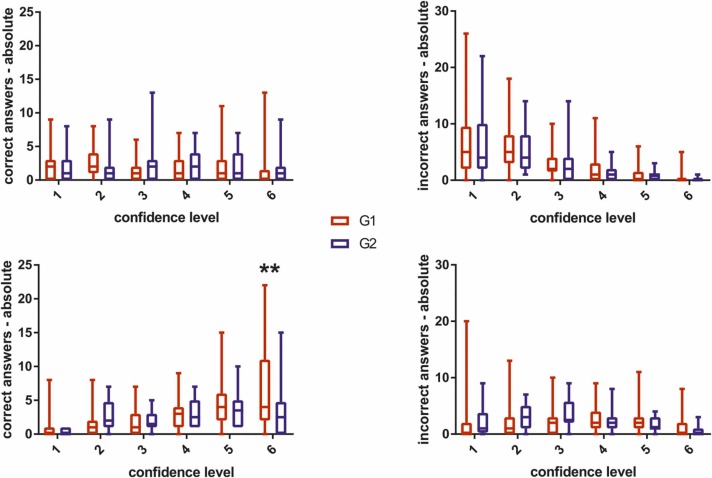
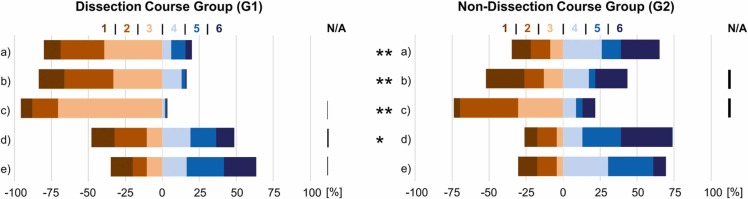
For medical students the dissection course is the preferred method to learn gross anatomy. However, the added value of active cadaver dissection on knowledge gain in multimodal curricula offering a diversity of e-learning resources is unknown. The Covid-19-related lockdown forced educators to replace the dissection course by e-learning resources. At the end of the summer term 2020 loosening of pandemic-related regulations allowed offering a compact, voluntary active dissection course of the head-neck region to first-year medical students at Hannover Medical School. A study was conducted comparing a dissection group (G1, n = 115) and a non-dissection group (G2, n = 23). Knowledge gain and confidence level were measured with a multiple-choice (MC-)test. The use of e-learning resources was recorded. A questionnaire measured motivation, interest and level of concern regarding Covid-19 and anatomy teaching. No differences between groups were found regarding motivation and interest in anatomy of the head-neck region. G2, however, had significantly higher concerns regarding the Covid-19 pandemic than G1. Neither before nor after the educational intervention, differences in the scores of the MC-test were found. However, after the course G1 answered more MC-questions with highest confidence level than G2 (6.7 ± 6.0 vs. 3.6 ± 4.6, p < 0.05) and demonstrated by trend an increased improvement in the scores of image-based questions (30.8 ± 18.2 % vs. 17.1 ± 14.8 %, p = 0.06). In general, frequent users of online quizzes, a part of the e-learning resources, scored significantly better in the knowledge test. Active dissection improves self-assurance to identify anatomical structures and should be re-implemented in multimodal, blended-learning-based anatomical curricula in the post-pandemic era.
Keywords: Active cadaver dissection; Confidence level; Covid-19; Head-neck region; Learning outcome.
Copyright © 2022 Elsevier GmbH. All rights reserved.
Conflict of interest statement
Declaration of Competing Interest The authors declare that they have no known competing financial interests or personal relationships that could have appeared to influence the work reported in this paper.
Figures
References
-
- Albanese M. Problem-based learning: why curricula are likely to show little effect on knowledge and clinical skills. Med. Educ. 2000;34:729–738. - PubMed
-
- Arráez-Aybar L.A., Sánchez-Montesinos I., Mirapeix R.M., Mompeo-Corredera B., Sañudo-Tejero J.R. Relevance of human anatomy in daily clinical practice. Ann. Anat. 2010;192:341–348. - PubMed
-
- Attardi S.M., Choi S., Barnett J., Rogers K.A. Mixed methods student evaluation of an online systemic human anatomy course with laboratory. Anat. Sci. Educ. 2016;9:272–285. - PubMed
-
- de Barros N., Rodrigues C.J., Rodrigues A.J., Jr., de Negri Germano M.A., Cerri G.G. The value of teaching sectional anatomy to improve CT scan interpretation. Clin. Anat. 2001;14:36–41. - PubMed
MeSH terms
LinkOut - more resources
Full Text Sources
Medical
