


Association Between Weight Gain and the Incidence of Cardiometabolic Conditions Among People Living with HIV-1 at High Risk of Weight Gain Initiated on Antiretroviral Therapy
- PMID: 35917003
- PMCID: PMC9618005
- DOI: 10.1007/s40121-022-00673-1
Association Between Weight Gain and the Incidence of Cardiometabolic Conditions Among People Living with HIV-1 at High Risk of Weight Gain Initiated on Antiretroviral Therapy
Abstract
Introduction: Antiretroviral therapy (ART) has been associated with weight gain in people living with HIV-1 (PLWH); however, limited research has assessed whether early weight gain post-ART initiation is associated with metabolic or cardiovascular outcomes among PLWH at high risk of weight gain (i.e., female, Black or Hispanic). This study aimed to evaluate the incidence of metabolic and cardiovascular outcomes between PLWH at high risk of weight gain following an observed ≥ 5% or < 5% weight/body mass index (BMI) gain within 6 months following ART initiation.
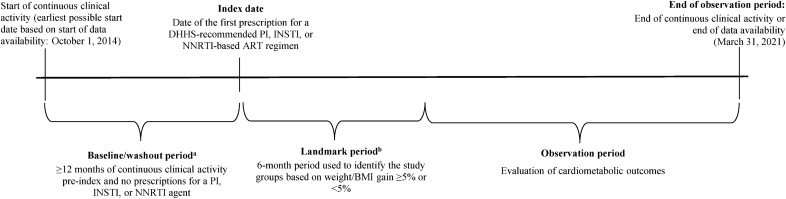
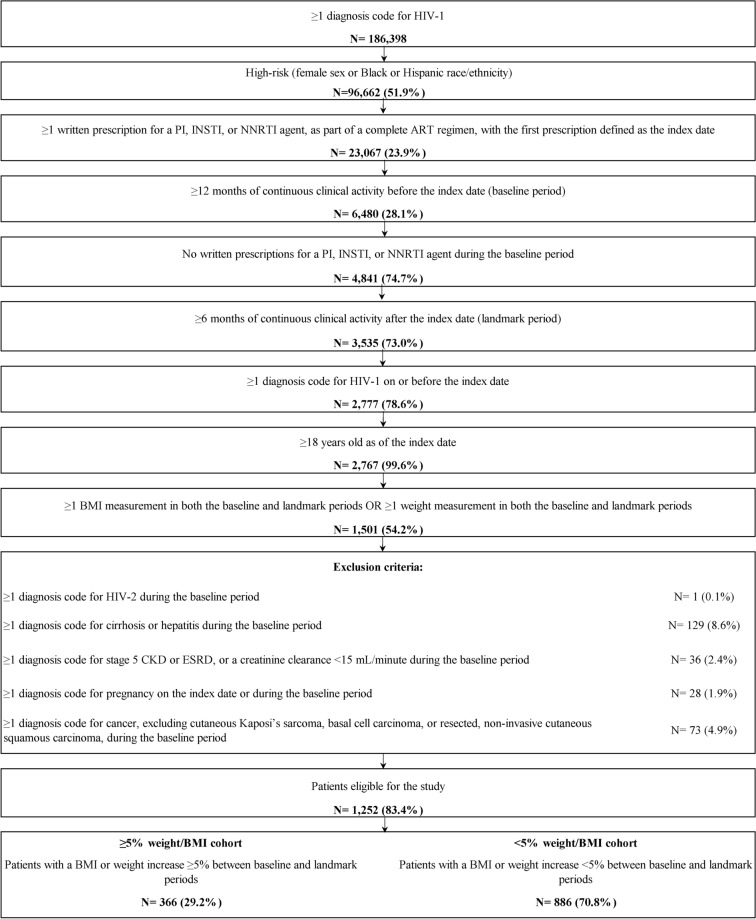
Methods: A retrospective longitudinal study using Symphony Health, an ICON plc Company, IDV® electronic medical records (October 1, 2014-March 31, 2021) identified adult female, Black, or Hispanic treatment-naïve PLWH who initiated ART and who had ≥ 1 weight or BMI measurement pre- and within 6 months post-treatment (landmark period). Inverse probability of treatment weighting was used to account for differences between PLWH who experienced ≥ 5% and < 5% weight/BMI gain. The time to each outcome was compared between cohorts using weighted hazard ratios (HRs) after the landmark period.
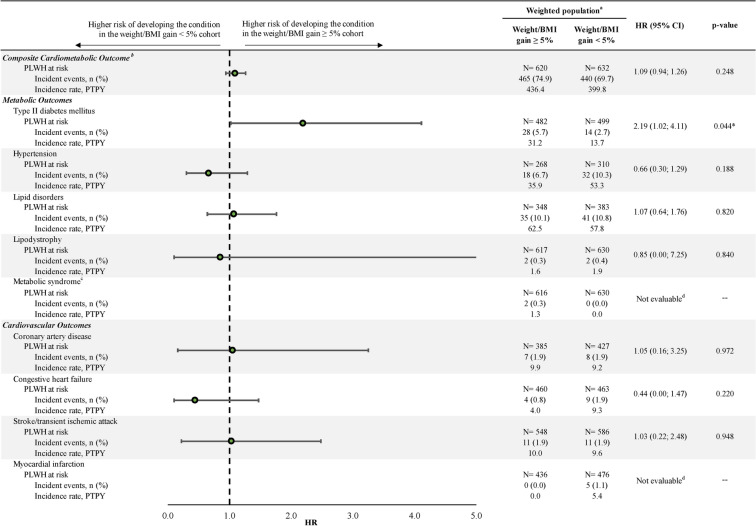
Results: Weighted ≥ 5% and < 5% cohorts included 620 and 632 patients, respectively; baseline characteristics were similar between the two cohorts (mean age: ~ 48 years, ~ 59% female, ~ 49% Black, ~ 17% Hispanic). During a mean 2-year follow-up, PLWH with ≥ 5% weight/BMI gain were significantly more likely to be diagnosed with type 2 diabetes mellitus (T2DM; HR = 2.19; p = 0.044). There were no significant differences in the incidence of any other outcomes between the study cohorts.
Conclusion: Despite a short 2-year follow-up, female, Black or Hispanic PLWH experiencing ≥ 5% weight/BMI increase within 6 months following ART initiation had an increased risk of T2DM, but not other metabolic or cardiovascular outcomes, likely due to the short follow-up period. Further research with longer follow-up and specific ART regimens is warranted to examine the impact of ART-related weight gain on long-term clinical outcomes.
Keywords: Antiretroviral therapy; Cardiovascular disease; HIV-1; Metabolic disease; Observational study; Weight gain.
© 2022. The Author(s).
Figures
References
-
- Bavinton BR, Pinto AN, Phanuphak N, Grinsztejn B, Prestage GP, Zablotska-Manos IB, et al. Viral suppression and HIV transmission in serodiscordant male couples: an international, prospective, observational, cohort study. Lancet HIV. 2018;5(8):e438–e447. doi: 10.1016/S2352-3018(18)30132-2. - DOI - PubMed
-
- Farnham PG, Gopalappa C, Sansom SL, Hutchinson AB, Brooks JT, Weidle PJ, et al. Updates of lifetime costs of care and quality-of-life estimates for HIV-infected persons in the United States: late versus early diagnosis and entry into care. J Acquir Immune Defic Syndr. 2013;64(2):183–189. doi: 10.1097/QAI.0b013e3182973966. - DOI - PubMed
-
- Rodger AJ, Cambiano V, Bruun T, Vernazza P, Collins S, van Lunzen J, et al. Sexual activity without condoms and risk of HIV transmission in serodifferent couples when the HIV-positive partner Is using suppressive antiretroviral therapy. JAMA. 2016;316(2):171–181. doi: 10.1001/jama.2016.5148. - DOI - PubMed
LinkOut - more resources
Full Text Sources
