


Clinical genetics evaluation and testing of connective tissue disorders: a cross-sectional study
- PMID: 35918752
- PMCID: PMC9344629
- DOI: 10.1186/s12920-022-01321-w
Clinical genetics evaluation and testing of connective tissue disorders: a cross-sectional study
Abstract
Background: Heritable connective tissue disorders (HCTDs) consist of heterogeneous syndromes. The diagnosis of HCTDs is aided by genomic biotechnologies (e.g., next-generation sequencing panels) facilitating the discovery of novel variants causing disease.
Methods: Detailed clinical exam data and CLIA-approved genetic testing results from next generation sequencing of 74 genes known to play a role in HCTDs were manually reviewed and analyzed in one hundred consecutive, unrelated patients with phenotypic features indicative of a HCTD referred over a 3.5-year period (2016-2020) to a specialized academic genetics clinic. The prevalence of symptoms was evaluated in the context of genetic variants. We also determined if symptoms among different organ systems were related and performed latent class analysis to identify distinct groups of patients based on symptomatology.
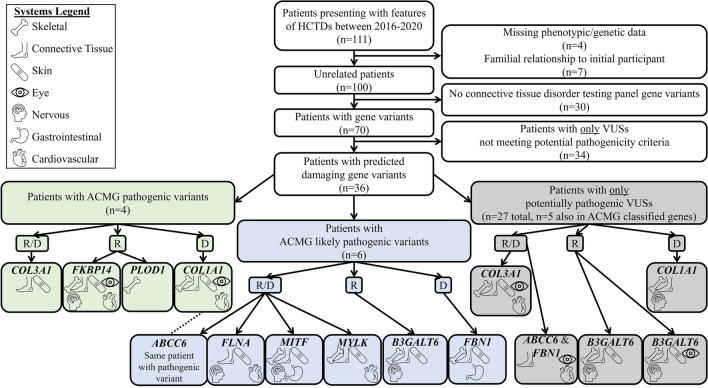
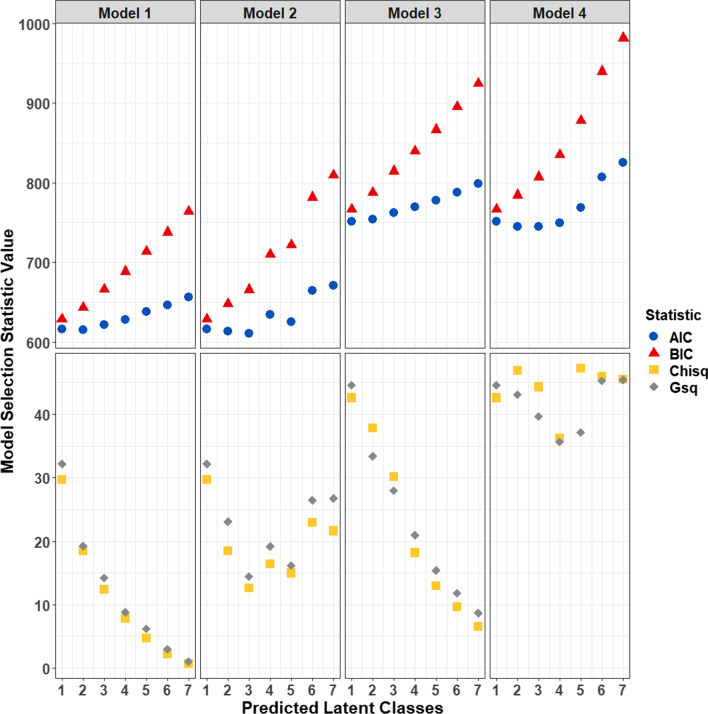
Results: In the cohort of 100 consecutive, unrelated individuals there were four pathogenic, six likely pathogenic and 35 classified potentially pathogenic variants of unknown clinical significance. Patients with potentially pathogenic variants exhibited similar symptom profiles when compared to patients with pathogenic/likely pathogenic variants in the same genes. Although results did not meet a multiple testing corrected threshold, patients with connective tissue symptoms had suggestive evidence of increased odds of having skin (odds ratio 2.18, 95% confidence interval 1.12 to 4.24) and eye symptoms (odds ratio 1.89, 95% confidence interval 0.98 to 3.66) requiring further studies. The best performing latent class analysis results were identified when dividing the dataset into three distinct groups based on age, gender and presence or absence of symptoms in the skeletal, connective tissue, nervous, gastrointestinal and cardiovascular systems. These distinct classes of patients included individuals with: (1) minimal skeletal symptoms, (2) more skeletal but fewer connective tissue, nervous or gastrointestinal symptoms and (3) more nervous system symptoms.
Conclusions: We used novel approaches to characterize phenotype-genotype relationships, including pinpointing potentially pathogenic variants, and detecting unique symptom profiles in patients with features of HCTDs. This study may guide future diagnosis and disease/organ system monitoring with continued improvement and surveillance by clinicians for patients and their families.
Keywords: Ehlers–Danlos syndrome; Gene variants; Heritable connective tissue disorders; Latent class analysis; Next-generation sequencing; Phenotype-genotype relationships.
© 2022. The Author(s).
Conflict of interest statement
The authors declare no conflicts of interest.
Figures
References
-
- Wheeler JB, Ikonomidis JS, Jones JA. Connective tissue disorders and cardiovascular complications: the indomitable role of transforming growth factor-beta signaling. In: Halper J, editor. Progress in heritable soft connective tissue diseases. Dordrecht: Springer Netherlands; 2014. p. 107–27. (Advances in Experimental Medicine and Biology; vol. 802). 10.1007/978-94-007-7893-1_8 - PMC - PubMed
Publication types
MeSH terms
Grants and funding
LinkOut - more resources
Full Text Sources
Medical
