


Proton Transfer Pathways in Nitrogenase with and without Dissociated S2B
- PMID: 35920055
- PMCID: PMC9804283
- DOI: 10.1002/anie.202208544
Proton Transfer Pathways in Nitrogenase with and without Dissociated S2B
Abstract
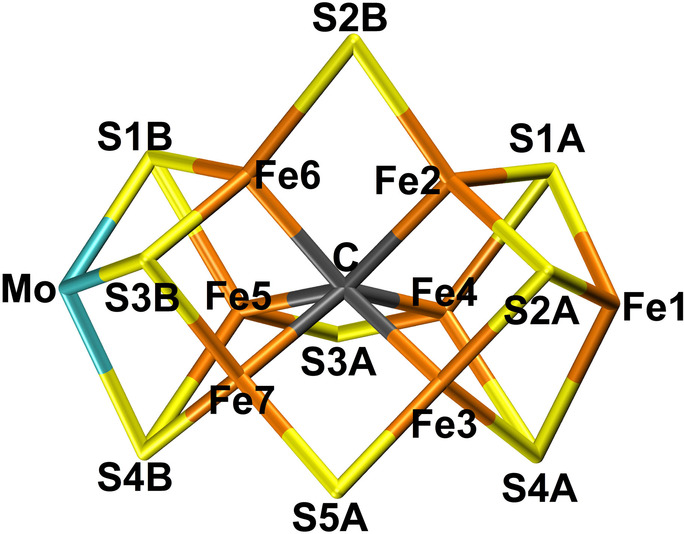
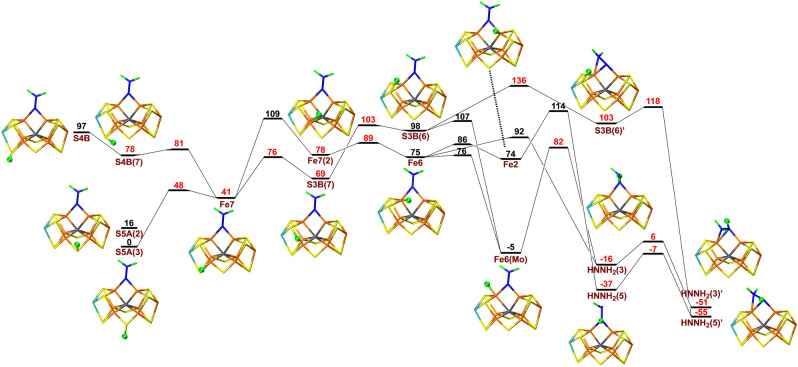
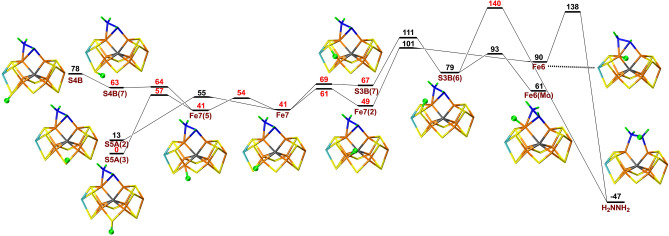
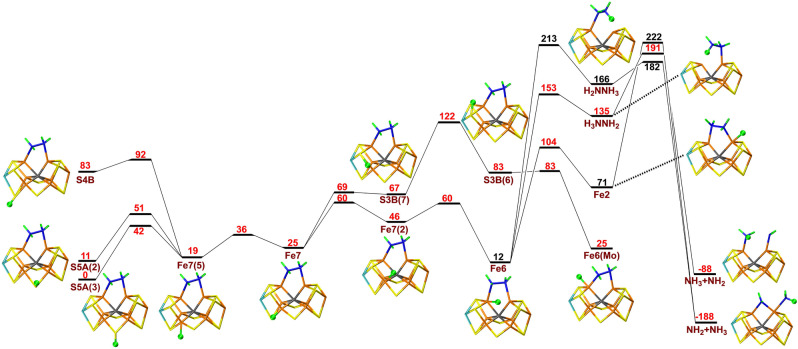
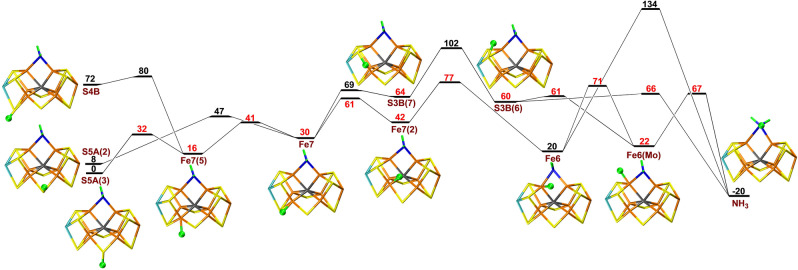
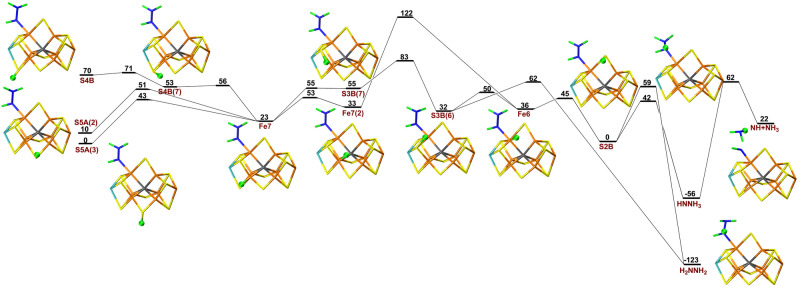
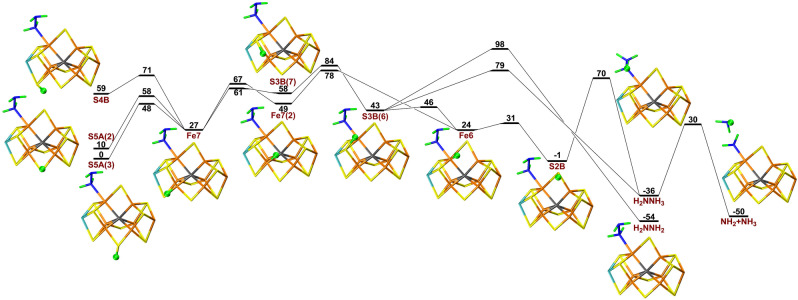
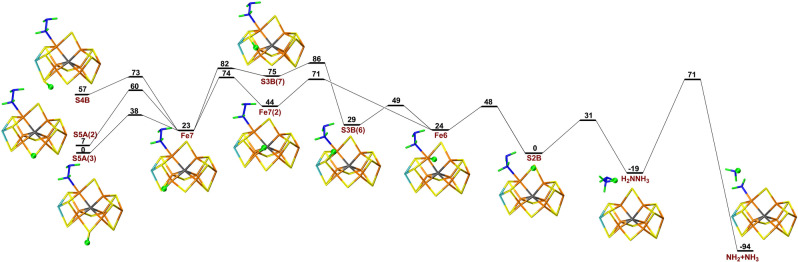
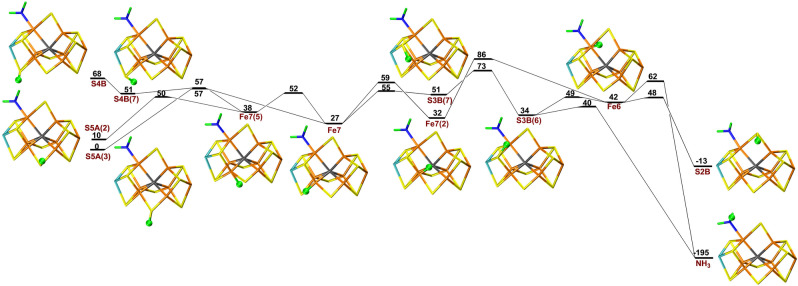
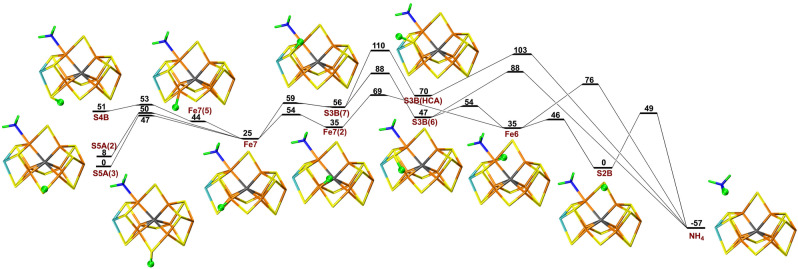
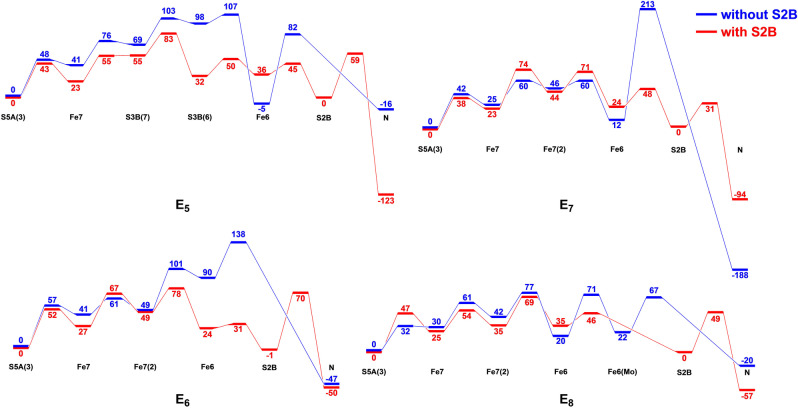
Nitrogenase is the only enzyme that can convert N2 to NH3 . Crystallographic structures have indicated that one of the sulfide ligands of the active-site FeMo cluster, S2B, can be replaced by an inhibitor, like CO and OH- , and it has been suggested that it may be displaced also during the normal reaction. We have investigated possible proton transfer pathways within the FeMo cluster during the conversion of N2 H2 to two molecules of NH3 , assuming that the protons enter the cluster at the S3B, S4B or S5A sulfide ions and are then transferred to the substrate. We use combined quantum mechanical and molecular mechanical (QM/MM) calculations with the TPSS and B3LYP functionals. The calculations indicate that the barriers for these reactions are reasonable if the S2B ligand remains bound to the cluster, but they become prohibitively high if S2B has dissociated. This suggests that it is unlikely that S2B reversibly dissociates during the normal reaction cycle.
Keywords: QM/MM; S2B dissociation; nitrogenase; proton transfer; reaction mechanisms.
© 2022 The Authors. Angewandte Chemie International Edition published by Wiley-VCH GmbH.
Conflict of interest statement
The authors declare no conflict of interest.
Figures
References
Publication types
MeSH terms
Substances
LinkOut - more resources
Full Text Sources
