


The role of prolactin/vasoinhibins in cardiovascular diseases
- PMID: 35923071
- PMCID: PMC10158951
- DOI: 10.1002/ame2.12264
The role of prolactin/vasoinhibins in cardiovascular diseases
Abstract
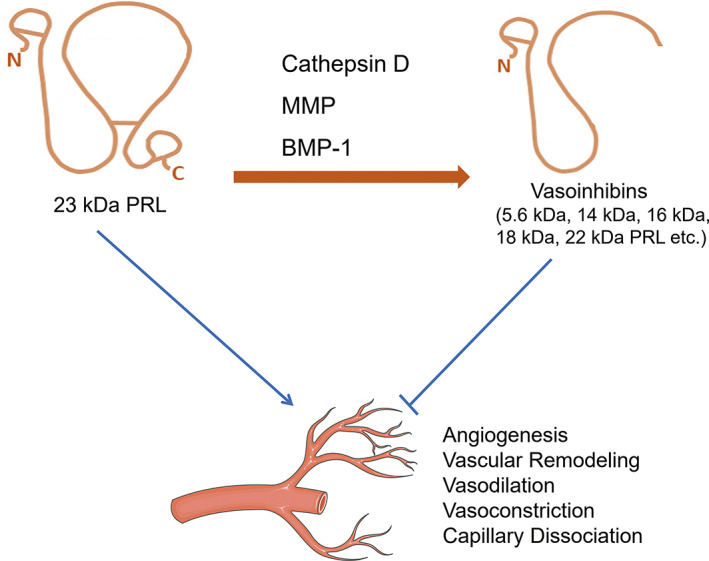
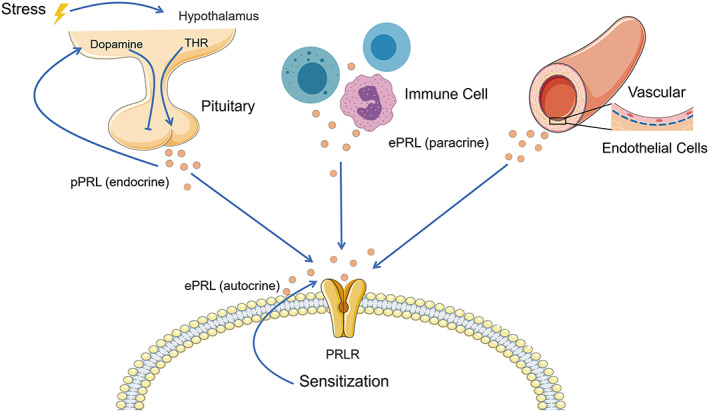
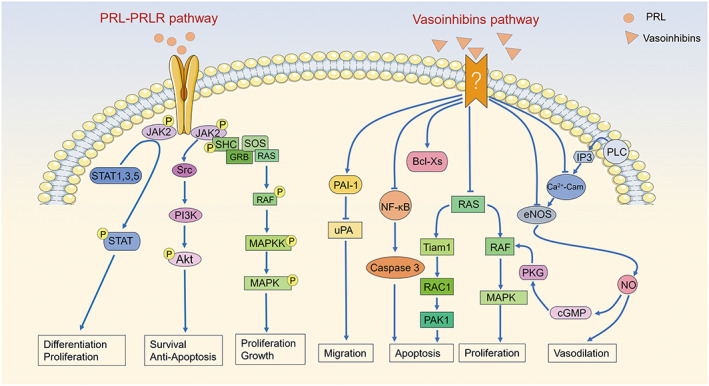
Prolactin (PRL) is a polypeptide hormone that is mainly synthesized and secreted by the lactotroph cells of the pituitary. There are two main isoforms of PRL: 23-kDa PRL (named full-length PRL) and vasoinhibins (including 5.6-18 kDa fragments). Both act as circulating hormones and cytokines to stimulate or inhibit vascular formation at different stages and neovascularization, including endothelial cell proliferation and migration, protease production, and apoptosis. However, their effects on vascular function and cardiovascular diseases are different or even contrary. In addition to the structure, secretion regulation, and signal transduction of PRL/vasoinhibins, this review focuses on the pathological mechanism and clinical significance of PRL/vasoinhibins in cardiovascular diseases.
Keywords: cardiovascular diseases; endothelial cells; prolactin; vasoinhibins.
© 2022 The Authors. Animal Models and Experimental Medicine published by John Wiley & Sons Australia, Ltd on behalf of The Chinese Association for Laboratory Animal Sciences.
Conflict of interest statement
The authors declare that they have no competing interests.
Figures
References
Publication types
MeSH terms
Substances
LinkOut - more resources
Full Text Sources
