


Ketogenic Metabolic Therapy for Glioma
- PMID: 35923675
- PMCID: PMC9339381
- DOI: 10.7759/cureus.26457
Ketogenic Metabolic Therapy for Glioma
Abstract
Purpose: This study describes a retrospective case series of patients with glioma who received ketogenic metabolic therapy through dietary adherence and intermittent fasting.
Methods: A retrospective chart review of a single surgeon's clinic records was performed to identify patients who maintained nutritional ketosis for at least four months between January 2015 and October 2020.
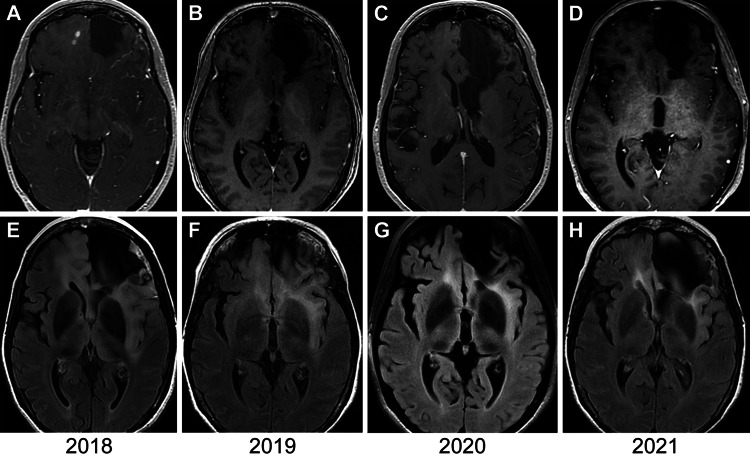
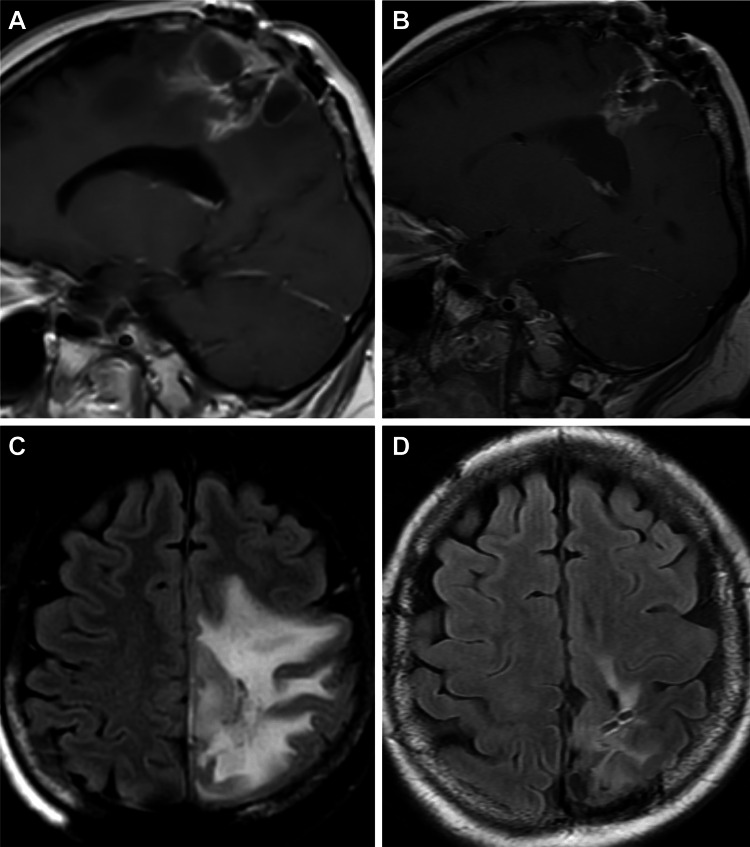
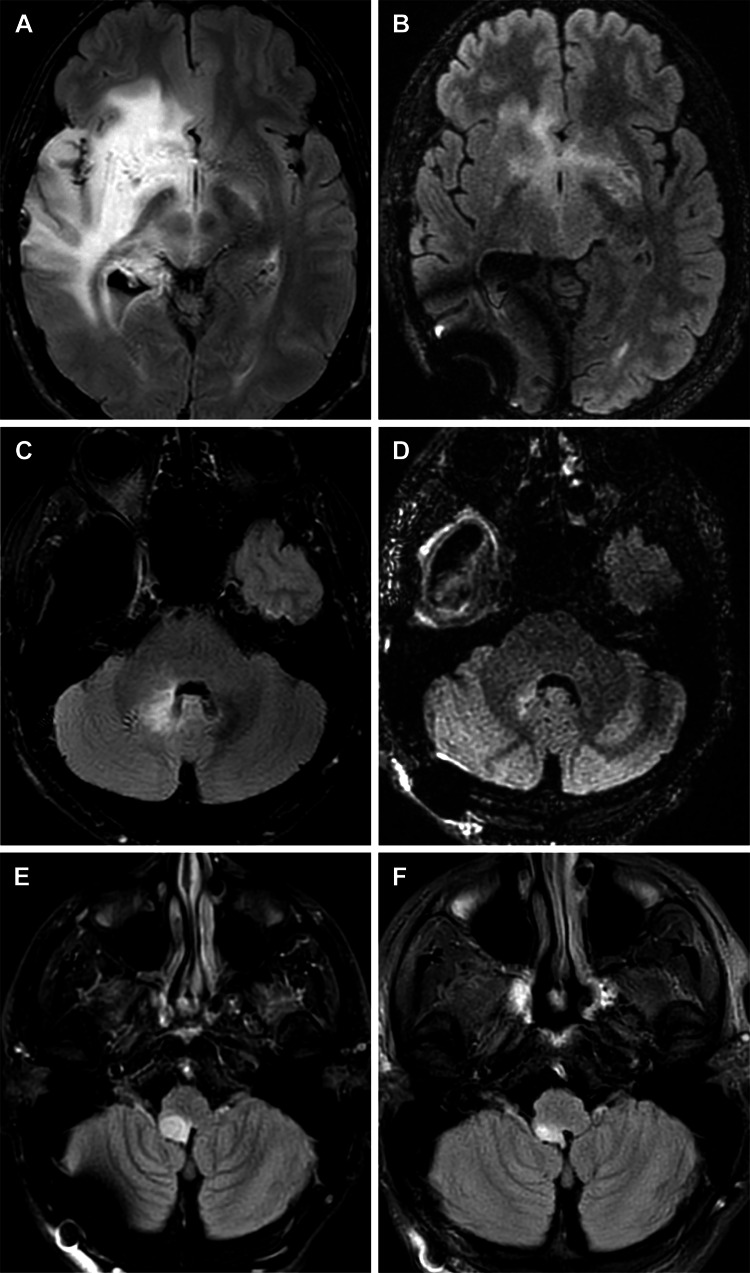
Results: Sixteen patients who met the inclusion criteria constituted a heterogeneous population of patients with diagnoses including eight World Health Organization (WHO) grade IV gliomas (seven glioblastoma, one gliosarcoma), seven WHO grade III gliomas (three oligodendroglioma, four astrocytoma), and one WHO grade II oligodendroglioma. IDH1 mutation status was present for 12 patients, and MGMT methylation status was present for eight patients. The mean (standard deviation [SD]) duration of ketogenic metabolic therapy was 20.6 (13.8) months. The Response Assessment in Neuro-oncology Criteria was applied during the ketogenic metabolic therapy interval, indicating a complete response in eight patients and partial response in eight patients. The mean (SD) progression-free survival while patients maintained ketogenic metabolic therapy was 20.0 (14.4) months.
Conclusion: Ketogenic metabolic therapy appears to convey a survival advantage within this patient series, which highlights the possibility that this therapy, when strictly applied, can augment the standard of care. Further exploration of this modality in a prospective series is warranted to formally explore this therapy.
Keywords: glioblastoma; high-grade glioma; ketones; ketosis; metabolism.
Copyright © 2022, Smith et al.
Conflict of interest statement
KAS is a minor stockholder in GT Medical Technologies.
Figures
Similar articles
-
Exploring the Feasibility and Effects of a Ketogenic Diet in Patients With CNS Malignancies: A Retrospective Case Series.Front Neurosci. 2020 May 19;14:390. doi: 10.3389/fnins.2020.00390. eCollection 2020. Front Neurosci. 2020. PMID: 32508561 Free PMC article.
-
Potential Role of Methylation Marker in Glioma Supporting Clinical Decisions.Int J Mol Sci. 2016 Nov 10;17(11):1876. doi: 10.3390/ijms17111876. Int J Mol Sci. 2016. PMID: 27834917 Free PMC article.
-
Potential influence of IDH1 mutation and MGMT gene promoter methylation on glioma-related preoperative seizures and postoperative seizure control.Seizure. 2019 Jul;69:283-289. doi: 10.1016/j.seizure.2019.05.018. Epub 2019 May 20. Seizure. 2019. PMID: 31141785
-
Ketogenic Diet in the Treatment of Gliomas and Glioblastomas.Nutrients. 2022 Sep 17;14(18):3851. doi: 10.3390/nu14183851. Nutrients. 2022. PMID: 36145228 Free PMC article. Review.
-
Targeting the Warburg effect for cancer treatment: Ketogenic diets for management of glioma.Semin Cancer Biol. 2019 Jun;56:135-148. doi: 10.1016/j.semcancer.2017.12.011. Epub 2017 Dec 30. Semin Cancer Biol. 2019. PMID: 29294371 Free PMC article. Review.
Cited by
-
Ketogenic metabolic therapy in conjunction with standard treatment for glioblastoma: A case report.Oncol Lett. 2024 Mar 26;27(5):230. doi: 10.3892/ol.2024.14363. eCollection 2024 May. Oncol Lett. 2024. PMID: 38586213 Free PMC article.
-
Successful application of dietary ketogenic metabolic therapy in patients with glioblastoma: a clinical study.Front Nutr. 2025 Feb 18;11:1489812. doi: 10.3389/fnut.2024.1489812. eCollection 2024. Front Nutr. 2025. PMID: 40041752 Free PMC article.
-
The Role of Ketogenic Diet in the Treatment of Neuroblastoma.Integr Cancer Ther. 2023 Jan-Dec;22:15347354221150787. doi: 10.1177/15347354221150787. Integr Cancer Ther. 2023. PMID: 36752115 Free PMC article. Review.
-
Plasma lipidomic and metabolomic profiles in high-grade glioma patients before and after 72-h presurgery water-only fasting.Mol Oncol. 2025 Aug;19(8):2249-2269. doi: 10.1002/1878-0261.70003. Epub 2025 Feb 24. Mol Oncol. 2025. PMID: 39992790 Free PMC article. Clinical Trial.
-
Enhanced lipid metabolism serves as a metabolic vulnerability to a polyunsaturated fatty acid (PUFA)-rich diet in glioblastoma.Res Sq [Preprint]. 2025 Jun 24:rs.3.rs-6355361. doi: 10.21203/rs.3.rs-6355361/v1. Res Sq. 2025. PMID: 40678204 Free PMC article. Preprint.
References
-
- Long-term glioblastoma multiforme survivors: a population-based study. Scott JN, Rewcastle NB, Brasher PM, et al. Can J Neurol Sci. 1998;25:197–201. - PubMed
-
- Eighty percent survival rate at 15 years for 1p/19q co-deleted oligodendroglioma treated with upfront chemotherapy irrespective of tumor grade. Iwadate Y, Matsutani T, Hara A, et al. J Neurooncol. 2019;141:205–211. - PubMed
LinkOut - more resources
Full Text Sources
Research Materials
Miscellaneous