


Performance of wild animals with "broken" traits: Movement patterns in nature of moose with leg injuries
- PMID: 35923947
- PMCID: PMC9339739
- DOI: 10.1002/ece3.9127
Performance of wild animals with "broken" traits: Movement patterns in nature of moose with leg injuries
Abstract
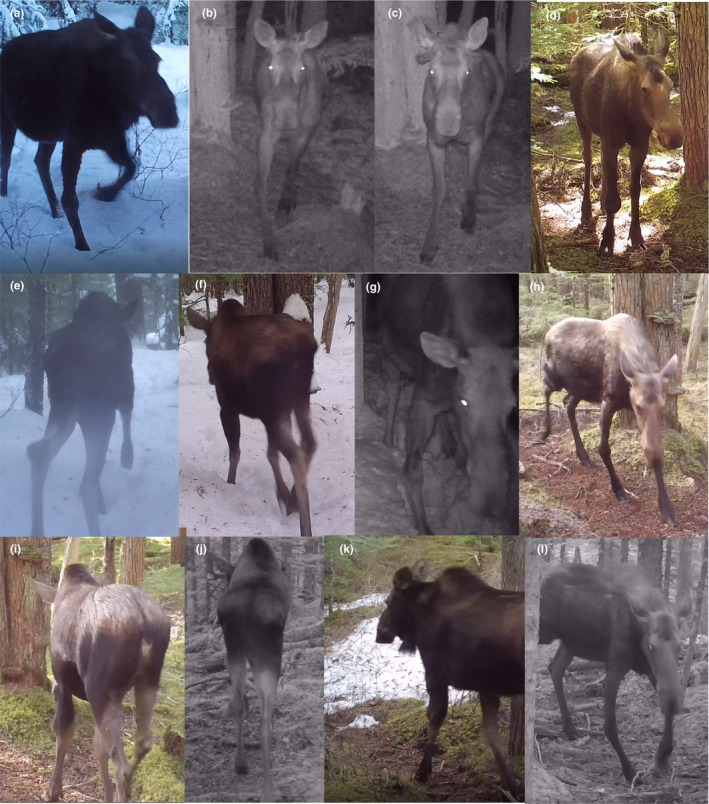
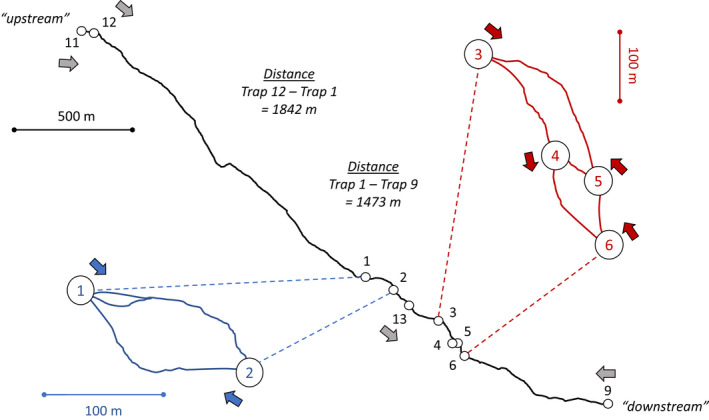
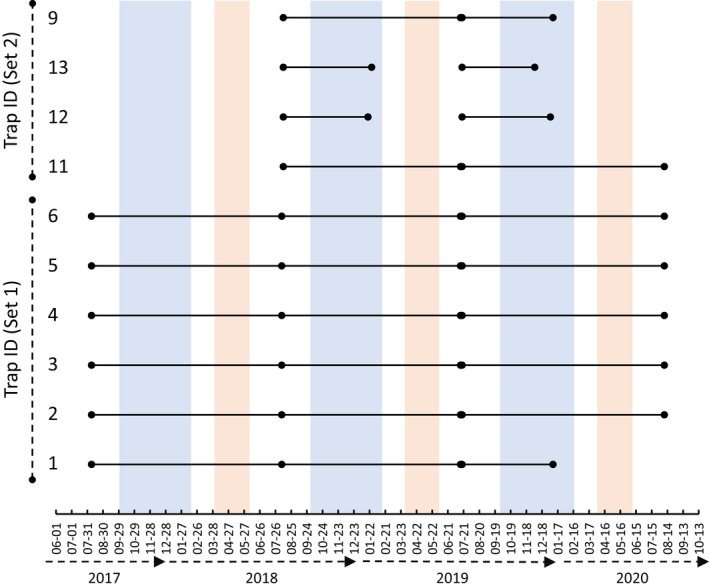
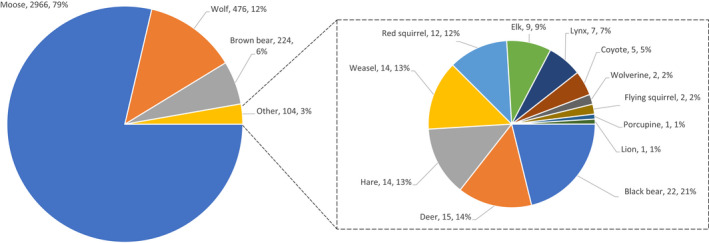
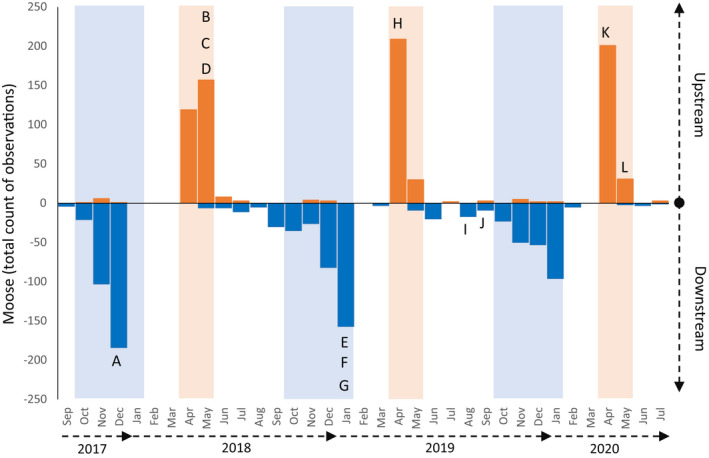
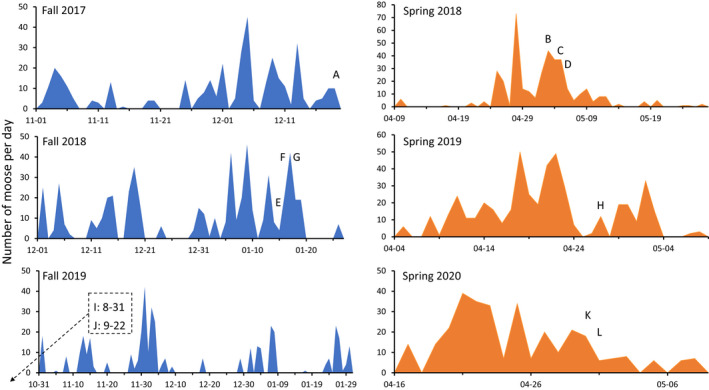
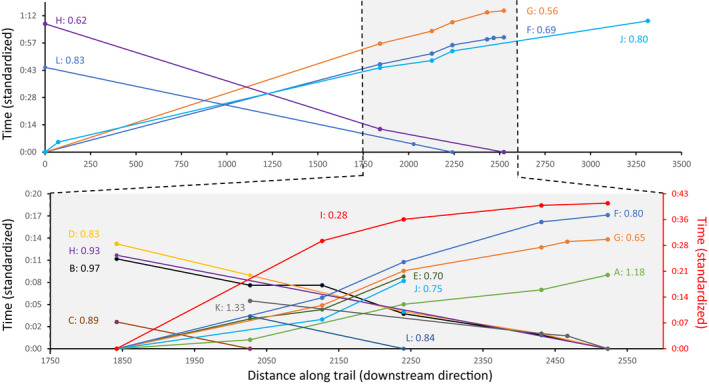
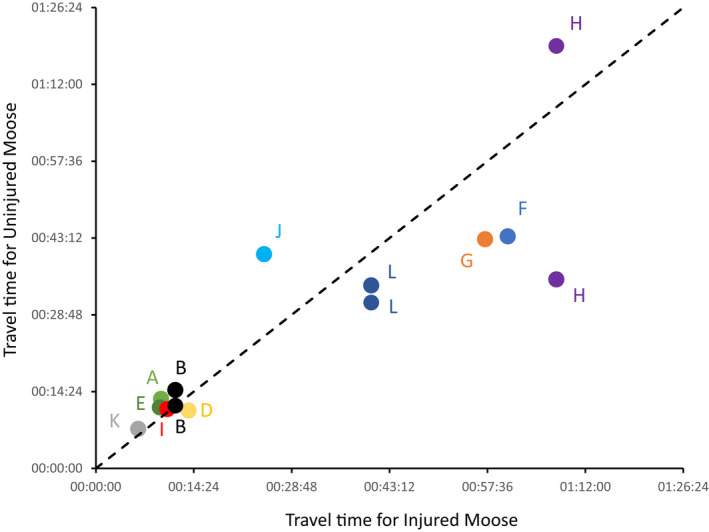
Organismal traits are presumed to be well suited for performance in the tasks required for survival, growth, and reproduction. Major injuries to such traits should therefore compromise performance and prevent success in the natural world; yet some injured animals can survive for long periods of time and contribute to future generations. We here examine 3 years of camera trap observations along a remote trail through old-growth forest in northern British Columbia, Canada. The most common observations were of moose (2966), wolves (476), and brown bears (224). The moose overwhelmingly moved in one direction along the trail in the late fall and early winter and in the other direction in the spring. This movement was clustered/contagious, with days on which many moose traveled often being interspersed with days on which few moose traveled. On the video recordings, we identified 12 injured moose, representing 1.4% of all moose observations. Seven injuries were to the carpus, three were to the antebrachium, and two were to the tarsus-and they are hypothesized to reflect damage to ligaments, tendons, and perhaps bones. The injured moose were limping in all cases, sometimes severely; and yet they did not differ noticeably from uninjured moose in the direction, date, contagiousness, or speed of movement along the trail. We discuss the potential relevance of these findings for the action of natural selection in the evolution of organismal traits important for performance.
Keywords: functional traits; game camera; lameness; natural selection; trailcam; ungulate.
© 2022 The Authors. Ecology and Evolution published by John Wiley & Sons Ltd.
Conflict of interest statement
The authors are all members of the same family—but did not receive any financial support from research grants, government agencies, NGOs, or businesses.
Figures
References
-
- Abdelhakiem, M. A. H. , & Elrashidy, M. H. (2017). A retrospective study of the congenital anomalies of the axial and appendicular skeleton in cow calves. Assiut Veterinary Medical Journal, 63, 88–99.
-
- Ahloowalia, B. S. , & Maluszynsk, M. (2001). Induced mutations—A new paradigm in plant breeding. Euphytica, 118, 167–173.
-
- Arnold, S. J. (1983). Morphology, performance and fitness. American Zoologist, 23, 347–361.
-
- Bell, G. , & Gonzalez, A. (2009). Evolutionary rescue can prevent extinction following environmental change. Ecology Letters, 12, 942–948. - PubMed
-
- Bulstrode, C. , King, J. , & Roper, B. (1986). What happens to wild animals with broken bones. The Lancet, 327, 29–31. - PubMed
Associated data
LinkOut - more resources
Full Text Sources
